Salade Niçoise with Seared Tuna and Anchovy
Rare-seared tuna, waxy potatoes, blanched beans and a warm anchovy dressing spooned over
Contents
↓ Jump to recipeA Salade Niçoise is really an argument about composition dressed up as lunch. Everything is cooked separately, kept distinct, and laid out so you can see each element, then pulled together at the last second by a single assertive dressing. Done well it is one of the great summer plates: cool and warm at once, salty and sweet, with the good sort of variety that keeps you eating.
My version leans on two moves that make it feel like a proper meal rather than a picnic afterthought. The tuna is fresh and seared rare, sliced in warm fingers, and the dressing is a warm anchovy vinaigrette pounded from whole fillets and spooned over at the end. That gentle warmth loosens the anchovy and garlic and lets them soak into the potatoes, so the whole plate reads as one dish.
Salade Niçoise with Seared Tuna and Anchovy
Ingredients
- 2 tuna steaks, about 150g each and 2.5cm thick
- 1 tbsp olive oil, for searing
- 400g small waxy potatoes (Charlotte or Anya)
- 200g fine green beans, topped
- 4 large eggs
- 200g cherry tomatoes, halved (or 3 ripe tomatoes in wedges)
- 100g small black olives, ideally Niçoise or Kalamata
- 1 small cucumber or a few small radishes, thinly sliced
- 4 spring onions or 1 small red onion, thinly sliced
- a small handful of basil leaves
- a few crisp lettuce leaves (Little Gem)
- flaky sea salt and black pepper
- For the warm anchovy dressing:
- 6 anchovy fillets in oil, drained
- 1 small garlic clove
- 1 tsp Dijon mustard
- 1 tbsp red wine vinegar
- juice of half a lemon
- 5 tbsp extra virgin olive oil
- 1 tsp capers, roughly chopped
Method
- Boil the potatoes whole in well-salted water until just tender, 12-15 minutes. Lift out with a slotted spoon and keep the water on the heat.
- Blanch the green beans in the same water for 3 minutes until bright and just tender with a bite, then plunge into iced water to stop the cooking and set the colour. Drain.
- Soft-boil the eggs: lower into gently boiling water and cook for exactly 7 minutes for a set white and a barely-fudgy yolk. Cool in cold water, then peel and halve.
- Make the dressing: pound the anchovies and garlic to a rough paste (a pestle and mortar or the flat of a knife). Whisk in the mustard, vinegar and lemon juice, then stream in the olive oil to emulsify. Stir in the capers. Warm gently in a small pan for a minute, just to take the edge off, no more.
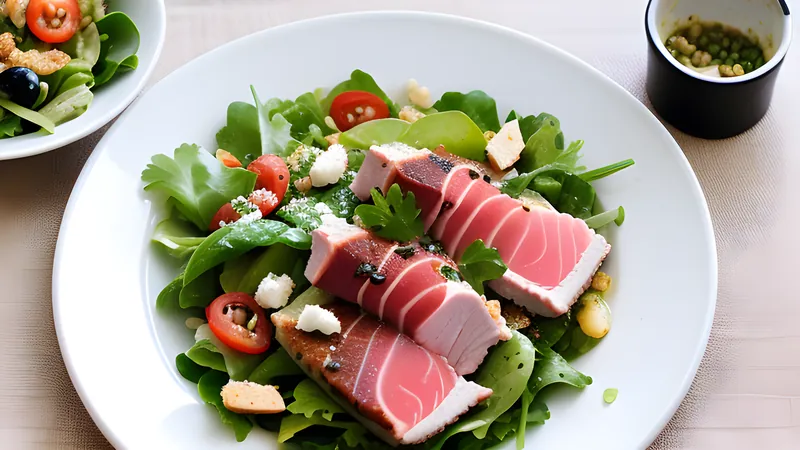
- Sear the tuna: pat the steaks bone-dry, rub with olive oil and season. Sear in a very hot pan for 60-90 seconds each side, so the outside colours and the centre stays rosy. Rest for 2 minutes, then slice against the grain into thick fingers.
- Halve or thickly slice the warm potatoes and toss with a spoonful of the dressing while still warm, so they drink it in.
- Compose: arrange lettuce, potatoes, beans, tomatoes, cucumber, onion and olives on a large platter. Nestle the egg halves and the sliced tuna on top.
- Spoon the warm anchovy dressing generously over everything, scatter with basil and a little more black pepper, and serve at once while the tuna is still warm.
The Nice argument nobody wins
Few salads inspire as much local ferocity as this one. In Nice itself, the keepers of the flame insist a true salade niçoise is a raw salad, built on tomatoes, and that cooked vegetables are heresy. The late Nissart authority Jacques Médecin, a controversial mayor of the city, laid down the law in his cookbook: no potatoes, no green beans, no cooked anything beyond the eggs and the tinned fish. Tomatoes, radishes, spring onions, small artichokes, fava beans in spring, black olives, anchovies, olive oil. That, he argued, was the genuine article, a peasant salad of raw things the city grew.
Then Escoffier and the wider French kitchen got hold of it, added the boiled potatoes and blanched beans, and gave us the composed platter that the rest of the world now calls Niçoise. Purists still wince. I am firmly in the practical camp: the potatoes and beans turn a starter into a supper, and if that annoys someone in Nice, I will live with it. What I do keep faith with is the anchovy, which the local version never leaves out, and the good olive oil, which is the whole soul of the thing.
There is also the tinned-versus-fresh question. Traditionally the fish was preserved: good tuna in oil, or anchovies, or both. A really excellent jar of tuna belly in olive oil, flaked over the top, is a wonderful and honest version, and on a hot day I sometimes prefer it. Fresh seared tuna is the restaurant flourish, and it is genuinely lovely, so long as you buy it responsibly and cook it barely.
Cook each thing on its own terms
The discipline of Niçoise is that nothing is cooked together, and each element wants a slightly different treatment. This is a plate that rewards attention to small timings, the same care that makes a Waldorf with toasted walnuts and grapes or a fennel, orange and black olive salad worth composing rather than just tossing.
Potatoes. Waxy varieties hold their shape and turn silky rather than fluffy. Boil them whole in properly salted water, which seasons them from within, and dress them while still warm so they absorb the vinaigrette. Cold potatoes shrug dressing off; warm ones drink it.
Green beans. Three minutes in the boiling water, then straight into iced water. That shock stops the cooking dead and locks in the bright green. Beans left to cool in their own heat go khaki and floppy, and lose the squeak you want against everything else.
Eggs. This is where most versions come unstuck. A jammy egg, white just set and yolk still fudgy at the centre, is the target, and seven minutes in gently boiling water from cold-shelled fridge eggs gets you there reliably. Cool them quickly to stop the yolk chalking to that grey-green ring, then peel under running water.
The seared tuna
Fresh tuna cooked past rare turns to dry, grey chalk, and there is no coming back from it. Buy steaks a good two and a half centimetres thick so the outside can colour before the middle overcooks. Pat them completely dry, because a wet surface steams instead of searing, then oil, season and drop into a genuinely hot pan. Sixty to ninety seconds a side gives you a thin band of cooked flesh around a rosy centre. Rest it briefly, then slice against the grain into thick fingers so it stays in generous pieces on the plate.
If searing fresh tuna makes you nervous, or the good stuff is not at the counter, a couple of jars of tuna in olive oil, flaked over, is honestly no compromise at all. Choose pole-and-line caught where you can.
The warm anchovy dressing, which is the twist
A Niçoise stands or falls on its dressing, and mine takes the anchovy that is normally scattered on top and builds it into the vinaigrette instead. Pound six fillets with a little garlic to a rough paste, whisk in mustard, red wine vinegar and lemon, then stream in a generous slug of good olive oil until it thickens and turns glossy. Chopped capers go in for little bursts of sharpness.
The one unusual step is warming it, gently, for barely a minute before it hits the plate. That faint heat melts the anchovy into the oil and softens the raw garlic’s bite, giving you something closer to a loose, cool bagna càuda than a sharp French vinaigrette. Spooned over the warm potatoes and the just-rested tuna, it ties every separate element into a single savoury whole. Do not let it get hot or it will split; you want it warm to the fingertip, no more. The same anchovy magic is at work in charred hispi cabbage with anchovy butter, where a little salted fish turns a humble vegetable into something you cannot stop eating.
Composing the platter
Resist the urge to toss. A Niçoise is arranged, so each person can see and choose. Lay a base of crisp lettuce, then group the potatoes, beans, tomatoes, cucumber, onion and olives in their own little zones. Nestle the halved eggs cut-side up and drape the sliced tuna over the top. Spoon the warm dressing over the lot, letting it pool, then finish with torn basil and cracked pepper. Bring it to the table as a whole and let people help themselves. It looks generous because it is.
Make-ahead, storage and variations
Almost every component can be prepped ahead. Boil the potatoes and beans, soft-boil the eggs and mix the dressing up to a day in advance, keeping everything separate and the dressing at room temperature so the oil stays loose. Sear the tuna and compose only when you are ready to eat, because warm tuna is half the pleasure and it stiffens in the fridge.
Leftovers keep a day, though the dressed potatoes soften and the beans dull. Bring it back to room temperature before eating, since fridge-cold flattens the olive oil and the tomatoes.
- No tuna day. Skip the fish and lean on extra egg and olives for a lighter lunch, or fold in a tin of good sardines.
- Spring version. Add small raw artichoke hearts and a handful of shelled broad beans, the way Nice does it.
- Fewer potatoes. For a starter, drop the potatoes and beans and go closer to the raw Nissart original, all tomatoes, radishes and anchovy.
- A grill note. For a smokier plate, char the tuna over coals and blister the spring onions alongside.
The genius of the dish is that it never feels like a diet salad, even though it more or less is one. It eats like a proper lunch, generous and salty and sunlit, the sort of thing you make once in July and then want again the very next day.
Related Content