Sahlab: Warm Orchid Milk with Cinnamon
Thickened milk scented with rosewater and mastic, dusted with cinnamon
Contents
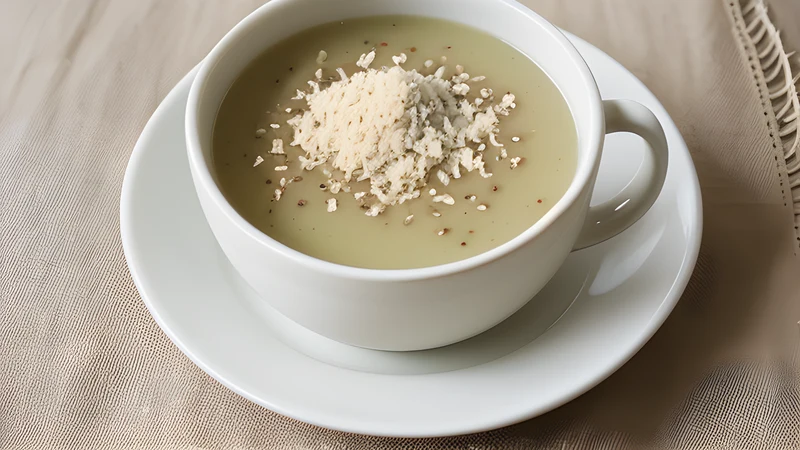
↓ Jump to recipeSahlab is what much of the eastern Mediterranean drinks when the weather turns: a warm mug of milk thickened to the silkiness of a loose custard, perfumed with rosewater and cinnamon, and finished with a scatter of chopped pistachios and coconut. Street vendors from Istanbul to Cairo ladle it out of tall urns on cold nights, and the smell of cinnamon and rose over hot milk is as much a part of a Levantine winter as chestnuts roasting are of a European one. The version most of us can actually make at home leans on cornflour and one quietly transformative optional ingredient, mastic, which gives the drink its faint pine-resin fragrance and a subtle chew that shop-bought sachets never manage.
Sahlab: Warm Orchid Milk with Cinnamon
Ingredients
- 500ml whole milk
- 2 tbsp cornflour (cornstarch)
- 2 tbsp caster sugar, or to taste
- 1–2 small tears of mastic gum, ground with a little sugar (optional but recommended)
- 1 tsp rosewater, or 1/2 tsp orange blossom water
- To serve: ground cinnamon, chopped pistachios, desiccated coconut, a few sultanas
Method
- If using mastic, crush the tears in a small mortar with a teaspoon of the sugar until powdered, to stop it clumping.
- In a cold saucepan, whisk the cornflour into about 100ml of the cold milk until completely smooth, with no lumps.
- Whisk in the remaining 400ml milk, the sugar and the ground mastic.
- Set over medium heat and bring slowly to a gentle simmer, whisking constantly, especially as it approaches the boil.
- Keep whisking and simmering gently for 3–5 minutes, until the mixture thickens to the consistency of pouring cream or a thin custard and coats the back of a spoon.
- Take off the heat and stir in the rosewater or orange blossom water.
- Pour into mugs and top generously with cinnamon, chopped pistachios, coconut and sultanas. Serve hot.
The orchid the drink is named after
The name sahlab, which travels as salep, sahleb and dozens of other spellings, refers to a flour ground from the dried tubers of certain wild orchids of the genus Orchis. The word itself traces back through Arabic to a phrase meaning, rather earthily, “fox testicles”, a nod to the paired shape of the underground tubers. That orchid flour, rich in a starchy substance called glucomannan, is an extraordinary thickener, and for centuries it was the definitive ingredient that gave both the hot drink and the famous stretchy Turkish ice cream, dondurma, their characteristic elastic texture.
The drink itself long predates its milk-and-sugar form. Warm salep beverages were drunk across the Ottoman world and reached as far as England, where in the seventeenth and eighteenth centuries “saloop” was sold hot on London streets as a cheap, warming drink and a supposed cure for all manner of ailments, drunk in the coffee houses before coffee and tea fully took over. Charles Lamb wrote about saloop stalls serving early-rising labourers and chimney sweeps. Genuine wild-orchid salep has since become a victim of its own popularity: the orchids cannot be farmed at scale, it takes a great many tubers to make a small amount of flour, and overharvesting has left the plants protected in Turkey, where export of real salep is now banned. This is why almost every home recipe today, and a great many of the commercial mixes, is thickened with cornflour standing in for the near-unobtainable orchid flour.
Mastic, the ingredient that makes it taste authentic
If real salep is off the table, the flavour that still marks out a proper sahlab from a bland cornflour pudding is mastic. Mastic is a natural resin, harvested as hardened “tears” from the trunks of the mastic tree, a shrub grown almost exclusively on the Greek island of Chios, where the practice has continued for so long that it holds protected status. Chewed on its own it is faintly medicinal and pine-like; ground and cooked into milk, it lends sahlab a haunting, almost incense-like aroma and, crucially, a slightly springy body that hints at the texture real orchid flour once gave.
A little goes a very long way, and too much turns the drink bitter and overpoweringly resinous, so one or two small tears for a pan this size is plenty. The trick is to crush the tears with a little of the sugar first: mastic is soft and sticky at room temperature and will gum up a pestle or a whisk on its own, but ground into sugar it powders neatly and disperses through the milk without clumping. If you cannot find it, the drink is still lovely with just rosewater and cinnamon; it simply loses that particular depth. Rosewater is the other essential aromatic, and orange blossom water makes a fine, slightly sharper alternative if you prefer it or have it to hand.
The recipe, step by step
Start cold, which is the single rule that keeps this lump-free. If you are using mastic, crush one or two tears in a small mortar with a teaspoon of the sugar until powdered. Put a cold saucepan on the scales and whisk 2 tablespoons of cornflour into about 100ml of the cold milk until absolutely smooth, working out every lump against the side of the pan while nothing is hot enough to seize. Whisk in the remaining 400ml of milk, 2 tablespoons of sugar and the ground mastic.
Now set the pan over medium heat and whisk it more or less constantly as it warms. As it approaches a simmer the cornflour will begin to thicken, and this is the moment lumps form if you stop stirring, so keep the whisk moving right through the base and corners of the pan. Once it reaches a gentle simmer, keep it there, whisking, for 3 to 5 minutes until it thickens to the consistency of pouring cream or a thin custard and coats the back of a spoon in a smooth, glossy layer. Pull it off the heat and stir in a teaspoon of rosewater, tasting as you go, since rosewaters vary wildly in strength and it is easy to tip a drink into tasting of soap. Pour into mugs and top generously with ground cinnamon, chopped pistachios, a little desiccated coconut and a few sultanas.
Getting the texture right, and storing
The finished drink should be pourable and just thick enough to feel luxurious in the mouth, closer to a very loose custard than a set pudding. If it comes out too thick, whisk in a splash more warm milk off the heat; if it stays thin after five minutes of simmering, mix a further teaspoon of cornflour with a tablespoon of cold milk and whisk that slurry in, then simmer another minute. Never add dry cornflour straight to hot milk, because it will clump instantly into little pale beads that no amount of whisking will rescue.
Sahlab is at its best fresh and hot, but it keeps in the fridge for a couple of days; it will set firmer as it cools, so reheat it gently with an extra splash of milk, whisking to loosen it back to a drinkable consistency. It also makes a fine base for a milk pudding, poured warm into small glasses and chilled with the same toppings, which is close to how muhallebi is made across the region.
One more thing worth knowing is how forgiving the sweetness is. Street sahlab is often quite sweet, built to warm and comfort someone coming in from the cold, so start at two tablespoons of sugar and add more to taste once it has thickened and you can judge it against the cinnamon and rose. The toppings carry their own sweetness too, particularly the sultanas, so a restrained hand in the pan leaves you room to build flavour at the mug. If you are serving it to guests, set out little bowls of pistachios, coconut, cinnamon and dried fruit and let everyone finish their own, which is close to how the urn vendors do it.
Variations and good company
For a richer, more festive mug, swap a little of the milk for single cream, or stir in a spoonful of ground almonds. A pinch of ground cardamom or a scrape of vanilla suits it, and some people add a little grated mastic-flavoured Turkish delight to melt through. In Egypt sahlab is often served especially thick and eaten with a spoon, buried under nuts, coconut and dried fruit. In Turkey the same base, thickened further, is the traditional foundation of dondurma ice cream, which is churned and pounded until it turns famously stretchy and resistant to melting.
If you like this style of warm, softly perfumed drink, you are in the same territory as golden turmeric milk, which trades rosewater for spice and ghee. And for a cold, rose-scented cousin from further east, bandung, made with rose syrup and condensed milk, shares sahlab’s love of the flower in a completely different, chilled form. Between them they cover most of the ways a mug of scented milk can turn a cold or a hot evening into something worth slowing down for.
Related Content