Sag Aloo with Mustard Seed
Spinach and potato, tempered twice, with dried fenugreek at the end
Contents
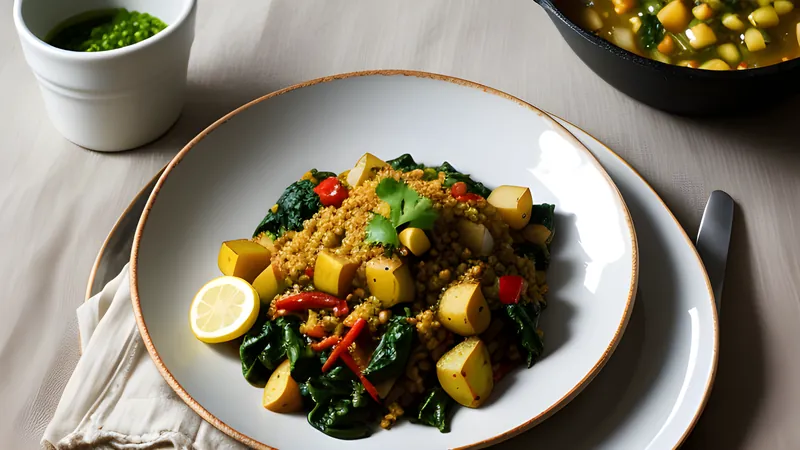
↓ Jump to recipeSag aloo is the dish that taught me most about what usually goes wrong with home cooking: two ingredients, both easy, ruined at the same time by the same mistake. Spinach overcooks in seconds and turns to khaki sludge; potato takes an age and stubbornly refuses to crisp when it is buried in wet greens. Cook them together from the start, as most quick recipes tell you to, and you get a grey, watery, well-meaning mush. Cook them apart and bring them together at the very end, and you get the version I first fell for in a Bradford cafe, with distinct golden potatoes and glossy green spinach that still tastes of itself.
Sag Aloo with Mustard Seed
Ingredients
- 500g waxy potatoes (Charlotte or similar), cut into 2cm cubes
- 400g fresh spinach, washed, or 250g frozen leaf spinach, thawed and squeezed dry
- 3 tbsp neutral oil or ghee
- 1 tsp black or brown mustard seeds
- 1 tsp cumin seeds
- 1 dried red chilli, broken
- 1 medium onion, finely sliced
- 3 garlic cloves, finely chopped
- 2cm fresh ginger, grated
- 1 green chilli, finely chopped (optional)
- 0.5 tsp ground turmeric
- 1 tsp ground coriander
- 1 tsp kasoori methi (dried fenugreek leaves)
- 1 tsp salt, plus more to taste
- Juice of half a lemon
Method
- Boil the cubed potatoes in well-salted water for 6 to 7 minutes until just tender at the edges but still firm in the centre, then drain well and leave to steam-dry for 5 minutes.
- Heat 2 tbsp of the oil in a large frying pan over medium-high heat and fry the drained potatoes until golden and crisp on several sides, about 8 minutes. Lift out and set aside.
- Add the last tbsp of oil to the pan and, when hot, add the mustard seeds, cumin seeds and dried chilli. When the mustard seeds pop, add the onion and fry for 8 minutes until soft and golden.
- Stir in the garlic, ginger and green chilli, cook for 2 minutes, then add the turmeric and ground coriander and cook for 30 seconds until fragrant. Add the spinach a handful at a time, letting each wilt before adding more.
- Return the crisp potatoes to the pan, add the salt, and toss gently over the heat for 3 to 4 minutes to bring everything together. Crush the kasoori methi between your palms over the pan, add the lemon juice, taste for salt and serve.
Sag, saag, and what the words actually mean
Sag (also spelled saag) simply means leafy greens in several North Indian and Pakistani languages, and aloo means potato, so sag aloo is greens and potatoes, no more mysterious than that. In Punjab, the heartland of the dish, the classic sarson ka saag is made with mustard greens rather than spinach, slow-cooked for hours into a thick, almost buttery purée and served with cornmeal flatbread. The spinach version that dominates British curry houses is a faster, brighter cousin, and it became a fixture here partly because spinach is far easier to buy year-round than mustard greens.
That curry-house version has its own integrity when it is made well, and its defining quality is that the two elements stay separate: recognisable pieces of crisp-edged potato lifted through a tangle of green, seasoned spinach. The dish sits on the vegetable side of a big Indian spread, next to the dals and the drier curries, doing the quiet job of soaking up sauce and giving the plate texture. Made carelessly it is the beige afterthought of the takeaway menu; made with attention it is often the thing I go back to first.
The two things that make or break it
The first rule is to keep the potato and the spinach apart until the end. Boil the potatoes until only just tender, then fry them separately until they crisp and colour, so they hold their shape and pick up a golden crust. If they go into the wet spinach still soft, they collapse and the whole dish turns to paste. The second rule is to treat the spinach with a light hand. Fresh spinach needs only to wilt, a minute or two, added in handfuls so the pan never floods; the moment it collapses and turns glossy dark green, it is done. Cook it longer and it weeps water, goes drab, and loses the fresh vegetal note that is the point of using it.
If you use frozen spinach, which is genuinely good here and often more convenient, thaw it fully and then squeeze it hard in your hands or in a clean tea towel to wring out as much water as you can. Frozen spinach carries an astonishing amount of liquid, and skip this step and your pan turns into a puddle that boils the potatoes soft again. A well-squeezed ball of frozen spinach behaves almost like a fresh wilt and saves a good deal of washing.
The tarka, and my dried-fenugreek twist
The soul of the dish is the tarka, or tempering: whole spices bloomed in hot fat to release their aroma before anything else joins the pan. Mustard seeds are essential here and behave in a specific way, popping and turning nutty and faintly bitter when they hit hot oil, which is why you wait for them to crackle before adding the onion. Cumin seeds go in alongside for warmth, and a broken dried red chilli lends a background heat that infuses the oil. Get this stage right and the whole dish is built on a foundation of proper, layered spice rather than raw powder stirred in at the end.
My one small twist is a pinch of kasoori methi, dried fenugreek leaves, crushed between the palms and scattered in right at the finish. This is the ingredient that gives so many good curries their distinctive, slightly savoury, almost maple-and-hay aroma, and most home cooks have never heard of it. Added at the end so its fragrance survives, it makes a simple spinach-and-potato side smell unmistakably like a proper curry house. A squeeze of lemon at the very end lifts everything and stops the dish tasting flat, the acidity doing for the spinach what it does for almost every cooked green.
Method, step by step
Cut the potatoes into two-centimetre cubes and boil them in well-salted water for six or seven minutes, until the edges are tender but the centres still have some bite. Drain thoroughly and let them steam-dry in the colander for five minutes; dry potatoes crisp, wet ones steam. Heat two tablespoons of oil in a large frying pan over medium-high heat and fry the potatoes until they are golden and crisp on several sides, around eight minutes, turning them now and then. Lift them out onto a plate and set aside.
Add the last tablespoon of oil to the pan and, once it is properly hot, tip in the mustard seeds, cumin seeds and broken dried chilli. Stand back a little, because the mustard seeds will pop and jump. When the popping settles, add the sliced onion and fry for around eight minutes until soft and golden at the edges. Stir in the garlic, ginger and green chilli if using, cook for two minutes until the raw smell goes, then add the turmeric and ground coriander and cook for thirty seconds, just until fragrant, so the ground spices toast without burning.
Now add the spinach a handful at a time, letting each batch wilt down before adding the next, so the pan never floods. Once all the spinach is wilted and glossy, return the crisp potatoes, add the salt, and toss everything together gently over the heat for three or four minutes, so the potatoes warm through and take on the spice without breaking up. Crush the kasoori methi between your palms as you scatter it over, squeeze in the lemon juice, taste for salt, and serve.
What can go wrong
Watery sag aloo means too much liquid in the pan, usually from unsqueezed frozen spinach or from covering the pan while the spinach cooks; keep it open so steam escapes. Mushy potatoes mean they were boiled too far before frying, or added while still soft, so err on the firm side when you boil them. Bitter, harsh spice means the ground turmeric and coriander caught and burnt, which happens fast; add a splash of water the moment they go in if your pan runs very hot, and keep the ground spices to their thirty seconds.
Storage, make-ahead and variations
Sag aloo reheats well and arguably improves overnight as the spices settle, which makes it a good dish to cook ahead for a bigger meal; keep it in the fridge for up to three days and reheat gently in a pan with a splash of water. It freezes acceptably, though the potatoes soften a little on thawing.
This is built to sit alongside a bigger Indian spread, and it is a natural partner to a whole roasted brassica such as my whole roasted cauliflower with green tahini when you want two vegetable-forward dishes that both lean on spice and char. If you love the greens-and-dairy idea in a gentler European register, creamed spinach with nutmeg and Parmesan is the same leaf handled entirely differently and worth comparing side by side. For a richer version, stir a spoonful of cream or a knob of butter through at the end for a sag that edges towards palak; for more heft, add a tin of drained chickpeas with the potatoes to turn it into a main.
Related Content