Saag Paneer with Fenugreek
Silky spiced spinach and golden paneer
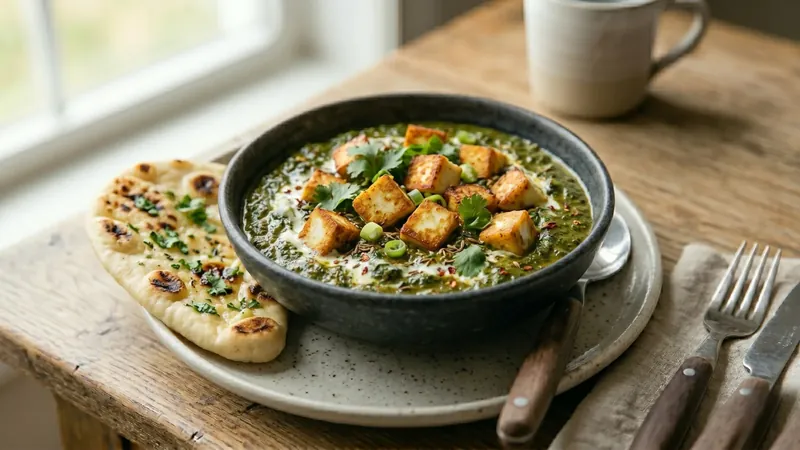
Saag paneer is the comfort dish of British curry houses for good reason: soft cubes of fresh cheese in a silky, deep-green spinach sauce. The twist here is two-fold. First, the paneer is pan-fried until golden and slightly crisp before it goes in, so it holds its shape and tastes nuttier. Second, a generous crumble of dried fenugreek leaves (kasuri methi) lends the savoury, faintly maple-like aroma that lifts the whole dish out of the ordinary.
Saag Paneer with Fenugreek
Ingredients
- 400g paneer, cut into 2cm cubes
- 500g spinach, washed (or 400g frozen leaf spinach, thawed)
- 3 tbsp ghee or vegetable oil
- 1 large onion, finely chopped
- 3 garlic cloves, finely chopped
- 1 tbsp grated fresh ginger
- 1 green chilli, finely chopped
- 1 tsp ground cumin
- 1 tsp ground coriander
- 0.5 tsp ground turmeric
- 0.5 tsp garam masala
- 1 tbsp dried fenugreek leaves (kasuri methi)
- 100ml double cream or natural yoghurt
- Salt, to taste
Method
- Wilt the fresh spinach in a dry pan or a splash of water until collapsed, then drain well and squeeze out excess liquid; blitz to a coarse puree.
- Heat 1 tbsp ghee in a frying pan and fry the paneer cubes over medium-high heat until golden on several sides, then set aside.
- Add the remaining 2 tbsp ghee to a wide pan and cook the onion gently for 8-10 minutes until soft and lightly browned.
- Stir in the garlic, ginger and green chilli and cook for 2 minutes until fragrant.
- Add the cumin, coriander, turmeric and garam masala and toast in the fat for 30 seconds.
- Stir through the spinach puree and a splash of water, then simmer gently for 5 minutes.
- Crumble in the dried fenugreek leaves between your palms and stir through.
- Add the cream or yoghurt and the fried paneer, warm through for 3-4 minutes, and season with salt to taste.
3 The Story
The word saag simply means leafy greens, and across northern India and Pakistan it covers a far wider field than spinach alone — mustard greens, fenugreek leaves, amaranth and more, often combined. The famous Punjabi dish sarson ka saag is built on mustard greens and eaten with cornmeal flatbread. When the green in question is spinach specifically, the dish is more precisely palak paneer; on British menus the two names are often used interchangeably, with saag paneer becoming the catch-all.
Paneer is the hero. It is a fresh, non-melting cheese made by curdling hot milk with an acid such as lemon juice or vinegar, then pressing the curds. Because it contains no rennet and is not aged, it is quick to make and entirely vegetarian, which helps explain its ubiquity in a cuisine with a large vegetarian population. Its mild, milky flavour and firm, springy texture make it a sponge for spice, and unlike most cheeses it keeps its shape when cooked, holding together in a simmering sauce rather than melting away.
Frying the paneer first, the small twist here, is a technique many home cooks swear by. A quick sear in hot fat builds a golden, faintly crisp surface, deepens the flavour through browning, and firms the cubes so they stay distinct in the sauce. Some cooks soak the fried cheese briefly in warm water afterwards to soften it again; that is a matter of preference.
The other defining touch is kasuri methi, dried fenugreek leaves. Toasted gently and crumbled in near the end, they release a distinctive savoury, slightly bitter and almost maple-sweet aroma that is hard to mistake and harder to replace. It is the ingredient that often separates a home curry from a restaurant one. Spinach brings the body and colour, the onion-ginger-garlic base brings depth, and a little cream or yoghurt rounds everything into the smooth, generous sauce the dish is loved for.
Related Content