Rum Baba Soaked in Syrup
A featherlight yeast cake drunk on warm rum syrup
Contents
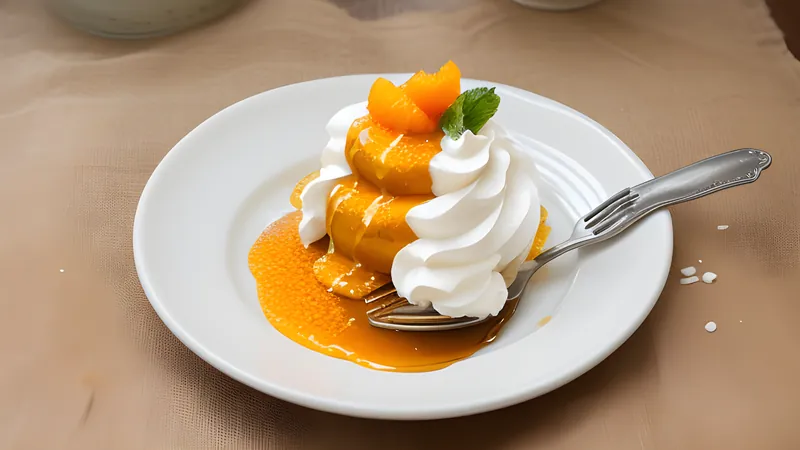
↓ Jump to recipeA rum baba is a cake that has given up all pretence of being cake. Bake the little yeasted sponges and they come out light, dry, faintly bready and, frankly, dull. The whole point arrives afterwards, when you sit them in a pan of warm, spiced, rum-laced syrup and watch them drink. They swell, darken and grow heavy, until a fork slides in with no resistance and each mouthful releases a small flood of boozy syrup. Done right, a baba trembles when you set it down. It is one of the few desserts where the plain version is merely the delivery mechanism, and the transformation is the recipe.
An accident with stale kugelhopf
The origin story is a good one and mostly holds up. In the early eighteenth century, Stanisław Leszczyński, the deposed King of Poland and father-in-law to Louis XV, was living in exile in Lorraine. The story runs that he found the local kugelhopf, a rich Alsatian yeast cake, too dry for his taste, and had it soaked in sweetened wine, or in some tellings, sprinkled with rum and set alight. Delighted, he supposedly named it after Ali Baba, the hero of the Thousand and One Nights he was reading at the time, and the name shortened to baba.
Whatever the truth of the christening, the dessert was carried to Paris by the king’s exiled court and refined there. It was the celebrated Parisian pâtissier Nicolas Stohrer, who had trained in Leszczyński’s kitchen and opened his own shop in 1730, that turned the soaked cake into a professional pastry, eventually settling on rum as the spirit of choice. Stohrer’s shop still stands on the rue Montorgueil, and it still sells babas. The Neapolitans took the dessert to their hearts too, so thoroughly that babà is now considered a Naples speciality, sold on every corner alongside the sfogliatella. A cake with a Polish king, a French pâtissier and an Italian second home is a well-travelled thing.
Rum Baba Soaked in Syrup
Ingredients
- 80g unsalted butter
- 250g strong white bread flour
- 7g fast-action dried yeast
- 30g caster sugar
- 0.5 tsp fine salt
- 3 medium eggs, beaten
- 60ml whole milk, lukewarm
- 300g caster sugar (for the syrup)
- 500ml water
- 1 orange, zest in strips plus its juice
- 1 vanilla pod, split
- 1 cinnamon stick
- 120ml dark rum, plus 2 tbsp to finish
- 150ml double cream, whipped, to serve
- 2 tbsp apricot jam, warmed, to glaze
Method
- Melt the butter in a small pan and cook over a medium heat until it foams, smells nutty and the milk solids turn golden-brown. Cool to lukewarm.
- Combine the flour, yeast, 30g sugar and salt. Add the eggs and lukewarm milk and beat hard for 8 to 10 minutes until the dough is smooth, glossy and elastic.
- Beat in the browned butter a little at a time until fully absorbed and the dough is soft and shiny. Cover and prove for 1 hour until doubled.
- Knock back gently and divide between 8 greased dariole moulds or a savarin tin, filling each halfway. Prove again for 30 minutes until the dough reaches the rims.
- Bake at 190C fan for 20 to 25 minutes until deep golden and hollow-sounding. Turn out onto a rack and cool for 10 minutes.
- For the syrup, simmer the 300g sugar, water, orange zest and juice, vanilla pod and cinnamon for 5 minutes. Off the heat, stir in the 120ml rum.
- Sit the warm babas in the warm syrup and spoon it over, turning, for 10 to 15 minutes until each is fully soaked and heavy. Lift out to drain.
- Brush with warmed apricot jam and a final teaspoon of neat rum. Serve with whipped cream and any remaining syrup.
Building the structure
A baba is essentially an enriched brioche dough, and the same rules apply: it must be beaten long and hard to develop the gluten before the butter goes in. Beat the flour, yeast, sugar, salt, eggs and milk for a full eight to ten minutes, by machine or by a determined arm, until the dough is smooth, glossy and stretches into a windowpane. Only then beat in the browned butter, a spoonful at a time, waiting for each to disappear before adding more. Rush it and the butter sits in greasy streaks; take your time and you get a satin, elastic dough that proves into an airy, open crumb. That open, holey structure is exactly what you want, because those holes are where the syrup will lodge.
Dariole moulds give you the classic tall, crowned individual babas; a ring-shaped savarin tin gives you the larger savarin, a close relative traditionally soaked in kirsch and filled with cream and fruit. Fill the moulds only halfway, because this dough rises with real enthusiasm, and prove until it reaches the rims.
The soak is everything
Bake the babas until deep golden and hollow-sounding, then let them cool for ten minutes so they firm up enough to handle without collapsing. Meanwhile make the syrup: sugar, water, strips of orange zest, its juice, a split vanilla pod and a cinnamon stick, simmered for five minutes, then the rum stirred in off the heat so its perfume survives. Warm baba, warm syrup is the rule, because a warm, slightly dry sponge is thirsty and drinks fast and evenly, where a cold baba soaks reluctantly and unevenly.
Sit the babas in the syrup and turn them, spooning it over, for a good ten to fifteen minutes. They should grow visibly heavier and darker, and when you lift one it should feel saturated and yielding, on the edge of falling apart. Drain them, brush with warm apricot jam for shine and a fruity edge, and finish each with a teaspoon of neat rum brushed on cold, which sits bright and sharp on top of the mellow soaked syrup underneath. Serve with softly whipped cream and a little extra syrup spooned around.
Getting ahead and keeping
The baked, unsoaked babas keep for two days in a tin and in fact soak better when a day old and slightly dry, so baking ahead is a genuine advantage. The syrup keeps a week in the fridge. Soak them on the day you serve; a soaked baba will keep a day covered in the fridge but is at its trembling best within a few hours. They freeze well unsoaked, ready to be revived and drenched whenever the occasion calls.
Substitutions and variations
Dark rum is traditional and gives the deepest flavour; a good aged rum is worth the difference here, since it carries the whole dessert. Kirsch turns this into a proper savarin, and Armagnac or a dark spiced rum both work beautifully. For a non-alcoholic version, replace the rum in the syrup with strong orange juice and a splash of vanilla, and skip the final brushing; you lose the boozy heat and keep the fragrant, syrup-heavy pleasure. Fill a ring savarin with whipped cream and macerated berries for a showpiece, or spoon a little Marsala zabaglione into the centre for a doubly Italian version. A scrape of orange zest through the cream, echoing the citrus and candied peel of a cannolo, ties a Neapolitan dessert table together.
Where babas go wrong
The classic disaster is a dense baba, and it always traces back to the dough: under-beaten before the butter, or butter beaten in too fast, gives a tight, greasy crumb that cannot drink syrup. Beat long, add the butter slowly, and prove properly. The second fault is soaking a cold baba in cold syrup, which floats stubbornly and soaks unevenly, leaving a dry core; keep both warm. And the third is timidity with the soak, pulling the babas out while still springy. A baba should be heavy, glistening and barely holding together. Soak it until you are slightly nervous, and you will have got it exactly right.
Related Content