Rough Puff Pastry: A Cheat's Lamination That Actually Works
All the flake, none of the all-day folding
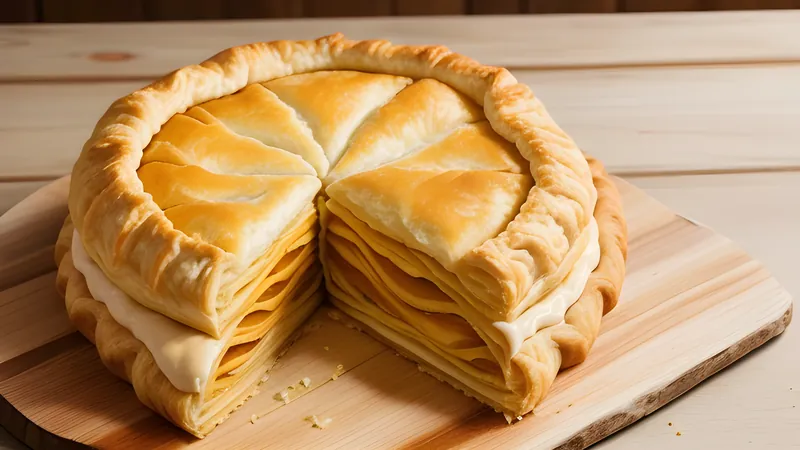
Rough Puff Pastry: A Cheat's Lamination That Actually Works
Ingredients
- 250g plain flour, plus extra for dusting
- 0.5 tsp fine salt
- 250g cold unsalted butter, cut into 1cm cubes
- 120ml ice-cold water
- 1 tsp lemon juice or cider vinegar
Method
- Whisk the flour and salt together in a wide bowl and add the cold cubed butter, tossing to coat each piece without rubbing it in.
- Mix the lemon juice into the ice-cold water, then add to the bowl and bring together with a knife until a shaggy, lumpy dough forms with visible butter.
- Tip onto a floured surface and pat into a rough rectangle, then roll out to roughly 40cm by 15cm.
- Fold the dough in thirds like a letter, give it a quarter turn, and roll out again to the same size.
- Repeat the roll and fold three more times, chilling for 20 minutes if the butter starts to soften or smear.
- Wrap the finished block and rest in the fridge for at least 30 minutes before using.
- Roll, cut and bake as your recipe directs, always starting in a hot oven of at least 200C fan.
There is a particular kind of kitchen smugness that comes from pulling a tray of homemade puff pastry out of the oven, watching it rise into golden, shattering leaves, and knowing you never once made a proper butter block. Classic puff pastry is a beautiful thing, but it is also an all-day commitment involving a slab of beaten butter, a carefully wrapped dough envelope and a lot of nervous resting between turns. Rough puff is the honest weeknight cousin: less ceremony, almost as much flake, and absolutely good enough for a galette, a sausage roll or the lid of a pie.
1 Why Rough Puff Works
Proper lamination relies on building hundreds of paper-thin alternating layers of butter and dough. When that hits a hot oven, the water in the butter turns to steam, the layers are forced apart, and the pastry puffs. Rough puff cheats the geometry. Instead of one neat sheet of butter folded over and over, you start with the butter in rough cubes scattered through the flour. As you roll and fold, those lumps streak and smear into ragged sheets. The layers are messier and less even, so the rise is a little wilder and a little lower, but it is unmistakably puff pastry rather than shortcrust.
The clever twist here is not an ingredient, it is restraint. The single most common mistake is overworking the dough into something smooth and uniform. You actually want to see marbled streaks of butter through the block right up until it goes in the oven. Those visible seams are your future flakes. If your dough looks tidy, you have gone too far.
2 The Method, Step by Step
Keep everything cold. Cut your butter into 1cm cubes and chill them hard, ideally for fifteen minutes in the freezer before you start. Whisk the flour and salt in a wide bowl, then add the butter and toss so every cube is dusted in flour. Do not rub it in. The point is to keep the cubes whole and distinct.
Mix the lemon juice or vinegar into ice-cold water. That splash of acid relaxes the gluten slightly, which makes the dough easier to roll without springing back and shrinking. Add the liquid and bring it together with a table knife until you have a rough, lumpy mass. It will look alarming and underhydrated. Trust it.
Tip the shaggy dough onto a floured surface and pat it into a rectangle. Now roll it out long and thin, roughly 40cm by 15cm, then fold it in thirds like a business letter. Give it a quarter turn so the open edge faces you, and roll out again. Repeat this roll-and-fold sequence four or five times in total. By the third turn the dough will have transformed from a crumbly heap into a cohesive, marbled block. If at any point the butter starts to soften, melt or push through the surface, wrap the dough and chill it for twenty minutes before carrying on. Warm butter is the enemy of layers.
Once you have done your turns, wrap the block and rest it in the fridge for at least half an hour, or up to two days. This relaxes the gluten and re-firms the butter so the pastry rolls cleanly and bakes tall.
3 Baking and Getting the Best Rise
Rough puff needs a hot, confident oven. Anything below 200C fan and the butter melts and leaks out before the steam can lift the layers, leaving you with greasy, sunken pastry. Roll the chilled dough to about 3 to 4mm, cut your shapes with a sharp knife or a floured cutter, and resist the urge to twist as you cut, since a clean downward press keeps the cut edges open and free to rise. A bashed or sealed edge will lift unevenly.
An egg wash gives that glossy, deep-bronze finish, but keep it off the cut sides for the same reason. Chill the cut pastry for ten minutes before baking to firm everything back up, and it will reward you with proper height.
4 How to Use It
This recipe makes enough for a generous galette, a batch of sausage rolls, or a pie lid with a little to spare. It freezes beautifully, either as a block or as cut shapes laid flat on a tray, so it is worth doubling the quantity and squirrelling some away. Roll offcuts into a spiral with cinnamon sugar for instant palmiers rather than re-rolling them into something tough.
The strong opinion I will leave you with is this: do not buy the block stuff out of habit once you have made this. Shop-bought puff is fine, but it almost always uses vegetable shortening rather than real butter, and the difference in flavour is enormous. Twenty-five minutes of unhurried rolling, most of it spent waiting for the fridge to do its job, buys you pastry that tastes of actual butter. That is a trade worth making.
Related Content