Ropa Vieja: Cuban Braised Shredded Beef
Old clothes, tender beef and a sofrito that sings
Contents
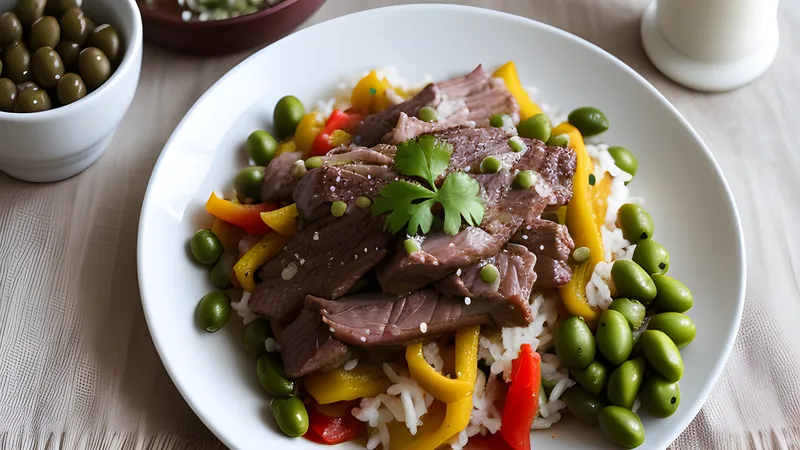
↓ Jump to recipeRopa vieja means “old clothes”, and the name has spawned a small library of folk tales. My favourite is the tender one: a poor man with no money to feed his family shredded and cooked his own worn-out clothes, and through the power of his love the rags turned into a rich meat stew. It is a good story to tell over the pot, because the dish really does look like a heap of soft, tattered fabric, strands of braised beef tangled in a red pepper sauce. It is the national dish of Cuba and one of the great one-pot suppers of the Caribbean.
The soul of ropa vieja is its sofrito, the slow-cooked base of onion, peppers and garlic that carries the flavour. My twist lives right there: a splash of dry sherry to deglaze, and a spoon of smoked paprika folded in with the spices. Neither is strictly traditional, though both nod to the dish’s deep Spanish roots, and together they give the sauce a warmth and a faint smokiness that lifts it above the standard tomato braise.
Ropa Vieja: Cuban Braised Shredded Beef
Ingredients
- 1kg beef flank or skirt, in large pieces
- 1.5 tsp fine salt
- 3 tbsp olive oil
- 1 onion, sliced
- 1 red pepper, sliced
- 1 green pepper, sliced
- 5 garlic cloves, sliced
- 1 tbsp tomato purée
- 1 tsp ground cumin
- 1 tsp smoked paprika
- 1 tsp dried oregano
- 1 bay leaf
- 400g tin chopped tomatoes
- 60ml dry sherry
- 500ml beef stock
- 80g pitted green olives, halved
- 1 tbsp capers, drained
- 1/2 tsp freshly ground black pepper
- 2 tbsp chopped flat-leaf parsley, to finish
Method
- Season the beef with 1 tsp of the salt. Brown it hard in 1 tbsp oil in a heavy pot on all sides, then remove.
- Add the remaining oil and soften the onion, peppers and garlic for 10 minutes until sweet.
- Stir in tomato purée, cumin, smoked paprika, oregano and remaining salt and cook for 2 minutes.
- Pour in the sherry to deglaze, scraping the pot, then add tomatoes, stock and bay.
- Return the beef, cover, and braise at 150C for 2.5 to 3 hours until it shreds easily.
- Lift out the beef and shred it into strands with two forks.
- Reduce the sauce on the hob for 10 minutes, then stir the beef back in with olives, capers and black pepper.
- Simmer 5 minutes, scatter with parsley, and serve with rice, black beans and fried plantain.
Spain, Cuba and the journey of a name
Ropa vieja did not begin in Havana. It traces back to the Sephardic Jewish communities of medieval Spain, particularly the Canary Islands and Andalusia, where cooks braised meat, often the remains of a chickpea stew, then shredded and refried it to stretch a little further. Frugality was the mother of the dish; a Friday’s leftover meat became Saturday’s supper, transformed enough to feel new.
The recipe crossed the Atlantic with Spanish settlers and found its true home in Cuba, where local peppers, tomatoes, cumin and olives shaped it into the version we know. It spread across the Spanish Caribbean and into Central America, with each place tweaking the seasoning. What stayed constant everywhere was the principle: tough, cheap beef braised until it collapses, then shredded and bound in a savoury sauce. It belongs to the same great family of long-braised shredded beef as barbacoa de res with consommé, though the flavours pull in completely different directions.
The cut: flank, and why it shreds so beautifully
Cuban cooks use falda, flank steak, and it is the ideal cut for this. Flank is a long, flat muscle with pronounced fibres running in one clear direction, so when it is braised soft it pulls apart into long, elegant strands, the “old clothes” of the name. Skirt steak works just as well and is often cheaper. Both have enough connective tissue to stay moist over a long braise and enough beefy flavour to stand up to the assertive sauce.
Do not reach for a lean cut like topside; it will shred into dry threads. Season the beef and brown it hard before anything else. A deep crust on the meat builds the fond in the bottom of the pot, and that browned residue, dissolved later by the sherry and tomato, is a layer of flavour you cannot get any other way.
Building the sofrito
Take your time here, because a rushed sofrito makes a thin dish. After browning the beef, soften the sliced onion, red and green peppers and garlic in the same pot over a gentle heat for a full ten minutes, until everything is limp and sweet and just starting to catch colour. This slow sweat draws out the sugars and is the flavour engine of the whole braise, the same patient move that underpins so much Latin cooking.
Stir in tomato purée, cumin, oregano and my smoked paprika, and let them fry for a couple of minutes so the spices bloom in the oil and the tomato purée loses its raw tinny edge. Then pour in the sherry and scrape hard at the bottom of the pot; you will feel the fond lift and dissolve into the sauce. Add the tinned tomatoes, stock and bay, and you have your braising liquid.
The braise and the finish
Return the beef, cover, and braise low at 150C for two and a half to three hours. Keep it at a whisper of a simmer; a hard boil will make the meat seize and toughen before it tenderises. It is ready when a piece pulls apart with almost no effort.
Lift the beef out and shred it into long strands with two forks. Meanwhile, reduce the sauce on the hob for ten minutes to concentrate it and thicken it slightly, then return the shredded beef along with halved green olives, capers and a good grind of black pepper. The olives and capers are essential, bringing a briny, tangy sharpness that keeps the rich sauce from feeling heavy. Simmer for five minutes so the flavours marry, scatter with parsley, and it is done.
What to serve it with
Ropa vieja is built to sit on rice. The classic Cuban plate is ropa vieja with white rice, black beans and sweet fried plantain, the trio of textures and sweetness that balances the savoury beef. If you want to make the rice the star, a saffron-scented arroz con pollo with sofrito and peas shares the same sofrito DNA and rounds out a Cuban feast handsomely. A wedge of lime and a cold beer complete the picture.
The role of the olives, and a note on peppers
Do not skip the olives and capers thinking they are a garnish. In a dish this rich, they are the seasoning that stops it cloying, threading a salty, sour brightness through every forkful. Use good manzanilla olives with a firm flesh rather than the soft black kind, and if you like, a spoonful of the olive brine stirred in at the end sharpens things further. The capers add a floral, mustardy tang that plays off the smoked paprika beautifully.
On the peppers, I use one red and one green on purpose. The green pepper brings a slightly bitter, grassy note that is very Cuban and keeps the sofrito from turning too sweet, while the red pepper adds body and colour. If you can find Cuban or cubanelle peppers, use those; they are milder and sweeter than a bell pepper and closer to the original. Slice them into strips rather than dicing, so they stay recognisable in the finished dish and echo the strands of beef.
Tips, make-ahead and variations
Like most braises, ropa vieja improves overnight. Make it a day ahead, cool it, and the flavours settle and deepen; reheat gently with a splash of stock if the sauce has tightened too much. It freezes well for up to three months, though I would add the olives and capers fresh on reheating so they keep their bite.
A few things that go wrong. If the beef is dry, you used too lean a cut or boiled it too fast, so keep the heat low and stick to flank or skirt. If the sauce is watery, you did not reduce it enough after shredding, so give it more time on the hob. If it tastes flat, it likely needs salt and a squeeze more acid; a splash of sherry vinegar at the end wakes the whole pot up.
For variations, some cooks add a handful of peas and strips of pimiento at the end for colour, and a few splash in a little white wine in place of the sherry. A Puerto Rican cousin leans on sofrito and sazón and often includes potatoes. Make it your own, but keep the three pillars intact: a slow sofrito, a properly braised shredding cut, and the briny lift of olives and capers. Get those right and the old clothes come out looking like a feast.
Related Content