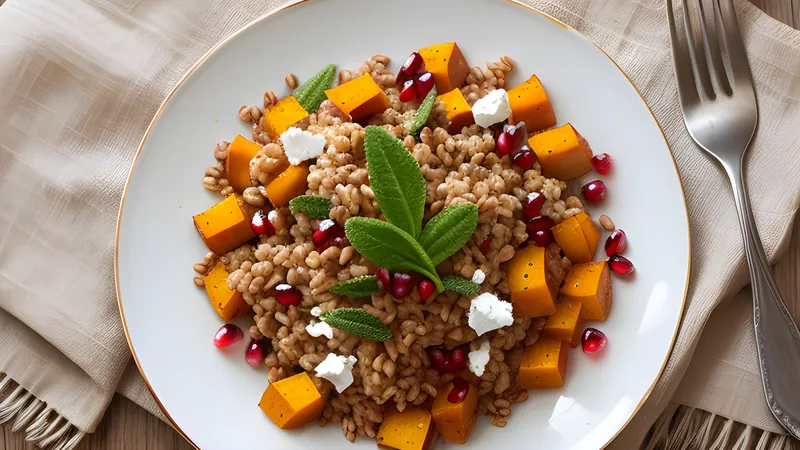
Roasted Squash, Farro and Pomegranate
A warm autumn grain salad lifted by a brown-butter and sage dressing
Contents
↓ Jump to recipeA grain salad can slide into worthy dullness faster than almost any other dish, a bowl of cold farro that tastes mainly of the fridge. This one stays on the right side of the line by leaning on contrast: sweet caramelised squash, sharp pomegranate, salty feta and chewy grain. The move that pulls it all together is a brown-butter and sage dressing poured on warm, so the nutty butter soaks into the farro and gives the whole bowl a savoury richness that a plain vinaigrette can only dream of.
Roasted Squash, Farro and Pomegranate
Ingredients
- 200g pearled farro
- 1 medium butternut or crown prince squash (about 900g), peeled and cut into 3cm pieces
- 3 tbsp olive oil
- 1 tsp ground cumin
- 1/2 tsp chilli flakes
- Salt and black pepper
- 60g unsalted butter
- 10 sage leaves
- 2 tbsp red wine vinegar
- 1 tsp runny honey
- Seeds of 1 pomegranate (about 120g)
- 80g feta, crumbled
- 50g pumpkin seeds
- A large handful of flat-leaf parsley, roughly chopped
- A handful of mint leaves, torn
Method
- Rinse the farro and simmer in plenty of salted water for 25 to 30 minutes until tender with a little chew. Drain well and tip into a large bowl.
- Meanwhile, heat the oven to 220°C fan. Toss the squash with the olive oil, cumin, chilli flakes, 1 tsp salt and plenty of pepper. Spread out on a tray in a single layer and roast for 30 to 35 minutes, turning once, until caramelised at the edges.
- Toast the pumpkin seeds in a dry pan for 2 to 3 minutes until they pop and colour, then set aside.
- For the dressing, melt the butter in a small pan over a medium heat. Add the sage and cook, swirling, for 3 to 4 minutes until the butter smells nutty and turns golden-brown and the sage crisps.
- Off the heat, whisk the red wine vinegar and honey into the warm brown butter with a pinch of salt; it will sizzle and emulsify.
- Pour the warm dressing over the drained farro and toss, then fold through the roasted squash, most of the pomegranate seeds, the herbs and half the feta.
- Tip onto a platter and finish with the remaining pomegranate, feta, the crisp sage leaves and the toasted pumpkin seeds.
The Story
Farro is one of the oldest cultivated grains in the Western diet, a name that in Italy covers three related hulled wheats: einkorn, emmer and spelt, with emmer (farro medio) the type most often sold simply as farro. It fed the Roman legions as a staple ration and gave its name to farina, and it survived into the modern day chiefly in central Italy, in Tuscany, Umbria and the Garfagnana, where it never fell out of favour even as more productive modern wheats took over elsewhere. Its recent popularity beyond Italy owes a lot to the appetite for grains that keep some texture and character rather than cooking down to mush, which is exactly what farro does.
Pomegranate carries the dish’s other half of history. Native to the region stretching from Iran to northern India, it has been a fixture of Persian and Levantine cooking for millennia, prized for the sharp, ruby seeds and the molasses cooked down from their juice. The pairing of a sweet roasted vegetable, a tart pomegranate and a salty cheese is straight out of the eastern Mediterranean playbook, where sweet-and-sour combinations do the work that a rich sauce might do in a French kitchen. This salad borrows an Italian grain and dresses it in that Levantine spirit, which is why it works across the seasons and suits so many tables.
Squash and pumpkin belong to the Americas, arriving in Europe only after the Columbian exchange, but they took to Mediterranean and Middle Eastern cooking so readily that it is easy to forget they are relative newcomers. Their dense, sweet flesh caramelises beautifully under high heat, and a firm-fleshed variety such as crown prince or a good butternut gives you pieces that hold their shape and edges rather than collapsing into purée.
The brown-butter twist
Browning butter is one of the quiet miracles of the kitchen. As butter heats past its melting point the water boils off and the milk solids left behind toast and turn golden, developing a deep, nutty, almost caramel aroma through the same Maillard browning that gives roasted meat and toast their savour. Cooking a few sage leaves in it at the same time does two jobs at once: the leaves crisp into a garnish and their earthy, slightly medicinal flavour infuses the butter, giving you a dressing base that tastes of far more than fat.
Turning that brown butter into a dressing is a matter of whisking in an acid while it is still warm, which the vinegar and honey do here, cutting the richness and helping it cling to the grain. Pouring it over the farro warm is what makes the difference: warm grains drink up a warm dressing, so the flavour goes right through the bowl instead of sitting on the surface. Watch the butter closely once it starts to colour, because it moves quickly from golden and nutty to dark and burnt, and burnt butter tastes acrid rather than rich.
Getting the components right
Cook the farro in plenty of salted water like pasta, and drain it well; grains left sodden will dilute the dressing and turn the salad heavy. Pearled farro, which has had some of its bran removed, cooks in around 25 to 30 minutes and needs no soaking, while wholegrain farro takes longer and benefits from a soak, so check which you have bought. Taste for doneness rather than trusting the clock: you want tender grains that still give a little resistance when you bite, with no chalky core.
Roasting the squash properly is the other thing that matters. Crowd the tray and the pieces steam in their own moisture and go pale and soft; spread them in a single layer with room to breathe and they caramelise, picking up the sweet, browned edges that carry the whole dish. A hot oven, a good tablespoon or two of oil and enough space are all it takes. Cut the pieces to a roughly even size so they cook at the same rate, and resist turning them too often, since each piece needs undisturbed contact with the hot tray to colour.
What can go wrong
The most common problem is a bland, stodgy salad, and it nearly always comes from under-seasoning the grain and under-roasting the squash. Farro is a blank canvas and needs salt at every stage, in its cooking water and again in the dressing, or it drags the whole bowl towards flatness. Pale, steamed squash brings no sweetness or depth, so give it the heat and the space it needs. A squeeze of extra vinegar or lemon at the end lifts everything if it tastes muddy.
The dressing is the other danger point. Take the butter too far and it turns bitter and there is no coming back; pull it the moment the solids are the colour of a hazelnut skin and it smells nutty. If you are nervous, tip it out of the hot pan into a cool bowl as soon as it is ready to stop it cooking on residual heat. And season the finished salad while it is warm, tasting as you go, since cold dulls the palate and a bowl that seemed perfectly seasoned warm can taste timid straight from the fridge.
Storage, make-ahead and variations
This salad keeps well and travels well, which makes it a good candidate for lunchboxes and picnics. It holds for three days in the fridge, though the pomegranate softens and the sage loses its crunch, so keep a little of both back to scatter fresh over leftovers. The farro and squash can be cooked a day ahead and the salad assembled with a freshly made dressing when you want it; brown butter is best made à la minute, but it takes only minutes.
For variations, roasted beetroot or carrots stand in happily for the squash in the depths of winter, and pearl barley or spelt work in place of farro if that is what you have. Toasted walnuts or hazelnuts can join or replace the pumpkin seeds, and a handful of rocket folded through at the end turns it into more of a leafy plate. If you like squash given the full roasting treatment, my miso-butter roasted squash leans on a savoury-sweet glaze that would suit this bowl too, and for another grain salad bright with pomegranate, my Kısır, the Turkish bulgur salad works the same sweet-sour balance with pomegranate molasses.
Related Content