No-Knead Overnight Sourdough Loaf with Roasted Garlic and Rosemary
A slow loaf, sweet with caramelised garlic
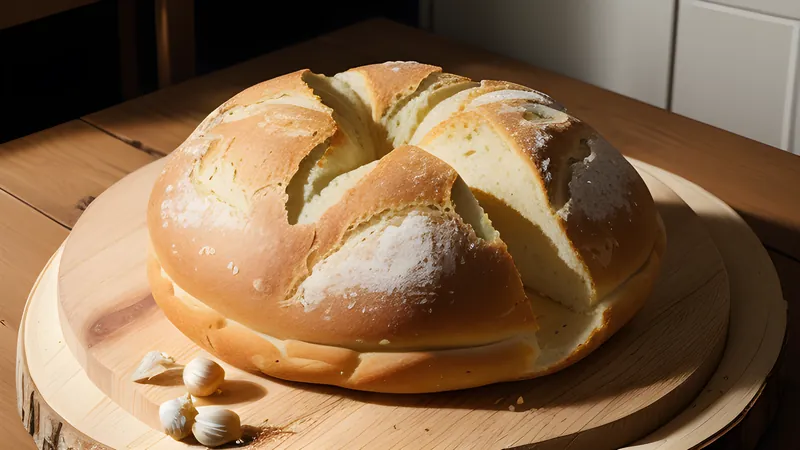
No-Knead Overnight Sourdough Loaf with Roasted Garlic and Rosemary
Ingredients
- 1 whole head of garlic
- 1 tbsp olive oil, plus extra for the garlic
- 100g active sourdough starter (bubbly, recently fed)
- 375g strong white bread flour
- 75g wholemeal or spelt flour
- 320ml water, lukewarm
- 9g fine sea salt
- 2 tbsp finely chopped fresh rosemary
- Fine semolina or rice flour, for dusting
Method
- Slice the top off the garlic head, sit it on foil, drizzle with oil, wrap and roast at 190C for 40 minutes until soft and golden. Cool, then squeeze out the cloves and mash to a paste.
- Whisk the starter into the lukewarm water until cloudy. Add both flours and mix to a shaggy dough with no dry patches. Cover and rest for 45 minutes.
- Add the salt, roasted garlic paste and chopped rosemary. Squeeze and fold the dough in the bowl until everything is evenly distributed.
- Over the next 2-3 hours, give the dough four sets of stretch-and-folds, spaced about 40 minutes apart, until it is smooth and holds its shape.
- Cover and leave to rise at room temperature until roughly 50 percent bigger and visibly puffy, 4-6 hours depending on warmth.
- Tip out, shape into a tight round, and settle seam-side up in a well-floured banneton or cloth-lined bowl. Cover and refrigerate overnight, 12-16 hours.
- Next day, put a lidded cast-iron pot in the oven and heat to 240C. Turn the cold loaf out onto baking paper and score the top deeply.
- Lower the loaf into the hot pot, cover, and bake for 25 minutes. Remove the lid and bake for a further 20-25 minutes until deep brown and hollow-sounding.
- Cool completely on a wire rack before slicing, at least an hour, so the crumb sets.
There is a particular kind of smugness that comes from pulling a sourdough loaf out of the oven, and I have learned to lean into it. This one earns the swagger honestly: a slow overnight ferment that does almost all the work for you, blistered crust, an open and chewy crumb, and tucked all the way through it the sweet, mellow hum of roasted garlic and the resinous note of rosemary. It smells, on the day you bake it, like the best decision you have made all week.
The clever twist here is not the sourdough — that part is gloriously traditional — but the garlic. Raw garlic folded into a dough would be aggressive and uneven, sharp pockets of it ambushing you slice by slice. Roasting a whole head first transforms it completely: the cloves turn soft, jammy and almost sweet, losing their bite and gaining a deep savoury richness. Mashed to a paste and worked through the dough, it perfumes the whole loaf rather than spiking it. You taste garlic in every bite, but gently, like a rumour rather than a shout.
1 Why no-knead works
No-knead bread sounds like a shortcut, and in terms of effort it is, but it is not a compromise on quality. What kneading does is develop the gluten network that gives bread its structure. Time does exactly the same thing, just more slowly. Leave a wet dough to sit and the flour hydrates fully, the gluten strands align on their own, and a few gentle stretch-and-folds along the way build all the strength you need without any of the wrestling.
The other half of the magic is the long, cold ferment in the fridge. That overnight rest is where flavour develops. The wild yeast and bacteria in your starter keep working slowly in the cold, producing the acids and aromatic compounds that give sourdough its tang and complexity. Bake the same dough straight away and you get bread; let it sit overnight and you get sourdough, with all the character that word implies.
2 Reading the dough
This is the part that intimidates people, and I want to talk you down from it. Sourdough timings in a recipe are always approximate because they depend on your starter, your flour, and the temperature of your kitchen. A warm summer afternoon will move things along quickly; a cold March evening will slow everything to a crawl.
So watch the dough, not the clock. During the bulk rise you are looking for it to grow by about half, to feel puffy and alive, and to wobble when you nudge the bowl. A few bubbles on the surface are a good sign. If your kitchen is cold and it is taking forever, do not panic — patience is rewarded here, and an under-proved loaf is far better than an over-proved one that has collapsed.
3 The bake
A preheated cast-iron pot with a lid is the single best tool for home sourdough, and I will defend that to anyone. As the loaf bakes inside it, the dough releases steam that gets trapped under the lid, keeping the crust soft and flexible just long enough for the bread to spring up dramatically. Take the lid off halfway and the trapped moisture escapes, the surface dries, and that beautiful deep-brown, crackly crust forms. Without steam you get a pale, tight loaf; with it you get oven spring and shatter.
Scoring matters too. That deep slash across the top is not decoration, though it is handsome. It gives the loaf a deliberate place to expand, so it opens cleanly along your cut rather than bursting awkwardly at a weak point on the side. Be braver with the blade than feels natural; a timid score barely opens at all.
4 Tips and variations
Roast the garlic the day before if it suits your schedule — it keeps happily in the fridge, and a head of roasted garlic is a useful thing to have around regardless.
If you do not keep a starter, this dough adapts well to a poolish made with a pinch of commercial yeast and an overnight rest; you lose the tang but keep the open crumb and the convenience. Swap the rosemary for thyme or a fistful of grated mature cheddar folded in at the same stage, and you have a different loaf entirely.
The bread is glorious fresh, but it makes the finest toast imaginable on day two, the garlic deepening overnight. Slathered with cold butter, it needs nothing else, though a poached egg never hurts. Strong opinion, freely given: this loaf is wasted on a sandwich. Eat it on its own and let it be the point.
Related Content