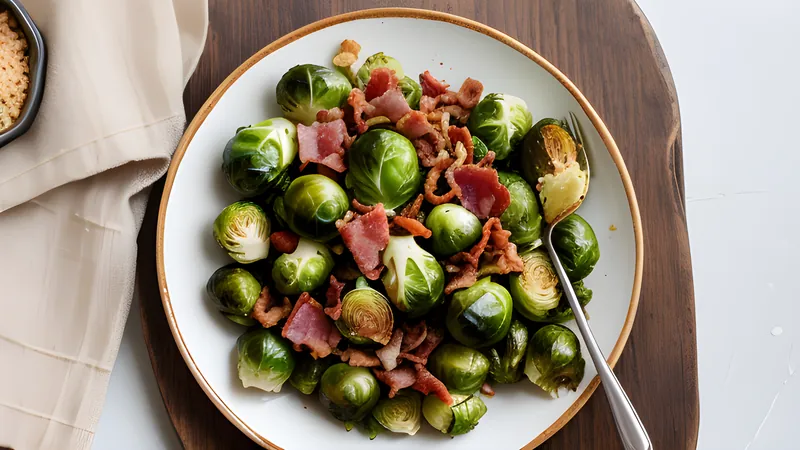
Roasted Brussels Sprouts with Bacon and Chestnut
Halved, blistered and tossed in sherry vinegar to cut the richness
Contents
↓ Jump to recipeThe Brussels sprout has spent generations as the most maligned vegetable on the British table, and almost all of that reputation was earned by a single crime: boiling. A sprout boiled to grey submission releases the sulphurous compounds that give it its schoolroom smell and its bitter, waterlogged texture, and no amount of butter afterwards can undo it. Roast the same sprout hard until the outer leaves char and the inside turns sweet and nutty, and you have a completely different vegetable, one that people who “hate sprouts” tend to eat by the handful without noticing.
Roasted Brussels Sprouts with Bacon and Chestnut
Ingredients
- 800g Brussels sprouts, trimmed and halved
- 150g smoked bacon lardons or chopped streaky bacon
- 180g cooked, peeled chestnuts, roughly broken
- 3 tbsp olive oil
- 1 tbsp butter
- 2 garlic cloves, thinly sliced
- 1 tbsp sherry vinegar
- 1 tsp runny honey or maple syrup
- 0.5 tsp sea salt flakes
- Black pepper, to taste
- Small handful flat-leaf parsley, chopped, to finish
Method
- Preheat the oven to 200C fan (220C conventional). Trim the sprouts and halve them through the root so the leaves stay attached, discarding only tatty outer leaves.
- Toss the halved sprouts with 2 tbsp of the olive oil and the salt on a large baking tray, then arrange them cut-side down in a single layer with space between them. Roast for 20 minutes without turning.
- Meanwhile, fry the bacon in the remaining oil over medium heat until the fat renders and the edges crisp, about 6 minutes. Add the garlic and chestnuts and cook for 2 minutes more until fragrant and the chestnuts begin to colour.
- After 20 minutes, add the bacon, chestnuts and all the pan fat to the sprout tray, add the butter, toss everything together, and roast for a further 8 to 10 minutes until the sprouts are deeply browned and crisp at the edges.
- Whisk the sherry vinegar with the honey, pour over the hot tray and toss immediately so it hisses and glazes. Season with black pepper, scatter with parsley, and serve at once.
Why roasting rewrites the sprout
Brussels sprouts belong to the brassica family, alongside cabbage, kale and cauliflower, and they carry the same sulphur-containing compounds that turn acrid and smelly with long, wet cooking. Boiling is the worst possible treatment: it draws those compounds out into the water and into the air, and it waterlogs the leaves so they can never brown. Dry, high heat does the opposite. It drives off moisture, caramelises the natural sugars in the leaves, and develops that deep, nutty, slightly bitter char that makes a roasted sprout taste more like a tiny roast cabbage than the boiled horror of memory.
The key is halving them and roasting them cut-side down on a hot tray with room to breathe. The flat cut face presses against the metal and caramelises into a dark, sweet crust, while the loose outer leaves that peel away crisp into something close to a vegetable crisp. Crowd the tray and they steam; give them space and they blister. This is the same principle behind almost every good roasted vegetable, and sprouts reward it more dramatically than most because they start out so easy to ruin.
Bacon and chestnut, the classic Christmas pairing
Sprouts with bacon and chestnuts is a fixture of the British Christmas table, and the pairing is no accident. The smoky salt of the bacon seasons the sprouts from within as its fat renders over them, while the chestnuts bring a soft, sweet, floury contrast that echoes the sprouts’ own nuttiness and adds a different texture to a plate that could otherwise be all crisp leaves. Cooked chestnuts, sold vacuum-packed or in jars from autumn onwards, are one of the great convenience ingredients: sweet, tender, and ready to break into a hot pan with no peeling or roasting of your own.
I render the bacon separately first, so its fat is available to toss the whole dish in and the lardons crisp properly rather than steaming among the sprouts. The garlic goes in with the chestnuts at the end of that step, sliced thin so it toasts golden and sweet rather than burning, then the whole lot joins the sprouts for the final blast in the oven.
The twist: a hit of sherry vinegar
Bacon fat, chestnut and roasted sprout is a rich, savoury, slightly sweet combination, and left there it can sit a little heavy on the plate, especially next to a roast. My fix, and the small twist that lifts this above the standard festive side, is a spoonful of sherry vinegar whisked with a little honey and thrown over the tray the moment it leaves the oven. It hits the hot fat with a hiss, half-glazes the sprouts, and cuts straight through the richness with a bright, faintly sweet acidity that makes you want the next forkful. Sherry vinegar has a rounder, more caramel note than harsh white wine vinegar, which suits the smoky, nutty flavours; balsamic works too but leans sweeter, so use less honey if you reach for it.
Method, step by step
Heat the oven to 200C fan. Trim the base of each sprout and halve it through the root, so the leaves stay attached to the little stem and the halves hold together on the tray. Peel away any loose or discoloured outer leaves, but keep the ones that fall off during trimming; scattered on the tray, they crisp into the best bits of the whole dish. Toss the halves with two tablespoons of oil and the salt, and spread them cut-side down in a single uncrowded layer. Roast for twenty minutes without turning, so the cut faces develop a proper dark crust.
While they roast, fry the bacon in the remaining oil over medium heat until the fat has rendered and the edges are crisp, around six minutes. Add the sliced garlic and the broken chestnuts, and cook for two minutes more, until the garlic is pale gold and the chestnuts have picked up a little colour. Once the sprouts have had their twenty minutes, tip the bacon, chestnuts, garlic and all the rendered fat onto the tray, add the butter, and toss everything together. Roast for another eight to ten minutes, until the sprouts are deeply browned, the loose leaves are crisp, and the chestnuts are hot through.
Whisk the sherry vinegar with the honey, then pour it over the hot tray and toss at once so it sizzles and coats everything in a light glaze. Grind over black pepper, scatter with parsley, and serve immediately, while the sprouts still have their crisp edges.
What can go wrong
Soft, pale sprouts mean a crowded tray or an oven that was not hot enough, so use two trays if you are cooking a big batch and make sure the oven is fully up to temperature before they go in. Bitter, acrid sprouts almost always mean they were overcooked or too large; choose small, tight sprouts, which are sweeter, and do not let them go past deep brown into burnt black. Soggy bacon means it was cooked among the sprouts from the start rather than rendered separately, so it never got the direct heat it needs to crisp.
Make-ahead, storage and variations
You can trim and halve the sprouts and render the bacon and chestnuts several hours ahead, keeping everything separate, then roast at the last minute; the dish is at its best straight from the oven and loses its crisp edges as it sits. Leftovers keep two days and are excellent fried up the next morning with an egg. The whole dish also holds up as part of a make-ahead festive spread, since the flavours only deepen as the bacon fat sets into the sprouts. To reheat, spread on a tray in a hot oven for eight minutes rather than microwaving, which softens the char.
This is a natural partner to any roast, and it belongs on the same table as my roasted carrots with honey, cumin and yoghurt, where the two sweet-and-charred vegetables play off each other. For a lighter green alongside, tenderstem with garlic, chilli and lemon brings acidity and heat, and blistered green beans with garlic and almond shares the same nut-and-char logic if you want to lean into it. For a vegetarian version, drop the bacon, roast the chestnuts with a good pinch of smoked paprika for the missing smoke, and add a spoon of capers with the vinegar for the salt. A handful of toasted flaked almonds thrown in with the parsley adds a second, crunchier nut against the soft chestnut, and a scattering of pomegranate seeds turns the whole tray into something bright enough for a party plate.
Related Content