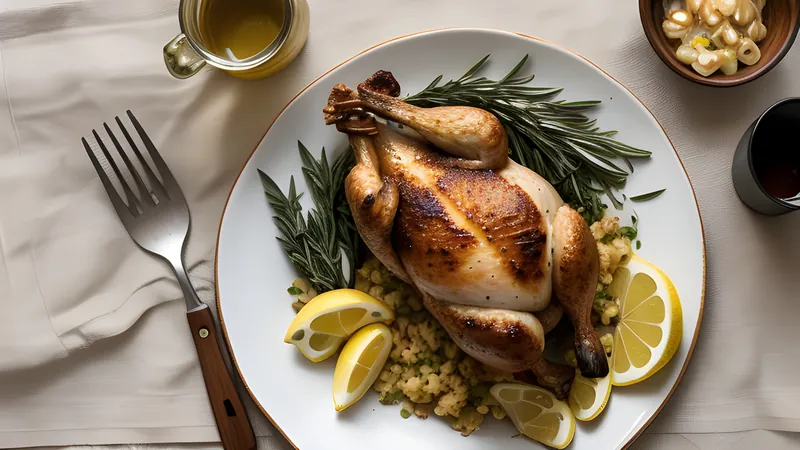
Roast Chicken with Tarragon Butter, Done Right
A herb butter under the skin and a bird that carves juicy
Contents
↓ Jump to recipeA roast chicken is the dish every cook is quietly judged by, and it is one of the easiest things to do badly. The breast dries out while you wait for the thighs to cook through; the skin comes out pale and flabby; the gravy is an afterthought made from a stock cube. All three problems are solvable, and none of the fixes are hard. They just ask you to plan an hour ahead, or ideally a day.
The twist I’ve settled on after years of Sunday birds is a spoon of white miso whisked into the tarragon butter. Miso and tarragon sound like an odd couple, and then you taste it. The miso brings a deep, savoury back-note that makes the whole bird taste more of chicken, the way a little anchovy does for lamb. Nobody at the table will name it. They’ll just say the chicken is the best you’ve made.
Roast Chicken with Tarragon Butter, Done Right
Ingredients
- 1 whole chicken, about 1.6kg
- 80g unsalted butter, softened
- 1 tbsp white miso paste
- 1 large bunch tarragon (about 20g)
- 1 garlic clove, grated
- Finely grated zest of 1 lemon
- 1.5 tsp fine salt, plus flaky salt for the skin
- Black pepper
- 1 lemon, halved
- 1 head garlic, halved across
- 1 onion, thickly sliced
- 200ml chicken stock
- 100ml dry white wine
- 1 tsp plain flour
Method
- The day before, rub the chicken all over and inside with 1.5 tsp fine salt and leave uncovered on a plate in the fridge overnight.
- Take the bird out 1 hour before roasting. Heat the oven to 200 degrees C fan (220 degrees C conventional).
- Beat the 80g softened butter with the chopped tarragon, grated garlic, lemon zest, 1 tbsp miso and black pepper. Loosen the breast skin and push two-thirds of the butter underneath, then spread the rest over the legs and skin.
- Scatter the onion, halved garlic head and halved lemon in a roasting tin. Sit the chicken breast-side down on top and roast 20 minutes.
- Turn the chicken breast-side up and roast a further 45 to 55 minutes, until the thickest part of the thigh reads 74 degrees C and the juices run clear.
- Lift the chicken onto a warm board, cover loosely with foil and rest 20 minutes.
- Make the gravy: pour off most of the fat, set the tin over medium heat, stir in 1 tsp flour, then whisk in 100ml wine and 200ml stock and simmer, scraping the base, until glossy. Strain and season.
- Carve and serve with the tarragon gravy.
Salt early, and why it matters
If you do one thing, salt the bird the day before. Rub 1.5 tsp of fine salt all over the skin and inside the cavity, then leave it uncovered on a plate in the fridge overnight. This is dry brining, and it does two jobs. The salt penetrates and seasons the meat all the way through rather than sitting on the surface, and the uncovered fridge air dries the skin so it crisps properly in the oven. A bird salted an hour before roasting is fine. A bird salted a day before is transformed — seasoned to the bone, with skin that shatters.
Wet brining works too, but it waterlogs the meat slightly and you lose that concentrated flavour. Dry brining keeps everything where you want it. If you forget, salt generously an hour ahead and pat the skin bone-dry before the butter goes on.
The tarragon-miso butter
Tarragon is the herb that was made for chicken. It has a faint aniseed sweetness that suits the mild meat, and it holds up to roasting where more delicate herbs would scorch. French cooks have paired the two for centuries, and it is the backbone of dishes like chicken chasseur with mushroom and tarragon.
Soften the butter to a spreadable paste. Chop the tarragon leaves fine and fold them in with the grated garlic, lemon zest, a good grind of pepper and the tablespoon of miso. Beat until it’s an even, pale-green paste.
Now the important part: get most of it under the skin, where it bastes the breast from the inside. Slide your fingers gently between the skin and the breast meat at the neck end, working carefully so you don’t tear it. Push two-thirds of the butter into that pocket and smooth it over the breast from outside. Rub the rest over the legs and skin. As the bird roasts, the butter melts and runs down through the meat, keeping the breast moist and carrying the herb and miso everywhere.
Roast breast-down first
Here is the second fix for dry breast meat. Start the chicken breast-side down for the first 20 minutes. The breast sits in the hot fat at the bottom of the tin, staying moist and taking on colour, while the thighs — which need more heat — face up into the oven. Then you flip it breast-up for the rest of the roast to crisp the skin. It’s a faff to turn a hot, greasy bird, but it’s the single biggest improvement you can make to even cooking.
Sit the bird on the halved garlic, onion slices and lemon in the tin. These lift it off the base so it roasts rather than stews, and they flavour the fat that becomes your gravy.
Method
- The day before, rub the chicken all over and inside with 1.5 tsp fine salt. Leave uncovered on a plate in the fridge overnight.
- Take the bird out 1 hour before roasting. Heat the oven to 200°C fan (220°C conventional).
- Beat 80g softened butter with the chopped tarragon, grated garlic, lemon zest, 1 tbsp miso and black pepper. Loosen the breast skin and push two-thirds of the butter underneath; spread the rest over the legs and skin.
- Scatter the onion, halved garlic head and halved lemon in a roasting tin. Sit the chicken breast-side down on top. Roast 20 minutes.
- Turn the chicken breast-side up. Roast a further 45–55 minutes, until the thickest part of the thigh reads 74°C and the juices run clear.
- Lift the chicken onto a warm board or plate, cover loosely with foil and rest 20 minutes.
- Make the gravy: pour off most of the fat from the tin, leaving the juices and browned bits. Set over a medium heat, stir in 1 tsp flour, then whisk in 100ml wine and 200ml stock. Simmer, scraping the base, until glossy. Strain and season.
- Carve and serve with the tarragon gravy.
Knowing when it’s done
Forget the “roast 20 minutes per 500g” rule as anything more than a rough guide — ovens lie and birds vary. Use a thermometer in the thickest part of the thigh, close to but not touching the bone. You want 74°C. At that point the thigh is fully cooked and safe, and the breast, insulated by the butter and its earlier stint face-down, will read a little higher but still be juicy.
The 20-minute rest is where a lot of good roasting is thrown away by impatience. The juices need time to settle back into the meat. Carve too soon and they run out onto the board; wait, and they stay in the bird. Twenty minutes under loose foil barely drops the temperature, and it gives you time to make the gravy in the tin.
Gravy from the tin
The best part of a roast is the sticky, caramelised residue left in the tin — cooks call it the fond, and it is pure concentrated flavour. Pour off the excess fat, keep the juices, and deglaze with wine and stock, scraping every brown speck loose with a wooden spoon. A teaspoon of flour thickens it just enough. If you want it richer, whisk in a small knob of the leftover tarragon butter at the end. Taste before you salt — the roasting juices are already seasoned from the dry brine.
Sides, swaps and leftovers
Roast potatoes are non-negotiable in my house, parboiled and roughed up so the edges go crisp. Beyond that, keep it seasonal: buttered greens, roasted carrots, a sharp watercress salad to cut the richness.
- No miso? Leave it out and add a teaspoon of Dijon instead for a different kind of savoury depth. The butter still works beautifully.
- Herb swaps: if tarragon isn’t to your taste, a mix of parsley, thyme and lemon zest makes a cleaner, more classic herb butter.
- Spatchcock version: if you want the whole thing done in 45 minutes, spatchcock the bird — flatten it by removing the backbone. The same technique underpins peri-peri spatchcock chicken, and it cooks faster and more evenly, though you lose the drama of the whole bird at the table.
- Leftovers: the carcass makes stock — simmer it with the spent onion, garlic and lemon for a couple of hours. Cold chicken and a spoon of the tarragon butter, melted, make a superb sandwich.
- Turn it French: the same bird, jointed and browned, is the starting point for a braise like coq au vin with lardons and pearl onions if you have more time and a bottle of red to spare.
Salt a day ahead, butter under the skin, breast-down to start, thermometer in the thigh, rest properly. Five small habits, and a roast chicken that carves juicy every single time.
A note on buying a good bird
A roast chicken can only be as good as the chicken. Cheap intensively-reared birds are watery, bland and prone to that spongy texture no amount of butter will save. Spend a little more on a free-range or organic bird from a breed that’s had time to grow — you can taste the difference immediately, in flavour and in a firmer, more satisfying bite. A 1.6kg bird feeds four with leftovers; size up to 1.8–2kg if you want cold chicken for sandwiches all week, adding ten minutes or so to the roast and checking the thigh temperature as before.
One last thing on skin. If yours comes out of the oven paler than you’d like, whack the heat up to 220°C fan for the final five minutes and keep an eye on it. The miso in the butter helps here too — its sugars caramelise and lacquer the skin a deeper gold than plain butter would. Pull the bird the moment the thigh hits temperature, and let the rest do the rest.
Related Content