Risotto alla Milanese with Saffron and Bone Marrow
The golden risotto Milan built its Sunday lunch around
Contents
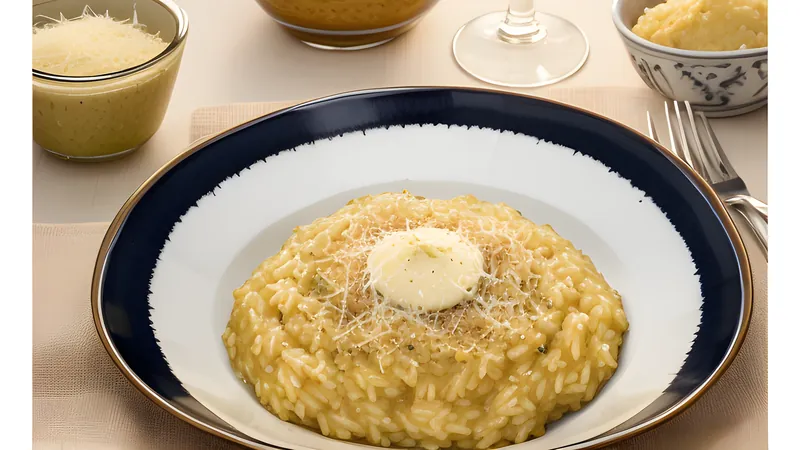
↓ Jump to recipeThere is a version of risotto alla Milanese that turns out pale and thin, and it always comes down to two shortcuts: stinting on the saffron and skipping the marrow. Do both and you get yellow rice pudding. Get them right and you get the dish Milan has been eating on Sundays for two hundred years — glossy, savoury, faintly floral, the colour of an old gilt frame.
I make this when I want something that feels like an occasion but demands nothing exotic from the shops. A marrow bone from the butcher costs almost nothing and most will saw it lengthways if you ask. The saffron is the only real outlay, and a small tin lasts a year.
Risotto alla Milanese with Saffron and Bone Marrow
Ingredients
- 320g carnaroli or arborio rice
- 1.2 litres light beef or chicken stock, kept at a bare simmer
- 1 large pinch saffron threads (about 0.25g)
- 60g bone marrow, scooped from a marrow bone
- 1 small onion, very finely chopped
- 150ml dry white wine
- 80g cold unsalted butter, diced
- 70g Parmigiano-Reggiano, finely grated
- 3 tbsp olive oil
- Fine sea salt
Method
- Warm 100ml of the stock, crush the saffron threads into it and leave to steep at least 10 minutes. Keep the rest of the stock at a bare simmer beside the hob.
- In a wide heavy pan, warm the olive oil and half the marrow over medium-low heat. Add the onion with a pinch of salt and sweat 8 to 10 minutes until soft and translucent as the marrow dissolves.
- Turn the heat to medium, add the rice and toast for 2 full minutes (the tostatura) until the edges turn translucent and it smells nutty.
- Pour in the wine and let it bubble away almost completely, scraping the base.
- Add the hot stock a ladle at a time, stirring and adding more only when the last has almost gone. Halfway through, stir in the saffron infusion.
- Continue for about 16 to 18 minutes total, tasting from minute 15, until the grain is cooked with a firm, chalky core just holding, all'onda; stop while it still looks a touch wet.
- Pull the pan off the heat and beat in the cold diced butter, the remaining marrow and the Parmesan for a full minute (the mantecatura) until glossy, loosening with a splash of hot stock if tight.
- Check the salt and serve at once on warmed plates, ungarnished.
Where the gold comes from
The romantic story ties Milanese risotto to the stained glass of the Duomo. A sixteenth-century glassmaker’s apprentice named Zafferano supposedly tinted his colours with saffron and, as a joke at his master’s daughter’s wedding, had the cooks stir some into the rice. The guests, so the tale goes, were delighted. It is almost certainly a nineteenth-century invention, printed and reprinted until it hardened into fact.
The likelier history is duller and more convincing. Saffron reached Lombardy through the same medieval trade routes that made Milan rich, and by the time Pellegrino Artusi codified Italian home cooking in his 1891 La scienza in cucina, saffron risotto already had a firm regional identity. Artusi’s version leans on marrow and beef stock, which tells you the dish grew up beside ossobuco — braised veal shin — as its natural partner. The marrow that enriches the rice is the same cut that garnishes the meat. Nothing was wasted, and the two dishes still arrive together on Milanese tables.
Marrow is the twist most people have quietly dropped, and it is the one I would fight to keep. It melts into the soffritto and coats every grain with a beefy richness that butter alone can’t reach. If you have ever wondered why a restaurant risotto tastes deeper than yours, this is often the reason.
Choosing your rice
Milanese risotto wants a starchy, short-grain rice that releases its outer starch slowly. Carnaroli is my first choice: the grains hold their bite through a long cook and forgive a distracted stir. Arborio is more common and works well, though it softens faster, so watch it near the end. Avoid long-grain or basmati entirely — they refuse to go creamy and you’ll be left with wet pilaf.
Do not rinse the rice. That surface starch is the whole point; washing it away gives you the loose, separate grains you want for a Yangzhou fried rice, and the exact opposite of what risotto needs.
Method
Start by waking up the saffron. Warm 100ml of the stock, crush the threads between your fingers into it, and leave them to steep for at least ten minutes. Cold infusion is weak; a little heat pulls out both the colour and the honeyed, hay-like aroma. The liquid should turn deep amber.
Keep the rest of the stock at a bare simmer in a pan beside the hob. Cold stock hitting hot rice stalls the cook and makes the grains cook unevenly, so temperature discipline matters more here than in almost any other dish.
In a wide, heavy pan, warm the olive oil and half the marrow over a medium-low heat. Add the onion with a pinch of salt and sweat it gently for eight to ten minutes until soft and translucent. Rush this and you’ll taste raw onion in the finished plate. The marrow should dissolve into the base and go glossy.
Turn the heat up to medium and add the rice. Stir it through the fat and toast it for two full minutes — this stage is the tostatura, and it’s non-negotiable. The grains should turn slightly translucent at the edges with an opaque pearl at the centre, and smell faintly of toasted nuts. Toasting sets the surface starch so the grains stay distinct instead of collapsing into porridge.
Pour in the wine and let it bubble away almost completely, scraping the base. The acidity keeps the finished rice from tasting flat and cuts the coming richness.
Now begin the ladling. Add a ladle of hot stock, enough to just cover the rice, and stir. Keep it at an active simmer and stir often and steadily to coax the starch out and stop anything catching, without going frantic. When the liquid has almost gone, add the next ladle. Repeat for about 16 to 18 minutes. Halfway through, stir in the saffron infusion; the rice will bloom into that unmistakable gold.
Taste from minute 15. You want the grain cooked through but with a firm, chalky core just barely holding — all’onda, “on the wave”, loose enough to ripple when you shake the pan. It will keep firming as it sits, so stop while it still looks a touch wet.
The mantecatura — where risotto is won
Pull the pan off the heat. Drop in the cold diced butter, the remaining marrow, and the Parmesan, and beat hard with a wooden spoon for a full minute. This is the mantecatura, the emulsifying beat that whips the fat and starch into a single glossy sauce. Cold butter is essential — it emulsifies rather than splitting into greasy pools, the same reason you finish a pan sauce off the heat.
If it looks tight, loosen with a splash more hot stock. It should spread across a warm plate in a slow wave and settle flat, not sit in a stiff mound. Check the salt, remembering the Parmesan brings its own. Serve at once, on warmed plates, and don’t garnish it. This is a dish confident enough to arrive plain.
What goes wrong, and why
Gluey, heavy rice usually means too much heat and not enough stirring, so the starch overworks. Keep it at a gentle simmer.
Pale colour is under-steeped or under-dosed saffron. A quarter gram is right for four people; steep it properly and give it time.
Chalky, crunchy centres at the 20-minute mark mean your stock ran cold or you added it too fast. Keep it simmering and let each ladle almost vanish before the next.
A greasy finish comes from adding warm or melted butter at the end. It must be fridge-cold and beaten in off the heat.
Make-ahead, storage and variations
Risotto is a last-minute dish and I won’t pretend otherwise — it waits for no one. That said, restaurant kitchens par-cook it: spread the rice on a tray after 10 minutes, cool it fast, then finish with hot stock to order in five. It’s a fair trick for a dinner party.
Leftovers stiffen in the fridge and reheat poorly as risotto, so turn them into risotto al salto — press the cold rice into a hot, buttered non-stick pan into a flat cake and fry until crisp and golden on both sides. It’s a Milanese classic in its own right and arguably better than the original.
For a vegetarian table, drop the marrow and beef stock, use a good vegetable stock, and lean harder on the butter and cheese; you’ll lose the depth but keep the elegance. If you want that meaty backbone by another route, a mushroom and Taleggio risotto gets there through umami instead. And if you’re building the full Milanese Sunday, serve this alongside slow-braised shin — a plate of braised short ribs in red wine makes a very fair stand-in for ossobuco.
Saffron rewards good storage: keep it in the dark, away from heat, and it holds its colour for a year. Buy threads, never powder, which is too often bulked out with turmeric or worse. Crush them yourself and you’ll always know exactly what’s in the pot.
A word on stock
The stock carries this dish, so it earns your attention. A light beef stock made from roasted bones gives the most authentic Milanese depth, but a good chicken stock is more than acceptable and keeps the saffron from being muscled out. Whatever you use, keep it lightly salted rather than fully seasoned — the liquid reduces into the rice as it cooks, and a stock salted for sipping will leave the finished risotto too salty to eat. Skim any fat off the top before you start; a clean, clear stock gives a cleaner-tasting rice.
If you’re short on homemade stock, dilute a shop-bought one by a third and enrich it with the trimmings from your marrow bone: roast the bone for 20 minutes first and drop it into the simmering stock while you cook. You’ll pull an extra layer of savour out of it for no real effort, and the kitchen will smell like a Lombard trattoria in November. That small habit — treating the stock as an ingredient rather than a background liquid — is the difference between a risotto that’s pleasant and one people remember.
Related Content