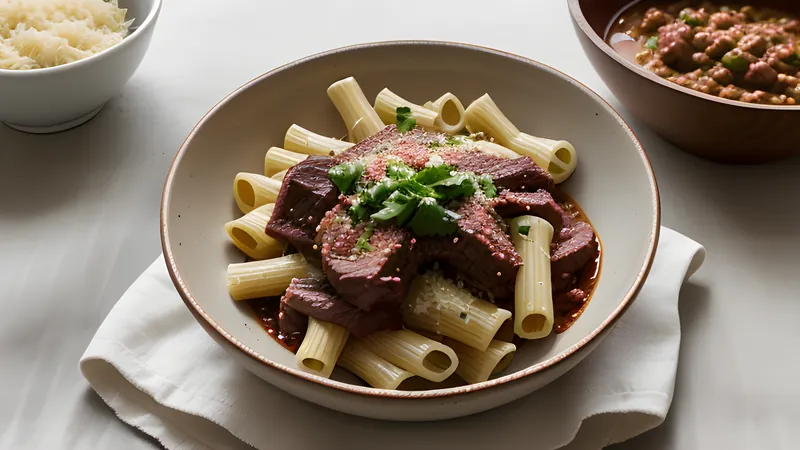
Rigatoni alla Genovese: The Onion Ragù of Naples
Two kilos of onions, one cheap cut of beef, and a great deal of patience
Contents
↓ Jump to recipeThe great joke of Neapolitan cooking is that its most famous meat ragù is named after Genoa, a city three hundred miles up the coast, and contains almost no tomato at all. La Genovese is a sauce built on onions, kilos of them, cooked so long and so slow that they dissolve into a sweet brown paste the colour of teak. The beef braising within them is almost a by-product; the onions are the star. It is one of the oldest dishes in the Neapolitan repertoire, mentioned in cookbooks going back to the fifteenth century, and it survives in the city because Neapolitan cooks have always known how to make a feast out of very little.
Where the name comes from is a genuine mystery, argued over in Naples to this day. One story credits Genoese merchants or cooks working the port. Another points to a long-vanished tavern-keeper nicknamed “‘o genovese”. Nobody can prove any of it, which is exactly the sort of origin story I trust: too odd to be invented for marketing. What is certain is that the dish belongs entirely to Naples now, cooked on a Sunday, the smell of onions caramelising for hours a signal that lunch will be worth the wait.
Rigatoni alla Genovese: The Onion Ragù of Naples
Ingredients
- 2kg white or yellow onions, thinly sliced
- 800g beef shin or chuck, in large chunks
- 100g pancetta or a piece of prosciutto, diced
- 3 tbsp olive oil
- 1 carrot, finely diced
- 1 celery stick, finely diced
- 125ml dry white wine
- 1 tbsp white wine vinegar
- 2 bay leaves
- Salt and black pepper
- 500g dried rigatoni
- 60g Parmesan or aged pecorino, grated, plus more to serve
Method
- Heat the olive oil in a large heavy pot. Add the pancetta and cook until its fat renders, about 4 minutes. Add the carrot and celery and soften for 5 minutes.
- Season the beef and add it to the pot, turning to colour lightly on all sides, about 6 minutes.
- Tip in all the sliced onions with a good pinch of salt and the bay leaves. Stir to coat. They will mound above the meat; this is correct. Cover and cook over low heat for 30 minutes, stirring occasionally, until they wilt right down.
- Uncover and continue cooking over low heat for 2 to 2 and a half hours, stirring every 15–20 minutes and scraping the base. The onions will collapse, catch and turn deep golden-brown. If they threaten to stick or burn, add a splash of water and lower the heat.
- When the onions are a jammy brown mass and the beef is falling apart, pour in the wine and vinegar. Scrape the base clean and simmer uncovered for 20–30 minutes more until thick. Season with salt and plenty of black pepper.
- Break the beef into rough shreds through the sauce. Cook the rigatoni in well-salted boiling water until just shy of al dente, reserving a cup of pasta water before draining.
- Toss the rigatoni through the ragù with a splash of pasta water and the grated cheese over low heat for a minute until glossy. Serve with more cheese and black pepper.
The onions are the whole point
Two kilograms sounds absurd until you watch them cook. Raw onion is around ninety per cent water, and as it cooks that water drives off and the volume collapses to a fraction of what you started with. That relentless reduction is where the sweetness comes from: the sugars concentrate, and the long, gentle heat coaxes out slow browning that builds layer after layer of savoury depth. Two kilos of raw onion becomes barely a large bowlful of jammy ragù.
Slice them thinly and evenly so they cook at the same rate. Yellow or white onions are traditional; I would steer clear of red, which can turn a muddy grey-purple. Do not be tempted to rush the browning by cranking the heat. Aggressive heat scorches the edges while the centre stays raw, and burnt onion turns the whole pot acrid and bitter. Low and patient, stirring every fifteen minutes or so and scraping up whatever catches on the base, is the only way.
The twist: a spoon of vinegar at the end
Traditional Genovese is a rich, deeply sweet sauce, and after three hours of concentrating onions it can tip into cloying. My one small departure is a single tablespoon of white wine vinegar stirred in with the wine at the very end. It does not read as sour. It sharpens the sweetness and pulls the whole thing into focus, the way a squeeze of lemon lifts a rich stew. Neapolitan cooks who use a splash of local wine are chasing the same acidity; the vinegar just guarantees it. Taste before and after and you will feel the sauce snap awake.
The method, unhurried
Render the pancetta first so its fat greases the pot and adds a cured, savoury undertone. Soften the carrot and celery in it, then colour the beef lightly. Deep browning matters less here than in a tomato ragù, because the flavour will come from the onions; a light colour and a seasoned surface are enough.
Now the mountain of onions. They will sit far above the meat and look like far too much. Salt them, cover the pot, and let them steam down for the first half hour until they slump into the pan. Then take the lid off and settle in for the long haul. This uncovered phase, two hours or more, is where the water leaves and the colour develops. Stir and scrape regularly. If the base starts to catch too darkly, a splash of water deglazes it and buys you time; that caught fond, lifted back into the sauce, is flavour, so long as it is brown and not black.
You will know it is ready when the onions have lost all structure and become a soft, glistening, deeply coloured mass, and the beef pulls apart at a nudge. Then the wine and vinegar go in, the base gets a final scrape, and twenty minutes uncovered thickens everything to a spoonable ragù. Shred the beef through it.
Bringing it to the pasta
Rigatoni is the classic choice, its ridges and hollow tube purpose-built to trap the soft sauce. Ziti snapped into lengths is the other Neapolitan favourite. Whichever you use, cook it a minute short and finish it in the sauce with a splash of pasta water and grated cheese, tossing over low heat until it turns glossy and clings. That starchy water is doing real work, emulsifying the fat and cheese into a coating that grips the pasta; it is the same finishing principle behind a good spaghetti aglio e olio. If you would rather have a lighter Sunday plate for another week, my bucatini all’Amatriciana gets you a big-flavoured bowl in under an hour.
Storage, make-ahead and variations
Like most long braises, Genovese is better the next day, so cook it ahead without a second thought. It keeps four days in the fridge and freezes for three months. The meat can be served two ways: shredded through the sauce as here, or lifted out whole and served as a second course, the classic Neapolitan “secondo”, with the onion ragù dressing the pasta as a first. That two-course trick is how the dish fed a family from one pot on a Sunday, and it is worth doing at least once.
For variations, a piece of Parmesan rind dropped in during the long cook adds a savoury hum; fish it out at the end. Some cooks add a splash of the pasta’s own cooking water into the ragù rather than plain water during the braise, for a little extra body. And if you eat pork, swapping half the beef for a chunk of pork shoulder gives a softer, sweeter result that suits the onions beautifully.
What you cannot do is hurry it. The Genovese asks for an afternoon and gives back a sauce with more depth than its shopping list has any right to produce. Put the onions on, open the window, and let the smell tell the neighbours what Sunday is for.
A note on choosing your cut
Beef shin is my first choice because its connective tissue melts into the sauce and gives the whole pot body, but chuck works well and is easier to find. What you want is a cut with some collagen and a little fat running through it, the kind sold for stewing and slow braising. Lean cuts like topside or silverside will only dry out and turn stringy over three hours, giving you tough threads instead of tender shreds. If your butcher offers a bone-in piece of shin, take it; the marrow enriches the sauce as it renders, the same benefit it brings to a beef-shin ragù for pappardelle.
Buy the onions loose rather than in a net if you can, and give them a quick sniff. You want firm, papery, dry onions with no soft spots or green shoots; tired onions carry a harsh, almost sulphurous edge that long cooking concentrates rather than mellows. Good onions, cooked with patience, are all this famous old sauce really asks of you.
Related Content