Quince Membrillo for the Cheeseboard
Amber, sliceable quince paste, warmed with orange and star anise
Contents
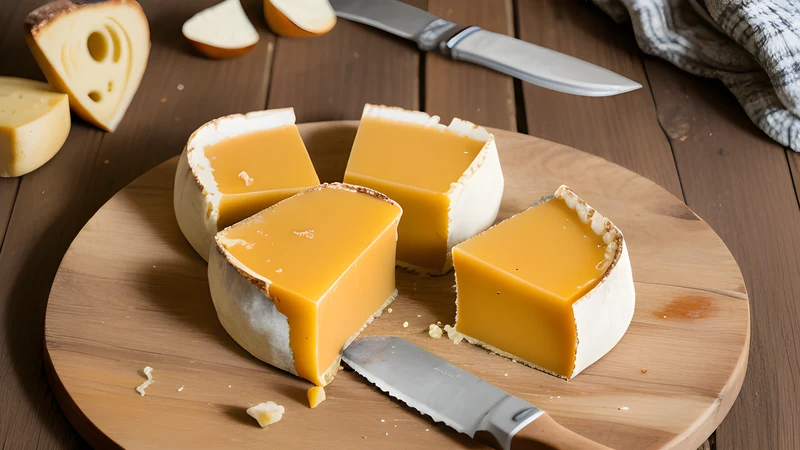
↓ Jump to recipeMembrillo is the reason to buy quinces. This dense, amber, sliceable paste, set firm enough to cut with a knife, is the classic Spanish partner to a wedge of manchego, and a homemade slab of it makes any cheeseboard look like you tried. It costs a fortune in the shops for a small block and almost nothing to make at home, the only real ingredients being quinces, sugar and a long, stirring afternoon.
Quince Membrillo for the Cheeseboard
Ingredients
- 1.5kg ripe quinces (about 5), washed and rubbed of their down
- 1 lemon, halved
- 1 strip of orange zest (pared with a peeler)
- 1 whole star anise
- Granulated sugar (weighed after cooking; see method)
- 1 tbsp lemon juice
Method
- Rub the fuzzy down off the quinces, then chop them roughly, skin, core, pips and all (the skin and pips are full of pectin). Rub the cut surfaces with the halved lemon to slow browning.
- Put the chopped quince in a large pan with the orange zest and star anise, add just enough water to cover, and simmer, covered, for about 40 minutes until completely soft.
- Discard the star anise and orange zest. Push the softened quince and its liquid through a sieve or pass through a food mill to make a smooth purée; discard skin and pips left behind.
- Weigh the purée, then return it to the pan with an equal weight of sugar and the lemon juice.
- Cook over low heat, stirring almost constantly with a wooden spoon, for 60–90 minutes. It will darken from pale yellow to deep amber-orange and pull thickly away from the base of the pan.
- It is ready when a spoon dragged across the base leaves a clear trail that stays open for a few seconds, and the paste is very thick and glossy. Take care, as it spits when thick.
- Line a shallow tin or dish with baking parchment or oiled cling film. Spread the paste 2–3cm thick, smooth the top, and leave to cool completely.
- Leave uncovered at room temperature for 1–2 days to firm and dry, then turn out, cut into squares, and store wrapped in a cool place for up to 3 months.
The fruit you cannot eat raw
The quince is an ancient fruit, grown around the Mediterranean and across the Middle East for thousands of years, and it has the peculiar distinction of being almost useless raw. Bite into one and you get a hard, astringent, mouth-drying flesh that fights back; the quince only becomes wonderful when cooked, at which point it transforms utterly, the pale flesh turning rosy amber and giving off a heady, honeyed, floral scent somewhere between apple, pear and rose.
The word membrillo is simply Spanish for quince, and the paste shares its deeper roots with marmalade itself. The Portuguese for quince is marmelo, and marmelada originally meant a solid quince paste exactly like this one; the word only later drifted to mean the citrus preserve the British claimed as their own. So membrillo and marmalade are linguistic cousins, both descended from a medieval quince conserve that spread across southern Europe and out through the Iberian empires. In Spain, dulce de membrillo remains an everyday pleasure, sliced onto bread for breakfast or eaten in the classic pairing with salty sheep’s cheese, the sweet floral paste and the sharp cheese completing each other.
No pectin, no trouble
Like the Seville orange marmalade, membrillo sets entirely on the fruit’s own pectin, and quinces are among the most pectin-rich fruits there are. That pectin lives mostly in the skin and the pips, which is why you cook the fruit whole and rough, skin, core and all, and only sieve out the solids afterwards. Throwing the peel and pips in the bin before cooking, as some people instinctively do, would throw away exactly the gelling power that lets the paste set solid without a scrap of added pectin.
The equal-weights rule is the heart of the method: you weigh the cooked purée, then add precisely the same weight of sugar. This one-to-one ratio is what makes membrillo sliceable rather than spreadable, giving you enough dissolved sugar to set firm and to preserve the paste for months. It also means you cannot decide the sugar quantity in advance, since it depends on how much purée your particular quinces yield, so weigh after cooking and do not be tempted to skimp; less sugar gives a softer, shorter-keeping paste.
The twist: orange and star anise
Traditional membrillo is often just quince, sugar and a little lemon, and it is lovely that way. I like to cook the fruit with a pared strip of orange zest and a single star anise, both removed before sieving, which perfumes the paste with a subtle warmth that flatters the quince’s own floral character. The orange picks up the citrus family the quince already belongs to, brightening it, and the star anise adds the same quiet, hard-to-place warmth it lends to a good caramelised onion marmalade, leaning into the quince’s honeyed notes without announcing itself. Taste a spoonful and you register something warm and rounded before you can name it.
The lemon does more than season. Its acidity helps the pectin set and keeps the colour bright, and a final tablespoon of lemon juice stirred into the cooking purée sharpens the sweetness so the finished paste tastes balanced against a salty cheese rather than flatly sugary.
The long stir, and why colour tells you everything
There is no shortcut for the cooking, and it is the one demanding part of the recipe. Once the sugar goes in, the purée needs an hour to ninety minutes over low heat with near-constant stirring, and its colour is your doneness gauge. It starts a pale, cloudy yellow and slowly deepens through gold to a rich, translucent amber-orange, the shift driven by long, slow cooking that concentrates the sugars and develops the fruit’s colour and flavour. When it has darkened to deep amber and pulls away from the base of the pan in a thick mass, leaving a trail that stays open for a few seconds behind the spoon, it is done.
Two warnings. First, as it thickens it spits like a volcano, and hot sugar burns badly, so use a long-handled wooden spoon, wear an oven glove, and consider a splatter guard; keep the heat low, which slows the spitting as well as guarding against scorching. Second, the paste catches easily once thick, so stir right into the corners of the pan and never walk away in the final stretch. If it starts to smell caramelised or you see brown flecks, drop the heat immediately.
If you cannot find quinces
Fresh quinces have a short autumn season and can be maddening to track down, appearing in greengrocers and Middle Eastern shops from about October to December and vanishing quickly. Buy them when you see them; they keep for weeks in a cool larder, and their scent alone will perfume a whole room while they sit in the fruit bowl waiting for you.
If quinces genuinely elude you, a very good approximation can be made from cooking apples with a handful of crab apples or a couple of guavas thrown in, both of which are high in pectin and share something of the floral quality. The colour will be paler and the flavour less haunting, so cook it a touch longer to deepen it, and add an extra squeeze of lemon. It won’t be true membrillo, though it will slice, keep and partner a cheese honourably.
A note on ripeness: quinces are ready when they turn from green to a clear golden yellow and smell strongly fragrant, and slightly overripe fruit with a bruise or two is perfectly fine here, since it is all going through a sieve. Rub off the grey down that clings to the skin before chopping, as it can carry a slight bitterness.
Setting, cutting and keeping
Spread the finished paste into a parchment-lined shallow tin, a couple of centimetres thick, and smooth the top. It firms as it cools, but the real setting happens over the following day or two at room temperature, uncovered, as the surface dries to a slightly tacky, sliceable finish. Rushing this by refrigerating gives a stickier paste that is harder to cut cleanly; a day or two in the open air gives you clean, firm squares.
Turn it out, cut into squares or slim slices, and wrap well. It keeps for up to three months in a cool place, and some say it improves over the first few weeks. Beyond the manchego pairing, membrillo is glorious with any hard, salty cheese, and a thin slice melts beautifully over roast pork or lamb as a glaze. Serve it on a board next to the caramelised onion marmalade and a sharp chutney, and you have covered every direction a cheese course could want. It is the sort of preserve that makes people think you have hidden talents; only you need know it was mostly a matter of stirring.
Related Content