Quick Kimchi (Mak-kimchi): Fermented in Two Days
The everyday kimchi that doesn't make you wait
Quick Kimchi (Mak-kimchi): Fermented in Two Days
Ingredients
- 1 large Chinese leaf cabbage (about 1 kg)
- 60 g fine sea salt (not iodised)
- 1 tablespoon glutinous rice flour
- 120 ml cold water
- 1 small Korean radish or 200 g daikon, cut into matchsticks
- 4 spring onions, cut into 3 cm lengths
- 5 garlic cloves, finely grated
- 1 thumb fresh ginger, finely grated
- 4 tablespoons gochugaru (Korean chilli flakes)
- 2 tablespoons fish sauce
- 1 tablespoon caster sugar
- 1 teaspoon toasted sesame seeds
Method
- Cut the cabbage into 4 cm squares, separating the leaves into a large bowl. Dissolve the salt in a litre of water, pour over the cabbage, then weigh down with a plate. Leave for 1.5 to 2 hours, tossing once, until the white stems bend without snapping.
- Make the porridge: whisk the rice flour into the cold water in a small pan, bring to a gentle simmer and cook 2 to 3 minutes until thick and glossy. Cool completely.
- Drain the cabbage and rinse twice under cold water to wash off excess salt, then squeeze gently and leave to drain in a colander.
- Stir the gochugaru, garlic, ginger, fish sauce, sugar and cooled rice porridge into a thick red paste.
- Add the drained cabbage, radish matchsticks, spring onions and sesame seeds. Wearing gloves, massage the paste through everything until evenly coated.
- Pack tightly into a clean jar, pressing down so brine rises to cover. Leave 2 cm headroom, seal loosely and stand on a plate. Ferment at cool room temperature for 1 to 2 days, then refrigerate.
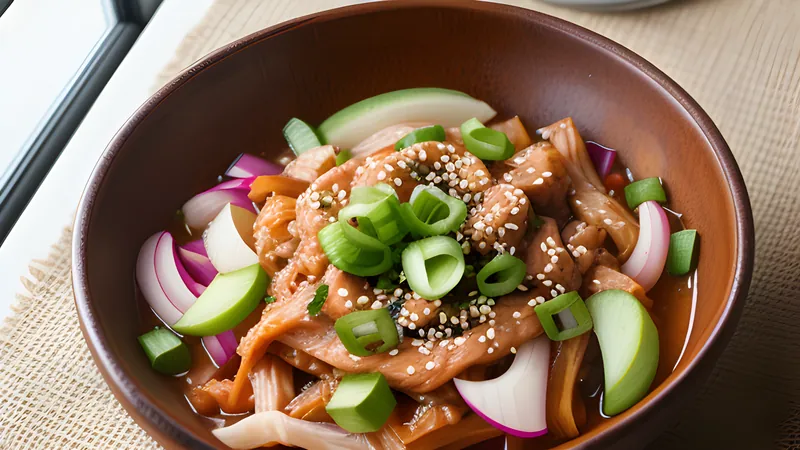
There is a kind of kimchi for high days and holidays, and a kind for Tuesday. This is the Tuesday one. Mak-kimchi — mak roughly meaning “carelessly” or “roughly” — is the everyday version that skips the whole-cabbage theatre. You chop everything into bite-sized pieces, salt it, dress it, and pack it away. No fermenting crock buried in the garden, no waiting a month to taste your work. Two days at room temperature and you have something bright, sour and alive that will keep improving in the fridge for weeks.
I keep a jar going at all times. It turns a bowl of rice and a fried egg into dinner, sharpens a pork stir-fry, and once it gets properly funky, becomes the backbone of jjigae and kimchi fried rice. The small clever twist here is the rice porridge — a quick slurry of glutinous rice flour and water. It sounds fussy but it earns its place: it helps the chilli paste cling to every piece and feeds the lactic bacteria, so fermentation gets going faster and the flavour rounds out sooner.
1 Where mak-kimchi comes from
Kimchi is not one recipe but hundreds — a whole grammar of fermented vegetables that varies by region, season and household. The grand version, baechu-kimchi, packs seasoning between the leaves of halved whole cabbages and is the dish families make together during gimjang, the late-autumn ritual of preserving enough kimchi to last the winter. UNESCO lists gimjang as intangible cultural heritage, and for good reason: it is as much about community as cabbage.
Mak-kimchi is the unfussy cousin, the kind you make in a single bowl on a weeknight because the jar ran low. Chilli only arrived in Korea a few centuries ago, brought by traders, so the fiery red kimchi most of us picture is relatively modern; older kimchis were paler, seasoned with salt and fermented seafood. What hasn’t changed is the principle — vegetables, salt, time, and the gentle work of wild bacteria turning a humble cabbage into something with real depth.
2 How to make it
Start with the salting, which is the only step you can’t rush. Cutting the cabbage into squares first means it salts evenly and quickly — about two hours rather than the half-day a whole head needs. You want the stems pliable: bend one, and it should fold rather than crack. Under-salted cabbage gives watery, dull kimchi; over-salted needs more rinsing. Two thorough rinses after draining strikes the balance.
While it salts, make the rice porridge and let it cool — adding it warm would shock the garlic and ginger. Build the paste in the bowl you’ll mix in: gochugaru for colour and a fruity, low warmth, plus grated garlic and ginger, fish sauce for savoury depth, and just enough sugar to balance. Korean chilli flakes are essential here; ordinary crushed chillies are far hotter and will give you heat without the gentle, almost smoky character. Use four tablespoons for a medium kimchi, more if you like it punchy.
Wear gloves — the chilli will find every cut on your hands and remind you for hours. Massage the paste through the cabbage, radish and spring onions until everything glows red, then pack it tight. Pressing firmly forces the brine up to cover the vegetables, which keeps them under liquid and away from spoiling air.
3 Fermenting, storing and using it
Leave the jar at cool room temperature, around 18 to 20°C, on a plate to catch any lively overflow. After a day you’ll see tiny bubbles and smell a clean sourness; taste it. In summer one day may be plenty; in a cold winter kitchen, give it two. Once it tastes pleasantly tangy, move it to the fridge, where it keeps fermenting slowly for a month or more, deepening as it goes.
A few honest notes. If the top layer dries out, just press everything back under the brine. A fizzy hiss when you open the jar is good news, not gas to fear. If you can’t find Korean radish, daikon is the right substitute; a wedge of crisp apple grated in adds a lovely sweetness too. For a vegan jar, swap the fish sauce for a tablespoon of light soy plus a little white miso — you’ll lose some of the marine funk but gain a savoury roundness that’s no lesser, just different.
The real reward comes at the two-week mark, when young, crunchy kimchi turns soft and sour and ready for the pan. Don’t throw away that brine: it’s liquid gold for noodle soups and marinades. Make a jar this weekend, and you’ll wonder how the fridge ever managed without one.
Related Content