Puy Lentil, Feta and Roasted Carrot
A robust, make-ahead salad that only gets better on day two
Contents
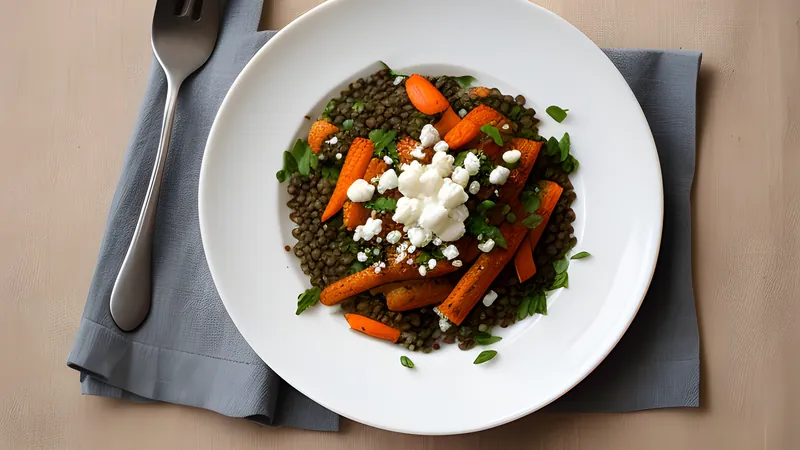
↓ Jump to recipeSome salads are a moment and some are an investment. This one is an investment, in the best sense: a bowl of Puy lentils, deeply roasted carrots and salty feta that tastes good the minute you make it and better the next day, when the lentils have soaked up every last drop of the mustard-honey dressing. The small twist is toasting whole cumin seeds directly on the carrots as they roast, so the spice caramelises into the sweet, blackened edges of the vegetable rather than sitting on top as an afterthought. It is a proper packed-lunch salad, a barbecue side, and a Tuesday supper all at once.
Puy Lentil, Feta and Roasted Carrot
Ingredients
- 250g Puy lentils (or other small green lentils)
- 1 bay leaf
- 1 garlic clove, lightly crushed but whole
- 600g carrots, peeled and cut into 3cm batons
- 2 tbsp olive oil, for roasting
- 1 tsp cumin seeds
- 1/2 tsp flaky salt, for the carrots
- 200g feta, in slabs or crumbled
- 1 small red onion, finely diced
- A large handful of flat-leaf parsley, roughly chopped
- A handful of mint leaves, torn
- 3 tbsp extra-virgin olive oil, for the dressing
- 1 tbsp red wine vinegar
- 1 tsp Dijon mustard
- 1 tsp runny honey
- Black pepper
Method
- Rinse the lentils and put them in a pan with the bay leaf and crushed garlic. Cover generously with cold water and bring to a simmer.
- Simmer uncovered for 20 to 25 minutes, until the lentils are tender with a little bite, then drain well and discard the bay and garlic.
- Meanwhile, heat the oven to 220C fan. Toss the carrot batons with the roasting olive oil, cumin seeds and flaky salt, and spread in a single layer on a tray.
- Roast the carrots for 25 to 30 minutes, turning once, until deeply caramelised at the edges and tender through.
- Whisk the extra-virgin olive oil, red wine vinegar, Dijon, honey and a good grind of black pepper into a dressing.
- While the lentils are still warm, toss them with the diced red onion and half the dressing so they drink it in.
- Fold through the roasted carrots, most of the herbs and the remaining dressing, then crumble over the feta and scatter with the last of the herbs.
The story
Puy lentils are the aristocrats of the lentil world, and the name is protected the way a good wine’s is. They are grown on the volcanic plains around Le Puy-en-Velay in the Auvergne region of central France, where the mineral-rich, iron-heavy soil and the dry microclimate give the lentils their distinctive slate-green, marbled skin and their concentrated, faintly peppery flavour. In 1996 the lentille verte du Puy became the first dried pulse in France to earn an Appellation d’Origine Controlee, the same certification system that governs Champagne and Roquefort, which means a lentil sold as a true Puy lentil must have been grown in that specific defined area. What sets them apart in the pot is that they hold their shape: where a red or brown lentil softens and slumps into something closer to dal, a Puy lentil stays intact and just tender, with a nutty bite that makes it ideal for a salad where you want distinct grains rather than mush. If you cannot find the genuine article, the similar Italian Castelluccio lentils or a good black beluga lentil behave the same way.
Lentils and something salty is one of the oldest, soundest pairings in cooking, and the reason is simple chemistry: lentils are earthy and mild on their own, and they come alive next to salt, acid and fat. A wedge of feta supplies all three at once, its brine and tang cutting through the earthiness while its crumbly richness coats each grain. This is why lentils turn up across France with salty lardons, in Greece and the Levant with feta and yoghurt, and in India with a final tempering of ghee and salt: the pulse is a canvas that wants a savoury, sharp counterweight.
Dressing the lentils warm
The single most important technique here, and the thing that turns a good lentil salad into a memorable one, is dressing the lentils while they are still warm. A warm lentil is porous and thirsty, and it absorbs an acidic dressing deep into the grain, seasoning it from the inside; a cold lentil, drained and chilled first, has firmed up and simply lets the dressing slide off, so the salad tastes bland however much you pour on. Drain the lentils the moment they are tender, tip them straight into the dressing with the raw red onion (which softens and mellows in the warmth), and let them sit and drink while the carrots finish roasting. This is also why the salad improves overnight: given hours in the fridge, the lentils keep drawing in flavour, which is a rare and useful quality in a make-ahead dish.
Salt the lentils only after cooking, never in the cooking water. Salt added early toughens the skins and slows their softening, so they end up chalky in the centre no matter how long they simmer; season them through the dressing instead, once they are tender. Cook them in plenty of unsalted water with a bay leaf and a whole garlic clove for background flavour, and keep the water at a gentle simmer rather than a hard boil, which can burst the skins.
Roasting carrots properly
Carrots are one of the sweetest common vegetables, and roasting them hot and hard is how you unlock that sweetness. At 220C the natural sugars caramelise and the edges blacken, developing the deep, almost toffee-like flavour that raw or boiled carrot never reaches. Two things guarantee good colour: a single uncrowded layer on the tray, so the carrots roast in dry heat rather than steaming in their own moisture, and enough oil to conduct that heat to the surface. Cut the batons a uniform size so they cook evenly, and give them a turn halfway so both cut faces catch. Toasting the cumin seeds directly on the carrots means the spice’s aromatic oils release into the caramelising sugars, and a few seeds will char and turn smoky, which is exactly what you want threaded through the finished bowl.
What can go wrong, and make-ahead
The two classic failures are overcooked lentils and undercooked carrots. Lentils go from tender to mushy in a matter of minutes near the end of cooking, so start tasting at the 18-minute mark and drain them while they still have a distinct bite; a salad of collapsed lentils is a stew. Carrots pulled too early stay pale and merely soft, missing the caramelisation that carries the dish, so give them the full time and the full heat, and trust the dark edges. The third pitfall is under-seasoning, which is easy with lentils: taste the finished salad and add a little more salt, vinegar or a squeeze of lemon until it tastes bright rather than flat.
This salad is a genuine make-ahead star. It keeps for three or four days in the fridge and improves for the first two as the lentils go on absorbing the dressing; hold back the fresh herbs and feta and add them only when you serve, so the herbs stay green and the cheese stays distinct. Bring it back to room temperature before eating, since the flavours mute when it is fridge-cold. For variations, roast parsnips or beetroot alongside or instead of the carrots, swap the feta for a soft goat’s cheese, or add a handful of toasted walnuts or pumpkin seeds for crunch. A spoonful of harissa stirred into the dressing takes the whole bowl in a warmer, spicier direction.
If you like a hearty grain-and-cheese salad that travels well, my roasted squash, farro and pomegranate is built on the same make-ahead logic with autumn flavours. And for another take on getting real depth out of humble roots, my roasted carrots with honey, cumin and yoghurt leans into that same sweet, spiced caramelisation as a warm side.
Related Content