Prawn Saganaki with Feta and Dill
A Greek taverna favourite in one pan
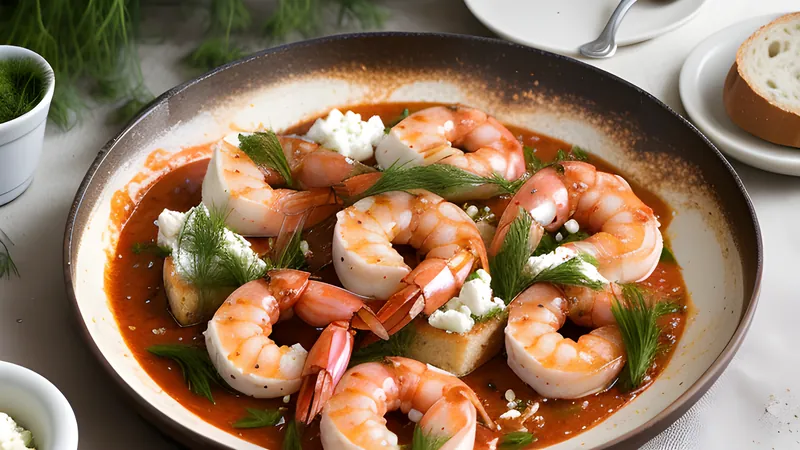
Prawn Saganaki with Feta and Dill
Ingredients
- 400g raw king prawns, peeled with tails on
- 3 tbsp olive oil
- 1 small onion, finely chopped
- 3 garlic cloves, finely sliced
- 1 tsp dried oregano
- 0.5 tsp chilli flakes
- 100ml ouzo or dry white wine
- 2 x 400g tins good chopped tomatoes
- 1 tsp caster sugar
- 200g feta, broken into chunks
- Large handful fresh dill, chopped
- Salt and black pepper, to taste
- Crusty bread, to serve
Method
- Heat 2 tbsp of the olive oil in a wide frying pan over a medium heat and soften the onion for 5 minutes.
- Add the garlic, oregano and chilli flakes and cook for a further minute until fragrant.
- Pour in the ouzo or wine and let it bubble fiercely for a minute to cook off the alcohol.
- Add the tomatoes and sugar, season, and simmer gently for 12 to 15 minutes until thickened.
- Toss the prawns with the remaining oil and a pinch of salt, then nestle them into the sauce.
- Scatter the feta over the top and cook for 4 to 5 minutes until the prawns are pink and the feta softens.
- Remove from the heat, scatter over the dill and serve straight from the pan with crusty bread.
Prawn saganaki is the kind of dish that makes you feel as though you’ve been transported to a harbour-side taverna with a cold glass of something and the sea a few feet away. Sweet prawns, a rich tomato sauce sharpened with garlic and chilli, and salty feta that softens into the bubbling pan — it’s bright, generous and comes together in well under half an hour. My small twist is finishing it with a real shower of fresh dill rather than the more usual parsley; its aniseed note echoes the ouzo and makes everything taste unmistakably Greek.
1 What “saganaki” actually means
The word saganaki doesn’t refer to an ingredient at all — it’s the small, two-handled frying pan the dish is cooked and served in, a diminutive of sagani. So “saganaki” really just means “something cooked in a little pan”, and there are many versions: most famously the slab of fried cheese that arrives flamed at your table, but also dishes built around prawns, mussels or feta. Prawn saganaki, garides saganaki, is a staple of the seafood tavernas that ring the Greek islands and coastline, where the day’s catch meets the tomatoes, olive oil and herbs of the Mediterranean larder. Ouzo, the anise spirit poured generously across the country, finds its way into the pan and ties the flavours together. It’s humble, sun-soaked cooking that tastes of the place it comes from.
2 Cooking it
Heat two tablespoons of the olive oil in a wide frying pan or a proper saganaki dish over a medium heat. Soften the onion for five minutes until translucent, then add the garlic, oregano and chilli flakes and cook for a further minute until fragrant.
Pour in the ouzo or wine and let it bubble fiercely for a minute to cook off the alcohol — stand back if you’re using ouzo near a flame. Tip in the tomatoes and sugar, season with salt and pepper, and simmer gently for twelve to fifteen minutes until the sauce has thickened and lost its raw, tinny edge. This patient reduction is what separates a good saganaki from a watery one.
Meanwhile, toss the prawns with the remaining oil and a pinch of salt. Nestle them into the simmering sauce, scatter the feta over the top in chunks, and cook for four to five minutes until the prawns turn pink and just cooked through and the feta has begun to slump and soften. Don’t overcook the prawns — the moment they curl and turn opaque, they’re done.
Pull the pan off the heat, scatter over a generous handful of dill, and serve at once straight from the pan with plenty of crusty bread.
3 Tips and variations
The bread is essential, not optional. That sauce, enriched with prawn juices and melting feta, is the best part of the dish, and you’ll want to mop every last streak of it. Warm the bread if you can.
A few honest notes. Use a feta that’s firm and properly salty — the cheaper, crumbly “salad cheese” lacks the backbone to stand up to the tomatoes. Raw prawns are far superior to pre-cooked ones, which go rubbery the second they hit the heat; if you can find shell-on, even better, as the shells add sweetness, though they make for messier eating. Buy the best tinned tomatoes you can, since they carry the whole sauce.
For a deeper flavour, char the prawns in a separate hot pan first, then add them to the sauce only at the end to warm through. A pinch of cinnamon or a few fennel seeds nods to the spicing of the eastern Aegean, where sweet and savoury sit comfortably together. If you like a bit more body, a handful of crumbled feta stirred through the sauce rather than scattered on top makes it creamier and richer.
This is forgiving food, which is part of its charm. The sauce can be made well ahead and sat happily in the fridge for a day or two — in fact it tastes better for the rest — leaving only the quick job of slipping in the prawns and feta when you’re ready to eat. That makes it a brilliant dish to lean on when people are coming round and you’d rather be talking than chained to the hob.
Serve it as a sharing starter with other small plates — a bit of tzatziki, some olives, a Greek salad — or as I prefer it, a main, in the middle of the table, everyone diving in with bread and forks. A glass of something crisp and cold alongside, and you’re most of the way to a holiday you didn’t have to book. Taverna food, no flights required.
Related Content