Prawn Malai Curry with Coconut Milk
Chingri malai curry, silken and gentle
Contents
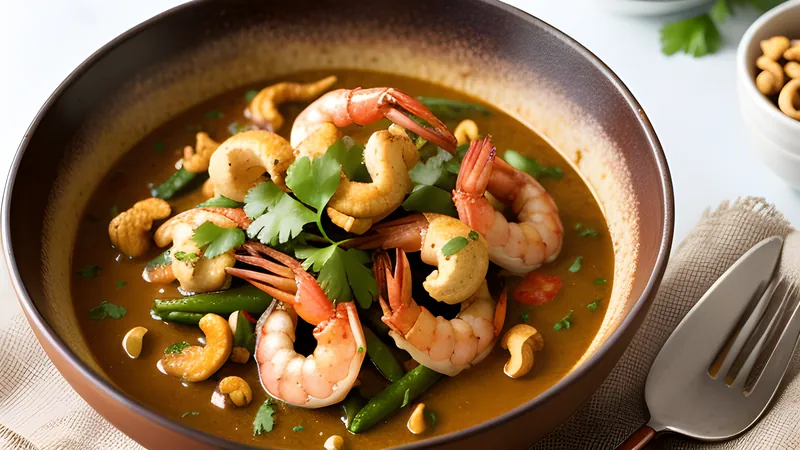
↓ Jump to recipeBengalis are famous for their devotion to fish, and among the hundreds of ways they cook it, chingri malai curry holds a special place: it is the dish that appears at weddings, at the Bengali New Year, at any occasion that deserves something a little grand. Plump prawns sit in a pale, glossy sauce of coconut and warm whole spices, gently sweet and utterly soothing. It is the opposite of a fierce, chilli-hot curry — the whole point is a fragrant, restrained richness. My one small twist is to fry the prawns in their spiced oil for barely a minute before setting them aside, so the oil takes on their sweetness and carries it through the entire sauce.
Prawn Malai Curry with Coconut Milk
Ingredients
- 500g large raw prawns, shell-on if possible, peeled and deveined
- 1/2 tsp ground turmeric
- 1/2 tsp salt, plus more to taste
- 3 tbsp mustard oil (or vegetable oil)
- 2 bay leaves
- 4 green cardamom pods, lightly crushed
- 1 small cinnamon stick
- 4 cloves
- 2 large onions, blended to a smooth paste
- 1 tbsp ginger paste
- 1 tbsp garlic paste
- 1 tsp ground cumin
- 1/2 tsp ground coriander
- 2 green chillies, slit
- 400ml coconut milk
- 1 tsp caster sugar
- 1/2 tsp garam masala
Method
- Toss the peeled prawns with the turmeric and 1/2 tsp salt.
- Heat 1 tbsp of the mustard oil until shimmering, then fry the prawns for about 1 minute a side until just pink. Lift out and set aside — they will finish cooking later.
- Add the remaining 2 tbsp oil to the pan. Fry the bay leaves, cardamom, cinnamon and cloves for 30 seconds until fragrant.
- Add the onion paste and fry over medium heat for 8–10 minutes, stirring, until it loses its raw smell and turns pale gold.
- Stir in the ginger and garlic pastes, cumin and ground coriander and fry for 2 minutes until the oil separates.
- Pour in the coconut milk, add the slit green chillies and sugar, and bring to a gentle simmer. Cook for 5 minutes and season with salt.
- Return the prawns and any juices to the pan and simmer very gently for 3–4 minutes, until just cooked through.
- Stir in the garam masala, take off the heat, and rest 5 minutes before serving with rice.
The curry with a misunderstood name
The name causes endless confusion, and it is a lovely bit of culinary history. Malai in Hindi and Bengali means cream, and most people assume the dish is named for the creaminess of its coconut-milk sauce. But there is a persuasive theory that malai here is a corruption of Malay — that this is a curry that came to Bengal through the maritime trade with the Malay peninsula and the East Indies, where coconut-based prawn dishes are common, and that Bengalis adopted it, refined it with their own spicing, and made it their own. Either way the sauce is genuinely silken, so the name fits however you read it.
The prawn itself matters to the story. The classic version uses golda chingri, the giant freshwater prawns of the Bengal delta, big enough that a few make a meal and prized for their sweet, firm meat and the orange fat in the head. Head-on, shell-on prawns give the best flavour by far, because so much of a prawn’s taste lives in the shell and the head — if you can get them, use them, and squeeze the heads into the sauce. Failing that, the largest raw prawns you can find, peeled but with the tail on, will make a beautiful curry.
Handling coconut milk without splitting it
Coconut milk is the body of this dish and it needs a little care, because it can split into a grainy, oily mess if you treat it roughly. Two rules keep it smooth. Keep the heat gentle once it goes in — a bare simmer, never a hard boil, which is what breaks the emulsion of fat and water. And stir it as it heats. If you are using full-fat tinned coconut milk, which I recommend for this celebratory dish, give the tin a good shake first so the thick cream at the top mixes back into the thinner liquid below.
The other thing coconut milk needs is seasoning to bring it to life. On its own it is bland and faintly sweet, so this curry leans on the small spoon of sugar to lift its natural sweetness, a proper amount of salt to give it savour, and the warm whole spices to give it perfume. Balance those three and the sauce sings; skip any of them and it falls flat.
Whole spices and the tempering
This is a curry built on garam masala thinking — warm, sweet, aromatic spices rather than hot ones. Cardamom, cinnamon and cloves are fried whole in the oil at the start, a technique called tempering or phoron, and this is where the fragrance comes from. Frying whole spices in hot oil for even thirty seconds blooms their aromatic oils and infuses the fat, so that every element cooked in that oil afterwards carries the perfume. Crush the cardamom pods lightly so they open and release their seeds; leave the cinnamon and cloves whole and simply push them to the side of anyone’s plate at the table.
Mustard oil is the traditional fat of the Bengali kitchen and it makes a real difference here, bringing a pungent, faintly sharp note that is unmistakably Bengali. Heat it until it just shimmers and reaches smoking point, then let it cool for a few seconds before adding the spices — this takes the raw bite off it and mellows its pungency. If you cannot get it, any neutral oil works, and the curry will still be lovely, if a shade less authentic.
The onion paste and the prawn timing
The base of the sauce is a smooth onion paste, blended rather than sliced, which cooks down into a thick, pale foundation that gives the curry its body without any of the browned, caramelised depth you would build for a heartier meat curry. You want to keep this pale — fry it gently until it loses its raw, sharp smell and turns a soft gold, but do not let it darken, because this is meant to be a fair, delicate curry.
The critical timing is the prawns. Prawns cook in minutes and turn rubbery the instant they are overdone, so we cook them twice, briefly. The first sear firms them and flavours the oil; then they come out while the sauce is built, and go back in for only three or four minutes at the end to finish. They are ready the moment they curl into a loose C and turn opaque all the way through. A prawn curled into a tight O has gone too far. Because they finish in the residual heat as the curry rests, pull the pan off the stove while they still look a touch underdone.
Deveining is worth the two minutes it takes. Run the tip of a small knife down the back of each prawn and lift out the dark thread — it is the gut, and while it is harmless, it can carry a gritty, muddy taste that has no place in a curry this delicate. Give the peeled prawns a quick rinse and pat them dry before they hit the oil, because wet prawns steam rather than sear and never take on that first flush of colour.
Serving, storage and variations
Serve chingri malai curry with plain steamed basmati or, for the full Bengali experience, fragrant gobindobhog rice, which is short-grained and aromatic. The sauce is rich, so keep everything else on the table simple — a plain rice and perhaps a light vegetable dish is all it wants. A scatter of fried onions or a few whole fried cashews on top is a pretty, festive finishing touch.
The curry keeps for two days in the fridge, though the prawns will firm up a little on reheating, so warm it very gently and briefly. It does not freeze well — the coconut milk can turn grainy and the prawns toughen — so this is one to make and eat. For variations, you can enrich it further with a splash of double cream stirred in at the end for a wedding-feast version, or swap the prawns for firm white fish. A handful of green peas dropped in with the coconut milk is a common home addition that lightens the dish and adds little bursts of sweetness. Some cooks finish with a spoonful of ghee for extra gloss and a nutty, festive aroma, which I do when the occasion warrants it. If this coastal, coconut register appeals, my Goan fish curry with kokum and coconut is the sharper, redder counterpoint from the other side of India, and for a drier, spicier prawn dish altogether, the Kerala prawn roast with curry leaf shows just how differently the same shellfish behaves in a southern pan. This one is for the days that call for a little gentleness.
Related Content