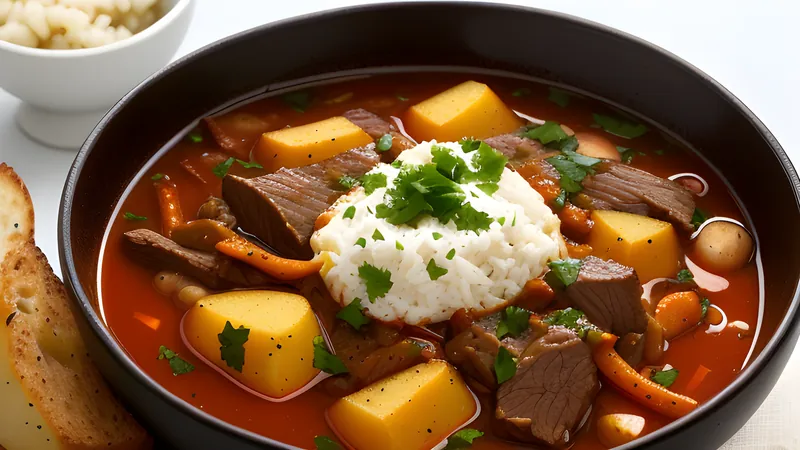
Pozole Rojo with Guajillo Broth and Hominy
A charred-chilli red broth, slow pork and a garnish bar you build yourself, bowl by bowl
Contents
↓ Jump to recipePozole rojo is a soup finished at the table. The broth arrives dark and glossy, thick with tender pork and swollen hominy, and everything else — the crunch, the heat, the sharpness — gets added by hand, bowl by bowl. The twist here is in the broth itself: the guajillo and ancho chillies are toasted hard, soaked, blended, then fried again in a separate pan before they go anywhere near the stockpot. That second frying is what turns a good pozole into the kind people ask for the recipe of.
Pozole Rojo with Guajillo Broth and Hominy
Ingredients
- 1.5kg boneless pork shoulder, cut into 5cm chunks
- 500g pork neck bones or trotters, split (optional but recommended for body)
- 1 white onion, halved, plus 1 finely diced onion for serving
- 1 whole head of garlic, halved crossways, plus 4 cloves, peeled
- 2 bay leaves
- 1 tbsp fine sea salt, plus more to taste
- 6 dried guajillo chillies, stemmed and deseeded
- 3 dried ancho chillies, stemmed and deseeded
- 2 dried chiles de árbol (optional, for heat)
- 2 tsp dried Mexican oregano
- 1 tsp cumin seeds, toasted and ground
- 2 x 400g tins white hominy, drained and rinsed
- 2 tbsp neutral oil
- Juice of 1 lime, plus wedges to serve
- 6 radishes, thinly sliced
- 1/4 head white cabbage, finely shredded
- 2 avocados, sliced
- Dried Mexican oregano, extra, to crumble over
- Chile piquín or ground árbol chilli, to serve
- Tostadas or warm corn tortillas, to serve
Method
- Put the pork shoulder, pork bones, halved onion, halved garlic head and bay leaves into a large stockpot and cover with 3.5 litres of cold water. Bring to a boil, skim off the grey foam thoroughly, then reduce to a bare simmer, partially cover, and cook for 2 to 2.5 hours until the pork shoulder is fully tender.
- Meanwhile, toast the guajillo, ancho and árbol chillies in a dry pan over medium heat for 30 to 60 seconds a side, pressing flat, until fragrant and slightly darkened but not blackened. Cover with 500ml of the simmering broth and let soak for 20 minutes until pliable.
- Blend the soaked chillies with their soaking liquid, the 4 peeled garlic cloves, oregano and cumin until completely smooth. Push the purée through a sieve into a bowl, discarding the skins left behind.
- Heat the oil in a heavy pan over medium-high heat. Pour in the chilli purée carefully (it will spit) and fry, stirring constantly, for 6 to 8 minutes until it darkens, thickens and the raw chilli smell turns rich and toasty.
- Lift the pork and bones out of the broth. Discard the bones, onion halves and garlic head. Shred or chunk the pork shoulder. Strain the broth through a fine sieve back into the pot, discarding the solids.
- Stir the fried chilli paste into the strained broth, add the salt, and simmer for 15 minutes. Taste and adjust salt — it should taste a shade too strong on its own, since the hominy and garnishes will mellow it.
- Add the shredded pork and drained hominy to the pot. Simmer for a further 20 to 25 minutes until the hominy kernels have softened and started to flower open at the tip.
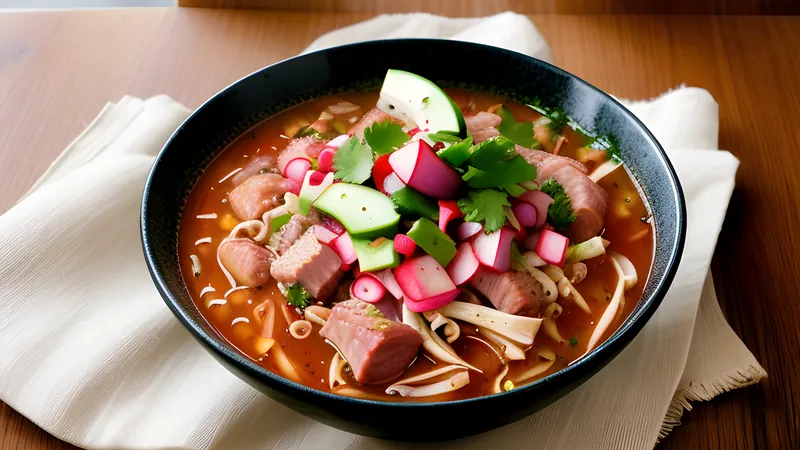
- Stir in the lime juice off the heat. Ladle into deep bowls and serve with the diced onion, shredded cabbage, radish, avocado, extra oregano, chile piquín, lime wedges and tostadas on the table for everyone to build their own bowl.
Where it comes from
Pozole predates the Spanish arrival in Mexico by centuries. The Nahua peoples of central Mexico made a version of it for ceremonial occasions, and the dish carries genuine weight in Mexican food history — early Spanish chroniclers, including the friar Bernardino de Sahagún, recorded that pre-Hispanic pozole was sometimes made with human flesh as part of ritual practice tied to sacrifice, a detail that has been debated by historians but which shows up repeatedly in colonial-era accounts. After the conquest, pork replaced the ceremonial meat, and the dish became what it is today: a celebration food, served on Mexican Independence Day, at Christmas, and at any gathering where a big pot needs to feed a crowd for hours.
The name comes from the Nahuatl pozolli, meaning “foamy,” a reference to the way the corn kernels — nixtamalised maize, known as hominy — puff and split as they cook, releasing starch that thickens and clouds the broth. Nixtamalisation itself, soaking dried corn in an alkaline solution of water and lime (cal, calcium hydroxide, not the citrus), is one of the oldest food-processing techniques in the Americas, and it is what unlocks the corn’s niacin and gives hominy its distinctive chewy, faintly mineral flavour — nothing like sweetcorn. Tinned hominy, already nixtamalised and cooked, is a completely legitimate shortcut; dried hominy needs an overnight soak and a two-hour simmer of its own before it goes anywhere near the pork.
Three colours of pozole exist in Mexico, distinguished entirely by what goes into the broth. Pozole blanco is the plain pork-and-hominy broth with no chilli, popular in Michoacán. Pozole verde, from Guerrero, gets its colour from a purée of tomatillos, pumpkin seeds and fresh green chillies. Pozole rojo, the version most people outside Mexico know, comes largely from Jalisco and takes its colour and its depth from dried red chillies — usually a guajillo and ancho blend, sometimes with a few chiles de árbol thrown in for heat. Each region treats the garnish spread differently too, but the principle is constant: the broth is rich and slightly plain on its own; the garnishes are where the brightness lives.
The method, explained
The single biggest difference between a pozole rojo that tastes flat and one that tastes alive is whether the chilli paste gets fried a second time. Most guajillo-broth recipes stop at blending the soaked chillies into the stock. That produces a broth that’s red and mild-tasting but a little raw around the edges — the chillies’ skins still carry a slightly bitter, grassy note that soaking alone doesn’t fully cook out.
Frying the strained purée in hot oil for six to eight minutes before it ever touches the stockpot does two things. First, it drives off the last of the water in the purée, concentrating the chilli flavour and letting real caramelisation happen at the sugars in the chilli flesh — this is the same principle behind toasting a curry paste in oil before adding liquid, and it’s the difference between “chilli-flavoured water” and a broth with actual depth. Second, the oil carries fat-soluble flavour compounds from the chillies that water alone can’t extract, so the finished broth tastes rounder and less one-dimensional. Watch it closely: chilli paste in hot oil goes from perfectly toasted to scorched and bitter within about a minute once it starts sticking, so keep stirring constantly and pull it the moment the raw smell turns toasty and sweet.
Sieving the blended chilli purée before it hits the oil matters too. Dried chilli skins never blend completely smooth, even in a powerful blender, and the leftover flecks of skin turn gritty and slightly bitter once fried. Pushing the purée through a sieve with the back of a ladle takes an extra five minutes and makes the difference between a silky broth and one with a faint sandy texture that undermines all the work that went into the chilli frying.
The pork bones aren’t optional if you want restaurant-depth broth. Pork shoulder alone gives you a decent, slightly thin stock; adding split neck bones or a trotter contributes collagen that gives the finished broth body and a faint stickiness on the lips — the textural signature of a broth that’s been properly built rather than just simmered.
The recipe
Start the pork simmering first, since it needs two to two and a half hours of gentle cooking to get properly tender — shoulder chunks with bones added for body, covered generously with water, brought to a boil and skimmed hard before it settles to a bare simmer. While that ticks along, toast the guajillo and ancho chillies (and árbol, if using heat) in a dry pan until fragrant, then soak them in hot broth until soft enough to blend. Purée the soaked chillies with a few cloves of raw garlic, dried oregano and toasted ground cumin, then sieve the whole lot to strip out any leftover skin.
Fry that sieved purée hard in oil until it darkens and smells toasted rather than raw, then stir it into the strained, bone-free pork broth along with a generous hit of salt. Add the shredded pork back in with two tins of drained, rinsed hominy, and let everything simmer together for 20 to 25 minutes so the kernels soften through and start to flower open — that little burst at the tip of each kernel is the sign it’s ready. Finish with a squeeze of lime off the heat.
Serve it properly: bowls of broth, pork and hominy going out plain, with a full garnish spread on the table — diced raw onion, shredded cabbage, sliced radish, avocado, extra crumbled oregano, ground chile piquín and lime wedges, plus a stack of tostadas or warm tortillas. Everyone builds their own bowl, and the crunch of the raw vegetables against the long-cooked broth is half the point of the dish.
Tips, substitutions, make-ahead and storage
Pozole rojo is, if anything, better the next day — the broth continues to deepen overnight in the fridge, so this is an excellent make-ahead dish for a gathering. Cook it up to two days in advance, keep the garnishes separate and freshly cut, and reheat the broth gently on the stove rather than in the microwave, which tends to overcook the pork at the edges. It freezes well without the garnishes for up to three months; thaw overnight in the fridge before reheating.
If dried guajillo or ancho chillies aren’t available, a tablespoon of good-quality ancho chilli powder mixed into the broth is a reasonable stand-in, though the flavour will be flatter and less complex — the toasting and frying steps genuinely matter more with whole dried chillies. Dried hominy, sold in Mexican grocers, gives a firmer, more toothsome kernel than tinned but needs an overnight soak in water and a separate two-hour simmer before it’s ready to add; tinned is entirely acceptable and far faster.
For a lighter version, chicken thighs simmered for 45 minutes stand in for the pork, though the broth won’t get the same collagen body without a few chicken wings added for the simmer. Vegetarian pozole rojo works too — swap the meat and bones for a rich vegetable stock built with roasted mushrooms and a piece of kombu, and the guajillo-ancho broth still carries the dish.
Variations
Pozole verde, made with tomatillos and pepitas instead of dried red chillies, is worth trying once you’ve got the pork-and-hominy technique down — the broth is bright and herbal rather than deep and smoky. A Jalisco-style version adds a splash of the pork’s own rendered fat back into the broth just before serving, for extra richness. And if you want real heat, double the chiles de árbol and skip seeding a couple of them; the broth will bite back, and the cooling crunch of raw cabbage and radish earns its place on the table twice over.
However you build your bowl, keep a stack of napkins close by and let the pot simmer a little longer than you think it needs — pozole rewards patience more than most soups. For another Mexican main with a slow, deeply spiced marinade at its heart, try cochinita pibil, or for something quicker with the same chilli-forward instincts, tacos al pastor and a classic bowl of chilli con carne both draw from the same pantry.
Related Content