Pillowy Potato Gnocchi with Brown-Butter Sage
Light little dumplings in a nutty butter
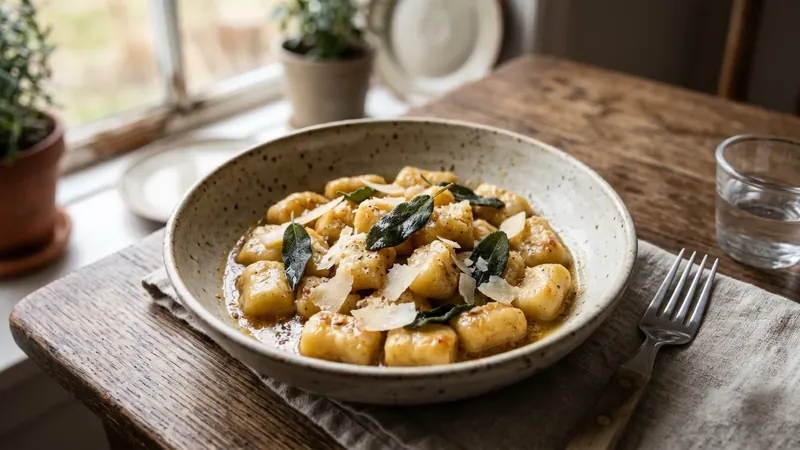
Gnocchi has a reputation for turning out gluey and heavy, but the secret is a light hand and dry, floury potatoes. These little dumplings are tender enough to dissolve on the tongue, and the twist lies entirely in the sauce: butter cooked until it turns golden and nutty, with sage leaves crisped to a whisper. It is barely a recipe, and yet it tastes like the best thing you have eaten all week.
Pillowy Potato Gnocchi with Brown-Butter Sage
Ingredients
- 900g floury potatoes (Maris Piper or King Edward), unpeeled
- 1 medium egg yolk
- 180g plain flour, plus extra for dusting
- 50g finely grated Parmesan, plus more to serve
- Pinch of freshly grated nutmeg
- 1 tsp fine sea salt
- 100g unsalted butter
- 20 fresh sage leaves
- Flaky sea salt and black pepper, to finish
Method
- Boil the unpeeled potatoes in salted water for 25-30 minutes until tender, then drain and leave until cool enough to handle.
- Peel the warm potatoes and pass them through a ricer onto a clean work surface. Spread them out to let the steam escape.
- Scatter over the flour, Parmesan, nutmeg and salt, add the egg yolk, and gently bring together into a soft dough. Stop as soon as it holds; do not knead.
- Cut the dough into pieces and roll each into a long rope about 2cm thick. Cut into 2cm pillows and, if you like, roll over a fork to make ridges.
- Bring a large pan of salted water to a gentle boil. Cook the gnocchi in batches; they are ready a few seconds after they float to the surface.
- Lift out with a slotted spoon and set aside while you make the sauce.
- Melt the butter in a wide pan over medium heat. Add the sage leaves and let the butter foam, swirling, until it turns golden and smells nutty, about 3-4 minutes.
- Tip in the drained gnocchi and toss gently to coat in the brown butter and crisp sage.
- Season with flaky salt and black pepper, and serve at once with extra Parmesan.
3 The Story
Gnocchi are among the oldest shapes in Italian cooking, predating the arrival of the potato in Europe by centuries. Early versions were dumplings bound with breadcrumbs, semolina or flour, and the word itself is generally traced to the Italian for a knot or a knuckle, a nod to their small, knobbly shape. It was only after the potato travelled from the Andes and gradually took root in northern Italian kitchens that the version most people now picture came into being: a soft potato dough, lightly bound and quickly boiled.
The choice of potato matters more than almost anything else. Floury, low-moisture varieties such as Maris Piper or King Edward rice into a dry, fluffy crumb that needs very little flour to hold together, and it is the restraint with flour that keeps the dumplings light. Waxy potatoes hold too much water, forcing in more flour and producing the dense, chewy results that give homemade gnocchi a bad name. Baking the potatoes rather than boiling them drives off even more moisture, and many cooks swear by it for that reason.
The brown-butter and sage finish is a classic of northern Italian cooking, where butter rather than olive oil is the traditional fat. Known in Italian as burro e salvia, it appears across the regions of Lombardy, Piedmont and the Veneto, dressing everything from filled pasta to these very dumplings. Cooking butter past the point of melting causes its milk solids to toast, developing the colour and the deep, biscuity aroma that French cooks call beurre noisette, or hazelnut butter. The sage, dropped in whole, perfumes the fat and crisps into fragile, savoury crisps.
The pairing works because it is so spare. A good plate of gnocchi needs little embellishment, and the nuttiness of the butter against the gentle potato and the salty hit of Parmesan is enough to carry the dish on its own. A final grind of pepper and a shower of cheese is all the gilding required. Treat the dough kindly, salt the water well, and these will reward you handsomely.
Related Content