Potato and Cheese Pierogi with Browned-Butter Onions
Poland's ruskie dumplings, boiled then crisped and finished in nutty browned butter
Contents
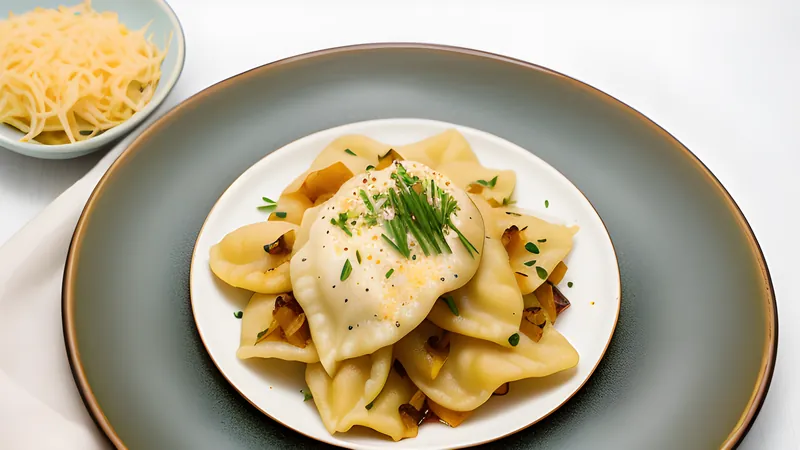
↓ Jump to recipePierogi ruskie are the pierogi most people mean when they picture the dish: soft half-moons of dough stuffed with mashed potato and farmer’s cheese, boiled until they float, and — if you know what you are doing — crisped in a pan afterwards and buried under sweet, slow-cooked onions. This version pushes the onions one step further by cooking them in butter until the butter itself turns nut-brown and toasty, which gives the whole plate a deep, nutty backnote that plain fried onions never reach. The other secret is duller and more important: resting the dough. A rested dough rolls thin, seals tight and stays tender, and it is the difference between pierogi that hold their filling and pierogi that burst in the pot and hand you a pan of cheesy soup.
Potato and Cheese Pierogi with Browned-Butter Onions
Ingredients
- 400g plain flour, plus extra for dusting
- 1 large egg
- 180ml warm water
- 2 tbsp soured cream
- 3 tbsp melted butter (for the dough)
- 1/2 tsp salt (for the dough)
- 500g floury potatoes (Maris Piper), peeled and cut into chunks
- 200g twaróg (farmer's cheese) or full-fat curd cheese, or ricotta well-drained
- 1 small onion, very finely chopped (for the filling)
- 2 tbsp butter (for the filling onion)
- 1 tsp salt for the filling, plus black pepper
- 100g butter (for finishing)
- 3 large onions, thinly sliced (for finishing)
- Extra soured cream, to serve
Method
- Make the dough: mix the flour and salt in a bowl, make a well, and add the egg, soured cream, melted butter and most of the warm water. Bring together, then knead on a floured surface for 8 to 10 minutes until smooth and elastic, adding the last of the water only if needed.
- Wrap the dough and rest it at room temperature for at least 30 minutes — this relaxes the gluten so it rolls thin without springing back and stays tender.
- Meanwhile, boil the potatoes in salted water until very tender, about 15 minutes, then drain well and mash smooth. Leave to cool slightly.
- Fry the finely chopped small onion in 2 tbsp butter over medium heat for 8 minutes until soft and golden, then beat it into the mash along with the twaróg, 1 tsp salt and plenty of black pepper. Cool the filling completely — warm filling tears the dough.
- For the finishing onions, melt the 100g butter in a frying pan over medium heat and cook the sliced onions slowly for 20 to 25 minutes, stirring, until deep golden and jammy. Keep cooking until the butter turns nut-brown and smells toasty, then take off the heat.
- Roll the rested dough out thinly, about 2mm, on a floured surface. Cut out rounds with an 8cm cutter, re-rolling the offcuts.
- Place a heaped teaspoon of cold filling on each round. Fold into a half-moon and pinch the edges firmly to seal, pressing out any air; crimp the sealed edge with your fingers or a fork. Keep them under a tea towel so they don't dry out.
- Bring a large, wide pan of salted water to a gentle boil. Cook the pierogi in batches for 3 to 4 minutes — they are done about 1 minute after they float to the surface. Lift out with a slotted spoon and drain.
- Melt a little of the browned butter (or a knob of fresh butter) in a large frying pan over medium-high heat and fry the boiled pierogi for 2 minutes a side until golden and crisp in patches.
- Serve hot, piled with the browned-butter onions and their butter spooned over, and soured cream on the side.
Where pierogi come from, and what “ruskie” means
Pierogi are the national dumpling of Poland, eaten across the country and the wider region in dozens of forms — filled with sauerkraut and mushroom, with meat, with sweetened curd cheese, with seasonal fruit like blueberries or strawberries in summer. The potato-and-cheese kind carry the name ruskie, and the label causes endless confusion because it does not mean Russian. It refers to Ruś Czerwona, Red Ruthenia — a historical region straddling what is now south-eastern Poland and western Ukraine — where this particular filling is thought to have originated. The dish crossed into central Poland and became a nationwide staple, keeping the old regional name. After Russia’s full-scale invasion of Ukraine in 2022, some Polish restaurants pointedly renamed them pierogi galicyjskie (Galician pierogi) to sever the accidental association, which tells you the name still carries a charge.
The filling’s defining ingredient is twaróg, a fresh white curd cheese somewhere between cottage cheese and quark, mild and faintly tangy, that is a cornerstone of Polish home cooking. Mashed with potato and softened onion, seasoned simply with salt and a great deal of black pepper, it makes a filling that is comforting and savoury without being rich. Twaróg is sold in Polish shops everywhere and is worth seeking out; well-drained ricotta or a firm curd cheese are the usual stand-ins if you cannot find it, though the flavour is a touch less tangy.
Pierogi are woven through Polish family life and the calendar. They appear on the Christmas Eve table (Wigilia), where the meat-free versions with cabbage and mushroom are traditional, and making them is often a communal, all-hands-on-deck job — someone rolling, someone filling, someone pinching — precisely because they take a while and go faster with company. That domestic, sit-round-the-table quality is a large part of what the dish means at home.
Why resting the dough matters
Pierogi dough is a simple mix of flour, egg, a little fat and water, and the moment you knead it you develop gluten — the elastic protein network that gives the dough its strength. Freshly kneaded, that gluten is tight and springy, so if you try to roll the dough straight away it fights back, shrinks on the board, and tears when you stretch it thin. Rest it, covered, for at least half an hour and the gluten strands relax: the dough rolls out thin and evenly, holds its shape, and stays supple enough to pleat and seal without cracking. The rest also lets the flour hydrate fully, which makes the cooked dough tender rather than tough. Skip the rest and you fight the dough the whole way; give it thirty minutes and it does what you ask. Anyone who has wrestled fresh potato gnocchi knows the same truth from the other direction — with dumpling doughs, a light hand and a little patience beat brute force every time.
Sealing: the make-or-break step
A pierog that opens in the boiling water dumps its filling and turns to mush, so the seal is everything. Three things keep them shut. The filling must be completely cold — warm mash softens the dough and makes it tear, and it is worth chilling the filling while the dough rests. The edges must be clean and dry, with no smear of filling trapped in the seam, which is why you keep the filling back from the very edge of each round. And you must press out the air as you fold: trapped air expands in the hot water and pops the seal from the inside. Fold each round firmly into a half-moon, pinch the whole seam hard between finger and thumb, then crimp it with your fingers or the tines of a fork for a second line of defence. If your dough has dried out and won’t stick, a wet fingertip run along the edge helps it grip. Keep the finished pierogi under a cloth so they don’t dry and crack before they cook.
Boil, then crisp
Pierogi are boiled, not steamed or fried from raw, and they cook fast — drop them into gently boiling salted water in batches (crowd the pan and they stick together and cook unevenly) and they are ready about a minute after they bob to the surface, three to four minutes in all. You could stop there; boiled pierogi with butter and onions are entirely traditional. But a spell in a hot pan afterwards is the upgrade worth making. Frying the drained, boiled pierogi in a little butter for a couple of minutes a side crisps and browns the dough in patches through the Maillard reaction, giving you a plate with two textures at once: the soft, slippery boiled surface and the golden, crunchy fried one. It is the best of both, and it rescues any that boiled a shade too long.
The browned-butter onions
Onions cooked long and slow in butter until soft and golden are the classic pierogi topping. Take the butter one stage further and you transform the plate. Keep the pan on past the point where the onions are golden, and the milk solids in the butter toast and turn from yellow to a deep hazelnut-brown, throwing off a warm, nutty, almost toffee-ish aroma — this is beurre noisette, browned butter, and it is one of the great cheap tricks in cooking. Poured over the crisped pierogi with the jammy onions, it adds a toasted depth that pulls the whole dish together and flatters the mild potato-and-cheese filling. Watch it in the final minute: browned butter goes to burnt butter quickly, so pull it off the heat the moment it smells nutty and looks the colour of a conker.
The recipe
Make a soft dough of flour, egg, soured cream, butter and water; knead until smooth and rest it 30 minutes. Boil and mash the potatoes, beat in soft fried onion and twaróg, season hard with salt and pepper, and cool the filling completely. Cook sliced onions slowly in butter until the butter browns and the onions are jammy. Roll the dough thin, cut rounds, fill with cold filling, and seal firmly with the air pressed out. Boil in batches until they float plus a minute, then fry in butter until golden in patches. Serve under the browned-butter onions with soured cream.
Tips, make-ahead and storage
Roll the dough as thin as you dare, around 2mm — thick pierogi are stodgy, and the dough puffs a little as it cooks. Work in batches and keep everything under tea towels, since exposed dough and filled pierogi both dry out and crack. Pierogi are made for batch cooking and freeze beautifully raw: open-freeze the sealed, uncooked pierogi on a floured tray until solid, then bag them, and cook them straight from frozen in boiling water (a minute or two longer) whenever you want them. This is genuinely the best way to keep them — boiled pierogi that are then chilled tend to stick together. Cooked leftovers keep for 2 days in the fridge and are excellent fried up in butter for breakfast.
If you love a potato-and-cheese filling, creamy potato soup works the same comforting register in a bowl, and for another dumpling that rewards a gentle hand and a hot pan, vegetable gyoza are boiled-then-crisped cousins from the other side of the continent. Make a big batch, rope in whoever is around to help pinch, and freeze half — pierogi were always meant to be made by the tableful.
Related Content