Pork and Chive Potstickers
Juicy pan-fried Chinese dumplings with a lacy crisp base, thanks to a splash of flour-water slurry
Contents
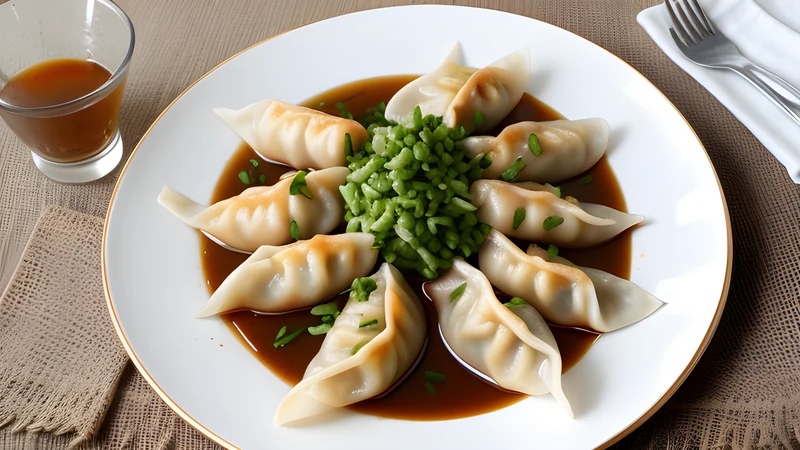
↓ Jump to recipePotstickers are the dumpling that teaches you the most about texture in a single bite: a soft, pleated top, a juicy pork filling that runs when you bite it, and a base fried to a deep golden crust that crackles. The name is a straight translation of the Chinese guo tie, “pot stick”, and it describes exactly what happens — the dumplings are deliberately allowed to grip the hot pan, so the underside caramelises into crisp lace. Making them at home is a satisfying afternoon’s work and a very sociable one, and the reward is dumplings that put most takeaway versions to shame. The small trick that lifts these over the ordinary is a flour-water slurry poured into the pan, which sets into a thin, crackling web across the bases.
Pork and Chive Potstickers
Ingredients
- 30 round dumpling wrappers (gyoza/jiaozi skins), about 8cm
- 300g minced pork (not too lean, around 20% fat)
- 100g Chinese chives (garlic chives) or regular chives, finely chopped
- 1 tbsp finely grated fresh ginger
- 2 cloves garlic, crushed
- 1 tbsp light soy sauce
- 1 tbsp Shaoxing rice wine
- 2 tsp toasted sesame oil
- 1 tsp caster sugar
- 1/2 tsp fine salt
- 1/4 tsp white pepper
- 3 tbsp cold chicken stock or water (for the filling)
- Neutral oil, for frying
- For the slurry: 1 tsp plain flour whisked into 150ml water
- For the dipping sauce: 3 tbsp black rice vinegar, 1 tbsp soy sauce, 1 tsp chilli oil, fine shreds of ginger
Method
- Put the pork in a bowl with the ginger, garlic, soy, Shaoxing wine, sesame oil, sugar, salt and white pepper. Stir vigorously in one direction for 2 to 3 minutes until the mixture turns sticky and pastes together — this gives a bouncy, cohesive filling.
- Add the cold stock a tablespoon at a time, stirring it fully in each time, until absorbed. This water is what makes the cooked filling juicy. Finally fold through the chopped chives.
- Chill the filling for 20 minutes to firm up, which makes it far easier to wrap.
- Working with a few wrappers at a time (keep the rest under a damp cloth), put a rounded teaspoon of filling in the centre of each. Wet the edge lightly with water.
- Fold the wrapper into a half-moon. Seal the top, then pleat one side of the pastry over towards the sealed centre, making 3 to 4 pleats and pressing each to the flat back edge, so the dumpling sits upright with a flat bottom.
- Heat 1 tbsp neutral oil in a non-stick or cast-iron frying pan over medium-high. Arrange the dumplings flat-side down in a snug circle or rows and fry undisturbed for 2 minutes until the bases are golden.
- Whisk the flour into the water and pour enough into the pan to come 5mm up the dumplings. It will splatter — stand back and cover immediately with a tight lid.
- Steam over medium heat for 6 to 7 minutes until the water has almost gone and the wrappers are translucent and cooked.
- Uncover, let the last of the liquid evaporate, and add a drizzle more oil around the edge. Fry 2 to 3 minutes more until a thin lacy crust forms and the bases are deep golden and crisp.
- Invert onto a plate, crisp-side up, and serve hot with the dipping sauce.
Jiaozi, guo tie and the Chinese dumpling
The Chinese dumpling, jiaozi, is one of the great foods of the world and one of the most freighted with meaning. Jiaozi are eaten across northern China as everyday food and, above all, at Chinese New Year, when families gather to fold them together through the evening; their crescent shape recalls old silver ingots, so eating them is a wish for prosperity in the year to come. The folding is a communal ritual, generations round a table, and the sheer number made — hundreds at a sitting — is part of the point.
The same dumpling can be boiled (shui jiao), steamed, or pan-fried, and pan-frying is where the potsticker lives. The technique of frying, then steaming with a splash of liquid under a lid, then frying again is a piece of genuine kitchen cleverness: it cooks the filling through with steam while crisping the base with fat, giving you two textures from one pan. The Japanese gyoza is a close cousin, thinner-skinned and usually more delicately seasoned, brought back from China by soldiers after the Second World War and made Japanese. If you like this, the same wrapping-and-steaming instincts carry straight over to har gow, prawn and chive dumplings and to a tray of char siu bao, steamed BBQ pork buns.
The filling: keeping it juicy
The most common disappointment with home dumplings is a dry, bouncy pellet of filling, and there are two techniques that fix it. The first is stirring the seasoned pork vigorously in one direction until it turns sticky and paste-like. This works the myosin proteins in the meat into a cohesive, springy mass that holds together and stays tender — the same principle that gives a good meatball or fish cake its bounce. The second, and the one that makes the real difference, is beating cold stock into the meat a spoonful at a time until the filling has absorbed several tablespoons of liquid. That water turns to juice inside the sealed wrapper as it cooks, so the filling steams itself and stays succulent. Skip it and the filling cooks dry.
Use pork with a decent amount of fat, around twenty per cent; very lean mince gives a dry, tight result no amount of technique fully rescues. The Chinese chives — flat garlic chives, sometimes sold as gau choy — bring a mild, sweet garlic-onion note that is the classic partner to pork in these dumplings. Ordinary chives or the green tops of spring onions stand in perfectly well. Chill the mixed filling before you wrap: cold filling is firm, easy to portion, and far less inclined to smear the sealing edge, which would stop the wrapper sticking.
Wrapping and pleating
Shop-bought round wrappers make this achievable on a weeknight; look for them fresh or frozen in Chinese supermarkets, labelled gyoza or dumpling skins. Keep the stack under a damp cloth as you work, because they dry and crack in minutes once exposed. A rounded teaspoon of filling is plenty — overfilling is the fast route to burst dumplings — and a light wipe of water round the rim is all the glue you need.
The pleat that gives potstickers their upright, ridged look is easier than it appears. Fold the wrapper into a half-moon and pinch it shut at the top centre. Then take the front sheet of pastry and fold small tucks of it toward that centre point, pressing each pleat firmly against the flat back edge. Three or four pleats a side is plenty. The pleats do a job beyond looks: they gather the pastry so the dumpling sits flat on its base, giving maximum contact with the pan for that crust. If pleating defeats you, a plain, well-sealed half-moon fries up just as deliciously, so do not let the frilly edge put you off.
The slurry, and the crisp base
Frying dumplings the plain way gives you a crisp spot in the middle of each base and pale edges. Pouring in a thin flour-water slurry instead of plain water is the trick that turns the whole underside into a connected, lacy crust — the flour in the water sets as the liquid cooks off, leaving a delicate golden web that binds the dumplings into a shareable sheet you invert dramatically onto a plate. Whisk just a teaspoon of flour into the water; too much and the crust turns thick and bready.
Timing is everything at the pan. Get the bases golden first in a little oil, then add the slurry — it will spit, so have the lid ready and clap it on at once — and steam under the lid until the liquid has nearly gone and the wrappers are translucent and cooked. Then take the lid off and let the last of the water evaporate, add a final drizzle of oil round the edge, and fry on until the lattice sets crisp and deep gold. Rushing the final fry gives you a soft, pale base; a couple of minutes of patience gives you the crackle that is the whole reason these are called potstickers.
Make-ahead, freezing and serving
Dumplings freeze beautifully, and freezing a batch is the real payoff for an afternoon of folding. Arrange the raw pleated dumplings on a floured tray so they do not touch, freeze until solid, then bag them; cook straight from frozen exactly as above, adding a minute or two to the steam. Do not thaw them first — they go soggy and stick together. Cooked potstickers are best eaten straight away while the base is crisp, so cook only as many as you will eat and keep the rest in the freezer.
The dipping sauce matters. A classic mix of black Chinkiang rice vinegar, a little soy, chilli oil and fine shreds of raw ginger cuts the richness and is the traditional foil; put it in small saucers so everyone can dunk. A pile of these with the dipping sauce and a bowl of edamame with chilli and sea salt to start makes a generous, hands-on supper. Serve them the moment they come out of the pan, crisp-side up, and eat them with your fingers or chopsticks while they are still too hot to be sensible about.
Variations
Swap half the pork for finely chopped raw prawn for a surf-and-turf filling with more bounce. Add a handful of finely shredded Chinese cabbage, salted and squeezed dry first, for a lighter, more classic northern jiaozi. For a vegetarian version, fill with a mix of scrambled egg, chives and softened shiitake, or with mashed firm tofu and finely chopped greens. And if you want them soupy inside, fold a couple of tablespoons of set, jellied stock into the filling — it melts as it cooks, giving a burst of broth in the manner of a soup dumpling.
Related Content