Porchetta with Fennel and Crackling
Rolled pork belly, a fennel-heavy rub, glass-hard crackling
Contents
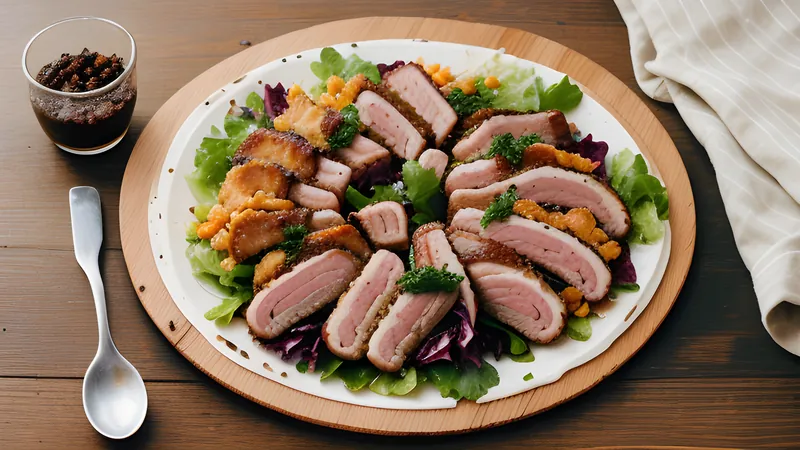
↓ Jump to recipePorchetta is the great festival pork of central Italy: a whole boned pig, or these days a slab of belly, rubbed inside with fennel, garlic and herbs, rolled tight, and roasted until the meat is meltingly soft and the skin cracks like glass. In Lazio and Umbria you buy it by weight from vans at markets, carved into rolls with nothing but the meat and its crackling. Making it at home is a Sunday project rather than a weeknight dinner, and it rewards the effort more than almost anything else you can put in an oven.
There are two things that make or break it, and both are about patience. The rub needs to penetrate, which means salting and seasoning the day before. And the crackling needs a bone-dry skin, which means air and time. Get those right and the rest is a long, gentle roast you can mostly ignore.
My own small twist is fennel pollen, the intense, sweet dust collected from wild fennel flowers. A teaspoon added to the rub deepens the aniseed note the way a good stock deepens a soup — it makes the porchetta taste unmistakably of fennel without a single crunchy seed getting in the way. It isn’t essential, and toasted fennel seeds carry the dish alone, but if you can find a jar it’s worth it.
Porchetta with Fennel and Crackling
Ingredients
- 2.5kg boneless pork belly, skin on, scored
- 3 tbsp fennel seeds
- 1 tbsp black peppercorns
- 1 tsp chilli flakes
- 6 garlic cloves
- Leaves from 4 sprigs rosemary
- Leaves from 6 sprigs sage
- Finely grated zest of 1 orange
- 1 tsp fennel pollen (optional)
- 3 tbsp olive oil
- 2 tbsp flaky sea salt, plus more for the skin
- 1 tbsp fine salt, for the skin
- 1 tbsp white wine vinegar
Method
- The day before: toast and grind the fennel seeds and peppercorns, then blitz with the garlic, rosemary, sage, chilli, orange zest, fennel pollen, olive oil and 2 tbsp flaky salt to a rough paste.
- Score the belly skin finely if not already done. Slash the meat side shallowly, rub the paste all over the flesh and into the slashes, and leave the skin bare.
- Roll the belly up tightly and tie at 3cm intervals with string. Rub the skin with the vinegar, then the fine and flaky salt. Sit uncovered on a rack in the fridge overnight to dry.
- Take the porchetta out 1 hour before cooking. Heat the oven to 220 degrees C fan (240 degrees C conventional).
- Pat the skin dry, brush off excess salt, and roast at high heat for 30 minutes to blister the crackling.
- Lower the oven to 150 degrees C fan (170 degrees C conventional) and roast a further 2 to 2.5 hours, until the internal temperature reaches 75 degrees C and the meat is fork-tender.
- If the crackling needs more, blast at 240 degrees C fan for a final 10 minutes, watching closely, or finish under a hot grill.
- Rest 20 minutes, then cut off the string and carve into thick slices with a serrated knife.
The cut and the butchery
Traditional porchetta wraps a lean loin inside a sheet of fatty belly, so every slice has tender meat and rich fat with crackling wrapped around. A simpler home version uses belly alone, rolled around its own herbs — easier to buy, easier to roll, and still spectacular. Ask for a rectangular slab of skin-on belly, around 2.5kg, with the skin scored in fine parallel lines. If you can, get the butcher to score it for you; the lines want to be close together and just through the skin into the fat, without cutting the meat.
Lay the belly skin-side down and run a knife over the meat side to open up shallow slashes — this lets the rub reach into the flesh and helps the roll hold its shape.
The fennel rub
Toast the fennel seeds and peppercorns in a dry pan over a medium heat until they smell fragrant and start to jump, a couple of minutes. Toasting wakes up the essential oils and takes the raw, dusty edge off the fennel. Grind them coarsely in a mortar or a spice grinder.
Pound or blitz the toasted spices with the garlic, rosemary, sage, chilli flakes, orange zest, fennel pollen if using, the olive oil and 2 tbsp flaky salt into a rough, oily paste. Orange zest is a Lazio touch that lifts the whole thing and stops it feeling heavy. Rub this paste hard into the meat side of the belly, right into the slashes. Leave the skin bare.
Roll the belly up tightly along its length into a fat cylinder and tie it firmly at 3cm intervals with kitchen string. Tight ties give you neat round slices and stop the roll unravelling as it cooks.
Drying the skin for crackling
This is the step people skip and then wonder why their crackling is leathery. Crackling is water leaving the skin fast and the collagen bubbling into crisp shards. Any moisture in the skin steams instead, and steamed skin never crisps. So you dry it.
Rub the vinegar over the skin, then a mix of fine and flaky salt, working it into the score lines. The vinegar helps draw out moisture and the salt does the same by osmosis. Sit the tied porchetta uncovered on a rack in the fridge overnight, skin exposed to the air. By morning the skin should feel dry and papery. If you’re pressed for time, an hour in front of a cold fan, or a careful going-over with a hairdryer on cool, does a fast version of the same job.
Method
- The day before: toast and grind the fennel seeds and peppercorns. Blitz with garlic, rosemary, sage, chilli, orange zest, fennel pollen, olive oil and 2 tbsp flaky salt to a paste.
- Score the belly skin finely if not already done. Slash the meat side shallowly and rub the paste all over the flesh and leave the skin bare.
- Roll tightly and tie at 3cm intervals with string. Rub the skin with vinegar, then fine and flaky salt. Sit uncovered on a rack in the fridge overnight to dry.
- Take the porchetta out 1 hour before cooking. Heat the oven to 220°C fan (240°C conventional).
- Pat the skin dry, brush off excess salt, and roast at high heat for 30 minutes to blister the crackling.
- Lower the oven to 150°C fan (170°C conventional) and roast a further 2 to 2.5 hours, until the internal temperature reaches 75°C and the meat is fork-tender.
- If the crackling needs more, blast at 240°C fan for a final 10 minutes, watching closely, or finish under a hot grill.
- Rest 20 minutes, then cut off the string and carve into thick slices with a serrated knife.
Reading the roast
Two temperatures matter and they pull in opposite directions, which is why porchetta is cooked in two stages. The high blast at the start shocks the dry skin into crackling. Then the long, low stretch renders the fat and breaks down the tough collagen in the belly into silky gelatine, which is what makes the meat carve soft. Push a thermometer into the centre of the roll: 75°C is where the belly gives up and turns tender. Belly is forgiving, so a little over won’t dry it out the way it would a lean loin.
The rest matters as much here as with any roast. Twenty minutes lets the juices settle and the crackling firm up. Carve with a serrated bread knife, sawing gently so you crunch through the crackling without crushing the meat underneath.
What to serve with it
Porchetta is rich, so the plate wants acidity and something plain to carry it. A sharp salad of bitter leaves — chicory, radicchio — with a lemony dressing cuts the fat. Soft polenta or plain roast potatoes soak up the juices. And a spoon of something fruity is traditional: the same instinct that pairs pork with apple, as in my slow-roast pork shoulder with apple sauce, works here too. A quick apple or quince compote sharpened with a little vinegar is perfect against the fennel.
For a crowd, serve it the Italian street way: thick slices stuffed into crusty rolls with a scrap of crackling and nothing else, and let people help themselves.
Storage, leftovers and swaps
- Make-ahead: the roll can be seasoned and tied up to two days ahead — the extra time only improves the drying and the seasoning.
- Leftovers: cold porchetta is one of the great sandwich fillings, sliced thin with a little mustard. Warm slices crisp up beautifully in a dry pan, edges going brown like carnitas, slow-braised and crisped — a different pork, same love of a crunchy edge.
- Freezing: it freezes well cooked and sliced; the crackling softens, so crisp it under the grill after thawing.
- No fennel pollen: use an extra teaspoon of toasted, ground fennel seed. The dish is named for fennel; keep it generous.
- Smaller version: a 1.2kg piece of belly serves four and cooks in about 90 minutes at the low temperature after the initial blast. Keep the two-stage method exactly the same.
If you love the alchemy of cheap pork turned magnificent by time, porchetta belongs in your repertoire next to a good sausage and mash with red onion gravy — both prove that the humblest cuts, given attention, outshine the expensive ones. Season a day ahead, dry the skin hard, roast low after the blast, and rest. That’s the whole secret, and the reward is a roast people talk about for weeks.
When the crackling won’t crack
Every so often a patch of skin stays chewy while the rest shatters, and there’s always a reason. The commonest culprit is uneven moisture: a spot that didn’t dry fully in the fridge, or a fold in the roll where air couldn’t reach. Trapped salt that clumped rather than spreading is another. The fix is the same in the moment — cut the stubborn crackling away from the roast, lay it flat on a tray, and give it five to eight minutes under a hot grill on its own, watching it like a hawk so it doesn’t catch. Flat and direct, it crisps in seconds.
For next time, three habits guarantee it: score the skin finely and evenly right through to the fat, dry it uncovered overnight with the air circulating, and start the roast hot before you drop the temperature. Skin that is scored, dry and blasted has nowhere to hide. Get those in your muscle memory and porchetta stops being a gamble and becomes the roast you reach for whenever there are people to feed and a Sunday to fill.
Related Content