Pommes Anna: Pressed, Buttered, Crisp-Edged
A golden cake of thin-sliced potato, clarified butter and patience
Contents
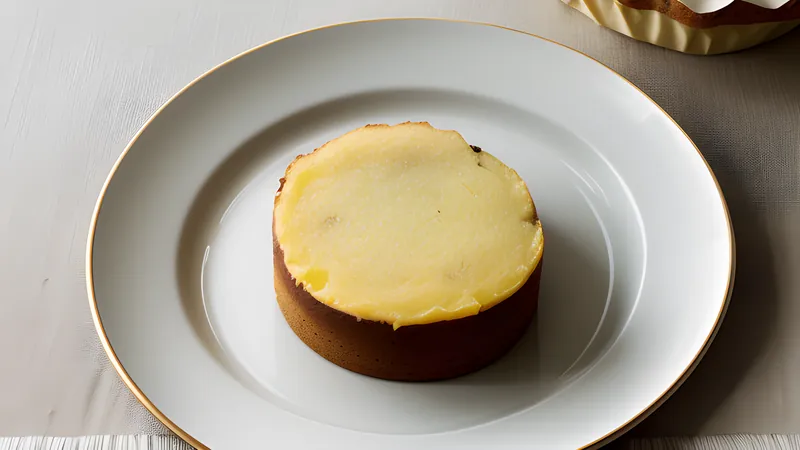
↓ Jump to recipePommes Anna is one of those dishes that looks like a magic trick and turns out to be mostly patience. A pile of thinly sliced potatoes, a great deal of butter and an hour in the oven become a burnished golden cake that you turn out whole onto a plate, crisp and lacquered on the outside, meltingly soft in the middle, and cut into wedges like a tart. There is no cream, no cheese, no stock and barely any seasoning beyond salt and pepper. It is potato and butter taken as seriously as they deserve, and it is one of the great French dishes precisely because it does so much with so little.
A dish from the age of grand hotels
Pommes Anna belongs to the golden age of French haute cuisine, and is generally credited to the kitchens of the mid-nineteenth century, during the Second Empire under Napoleon III. It is most often attributed to Adolphe Dugléré, a celebrated chef who trained under Carême and ran the kitchen at the Café Anglais in Paris, one of the most famous restaurants of the era. The dish was named, by the usual account, after one of the grand demi-mondaines of Parisian society, though which particular Anna has been lost to competing legends. What is certain is that it emerged from a restaurant culture that could afford to devote a specialised copper pan, and a great deal of butter, to the transformation of the humble potato.
There is even a piece of equipment named for it: la cocotte à pommes Anna, a round, straight-sided copper pan with a tight-fitting lid designed to be flipped, so the potato cake could be turned partway through cooking and browned on both sides. Very few home kitchens own one, and happily you do not need it. A good heavy ovenproof frying pan, cast iron for preference, does the job well, and the modern oven method gives you a reliably crisp base without the nerve-wracking mid-cook flip. What has not changed in a century and a half is the principle: thin potatoes, clarified butter, firm pressing, and heat until the outside is deep gold.
The clever bit: clarified butter, and no rinsing
Two decisions make or break pommes Anna, and both run against ordinary potato instinct. The first is to clarify the butter. Whole butter is around a sixth water and milk solids, and those solids burn at the high, sustained heat this dish demands, leaving black flecks and a bitter, scorched taste. Clarifying, gently melting the butter and separating out the clear golden fat, leaves you with pure butterfat that can take the heat, crisp the potatoes and carry all their flavour without catching. The second, more surprising decision is not to rinse the sliced potatoes. Every instinct says to rinse away the starch, but here that surface starch is the glue: it makes the layers cling together so the finished cake holds its shape when you turn it out. Rinse them and the whole thing slumps into loose slices. Leave the starch, pat the slices dry, and they knit into a single burnished round.
Pommes Anna: Pressed, Buttered, Crisp-Edged
Ingredients
- 1.2kg waxy potatoes, such as Charlotte or Desiree
- 150g unsalted butter, clarified (see method)
- 1 tsp fine salt
- 0.5 tsp white pepper
- 1 tsp fresh thyme leaves (optional)
Method
- Clarify the butter: melt it gently, skim the foam, and pour off the clear golden fat, leaving the milky solids behind.
- Peel the potatoes and slice them 2 to 3mm thick on a mandoline. Do not rinse; the surface starch helps the layers stick. Pat dry.
- Heat the oven to 200C fan. Brush a heavy ovenproof frying pan generously with clarified butter and set over a medium heat.
- Arrange the first layer in a tight, overlapping spiral, pressing down, then brush with butter and season lightly. Repeat, building even layers.
- Cook on the hob for 5 minutes to set and colour the base, then press down firmly with a smaller lid or plate.
- Cover with a lid or foil and bake for 30 minutes, then uncover and bake for a further 20 to 25 minutes until deep golden and tender.
- Rest for 5 minutes, pour off excess butter, run a knife around the edge, and invert onto a warm plate. Cut into wedges to serve.
Why pressing and thinness matter
The texture of pommes Anna depends entirely on how the layers behave, and that comes down to two things: slice thickness and pressure. Slice too thick and the potatoes cook unevenly, staying raw in the centre while the edges char; the sweet spot is 2 to 3mm, thin enough to cook through and cling together, thick enough not to disintegrate. A mandoline earns its place here, giving you the even slices that let the cake cook uniformly. Pressing, meanwhile, drives out the air between the layers and compacts them into a single mass, which is why a well-pressed pommes Anna turns out as a clean cake and a loose one collapses. Press at the start, press again after the first bake, and do not be gentle about it.
The high, sustained heat does the rest. The butterfat between the layers essentially shallow-fries the potato in place, crisping the outer surfaces to deep gold while the interior steams soft in its own moisture under the lid. Removing the lid for the final stretch drives off surface moisture and lets the top and edges lacquer and crisp. Waxy potatoes are essential here: their lower starch and higher moisture hold their shape and slice cleanly, where a floury baking potato would break down into a mash.
Substitutions, make-ahead and variations
If you cannot be bothered to clarify butter, ghee is exactly the same thing and comes ready-made in a jar; use it straight. Duck or goose fat gives a richer, more savoury cake and is a fine swap for the butter if you have it. For flavour, a whisper of grated garlic or a scatter of thyme, rosemary or a little grated Gruyère between the layers all work, though the purists would tell you the plain version is the best, and they are usually right.
Pommes Anna is best fresh from the oven when the edges are at their crispest, but it reheats well: cool it completely, then warm through in a hot oven for 10 to 15 minutes to recrisp the outside. You can slice the potatoes and clarify the butter a few hours ahead, keeping the slices in a covered bowl, though I would assemble and bake close to serving. It sits beautifully alongside a roast, a steak or a piece of pan-fried fish, and belongs in the same family of pressed, buttered potato dishes as my gratin dauphinois with garlic and thyme, where cream does the work butter does here. For a spiced, altogether different potato side to round out your repertoire, my sag aloo with mustard seed pulls in the opposite direction and makes a good contrast on a table of roots and greens.
Related Content