Poffertjes: Dutch Mini Pancakes with Butter and Icing Sugar
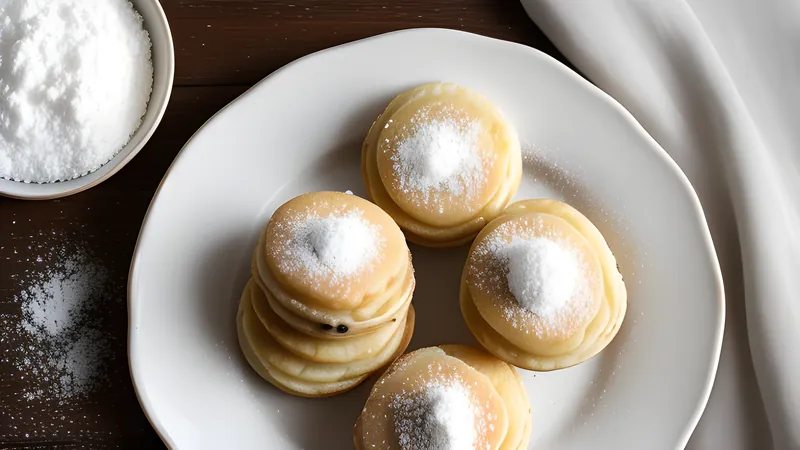
Puffed little buckwheat pancakes, a knob of cold butter, a snowfall of icing sugar
Contents
↓ Jump to recipeThere is a particular sound to a Dutch market in autumn: the scrape of a spatula across a cast-iron pan drilled with shallow wells, forty little pancakes turning at once, and the smell of butter drifting halfway down the street. Poffertjes are the small, puffed, faintly chewy cousins of the pancake, served in a heap under a slab of cold butter and enough icing sugar to make you squint. They are a fairground food and a Sunday food, and they are far easier to make at home than the theatre of that market pan suggests.
Poffertjes: Dutch Mini Pancakes with Butter and Icing Sugar
Ingredients
- 125g plain flour
- 75g buckwheat flour
- 1 tsp fast-action dried yeast
- 1 tbsp caster sugar
- 1/2 tsp fine salt
- 250ml whole milk, lukewarm
- 1 large egg, beaten
- 60g unsalted butter (30g for browning into the batter, 30g for cooking)
- 50g cold unsalted butter, to finish
- Icing sugar, for dusting
Method
- Brown 30g of the butter in a small pan over medium heat until it smells nutty and turns amber, about 3-4 minutes. Set aside to cool slightly.
- Whisk the plain flour, buckwheat flour, yeast, sugar and salt in a large bowl.
- Make a well, pour in the lukewarm milk and beaten egg, and whisk to a smooth, pourable batter. Whisk in the browned butter.
- Cover and leave in a warm spot for 45-60 minutes until bubbly and risen.
- Heat a poffertjes pan or a heavy frying pan over medium heat. Brush the wells (or the whole pan) with a little of the remaining butter.
- Fill each well about two-thirds full, or drop tablespoons of batter into the pan. Cook 1-2 minutes until bubbles set and the edges look dry.
- Flip each with a skewer or fork and cook a further minute until puffed and golden on both sides.
- Pile onto warm plates, drop cold butter over the top so it half-melts, and dust heavily with icing sugar. Serve at once.
A pancake with a monastery in its past
The story most often told about poffertjes is that they began as a monastery food, born of scarcity rather than plenty. During the French occupation of the Low Countries around the turn of the nineteenth century, wheat flour ran short, and cooks stretched what they had with buckwheat, a hardy pseudo-cereal that grows on poor soil and asks little of the weather. Buckwheat had been a peasant staple across the sandy heathlands of Drenthe and Brabant for centuries, ground into a dark, nutty flour that made porridge and flatbreads long before it made these fairground treats.
Whether the monastery detail is fact or folklore, the buckwheat is real and it matters. It gives poffertjes their slightly greyed colour, their earthy flavour and a bit of their chew. The name itself is a diminutive, roughly “little puffs”, and the yeasted batter is what separates them from an ordinary drop scone. Yeast, rather than baking powder, is what gives poffertjes their open, spongy interior and their faintly sour, bread-like edge.
By the nineteenth century they had become a fixture of Dutch fairs and street stalls, cooked on those copper or cast-iron plates dimpled with rows of wells, each about four centimetres across. The professional pans hold dozens; a good stallholder fills the whole grid, then walks down it flipping each poffertje with a long two-pronged fork in a rhythm that looks like knitting. You do not need that pan, though I will tell you how to fake it, and I will tell you where a plain frying pan lets you down.
Buckwheat, and why it earns its place
If you have only ever had poffertjes made with plain flour, you have had a pale imitation, tender enough but characterless. The buckwheat is the point. It brings a nuttiness that stands up to all that butter and sugar, and because it contains no gluten of its own, it keeps the crumb soft rather than tough. I use a ratio of roughly two parts plain flour to one part buckwheat: enough buckwheat to taste and colour the batter, enough wheat flour to give the yeast some gluten to work with so the little cakes puff and hold.
Buy proper buckwheat flour, the greyish-brown kind with dark flecks. If you can only find “light” buckwheat, it will still work but the flavour is muted. And do check the date, because buckwheat is high in fat and goes rancid faster than wheat flour; a stale bag tastes bitter and musty, and no amount of sugar hides it.
The clever bit: brown the butter into the batter
Here is my one departure from the market recipe. Poffertjes are traditionally cooked in butter and finished with butter, and I keep both, but I also brown a little butter and whisk it straight into the batter. Browning butter cooks the milk solids until they toast and turn amber, throwing off a nutty, almost caramel aroma. Stirred into a batter that already leans nutty from the buckwheat, it doubles down on that toasted flavour and carries it right through the pancake rather than leaving it all on the surface.
To brown butter, melt it in a small pale-coloured pan over medium heat so you can see the colour change. It will foam, quieten, and then the flecks at the bottom will turn from pale to golden to a deep amber. The moment it smells like toasted hazelnuts, pull it off the heat, because the line between browned and burnt is about fifteen seconds wide. Let it cool for a minute before adding it, so you do not scramble the egg in the batter.
Making and proving the batter
Warm the milk to blood temperature, no hotter, or you will stun the yeast before it starts. Whisk your dry ingredients together first so the yeast, sugar and salt are evenly spread, then make a well and pour in the milk and beaten egg. Whisk to a smooth batter about the thickness of double cream, add the cooled browned butter, and give it a final mix.
Cover the bowl and leave it somewhere warm for three-quarters of an hour to an hour. It should rise, bubble across the surface and smell faintly of bread. This is the fermentation doing its work: the yeast produces the gas that makes each poffertje puff, and it develops that gentle tang that sets them apart from a baking-powder pancake. Do not stir the risen batter down more than a gentle single fold, or you knock the air out and lose the lift.
If you are short of time, you can make a version with baking powder instead of yeast and skip the prove, but you sacrifice the flavour and the true open texture. The yeasted batter is worth the hour, and the hour is entirely hands-off.
Cooking them without the special pan
A cast-iron or non-stick poffertjes pan makes uniform, dimpled little rounds and is a joy if you own one. Fill each well about two-thirds full, wait until the surface bubbles and the edges look dry, then flip each one with a skewer, a cocktail stick or a small fork. The half-cooked batter behaves like a tiny hinge; a confident quarter-turn flip is easier than a nervous prod. Cook a further minute on the second side.
No pan? A heavy frying pan works. Get it to a steady medium heat, brush with butter, and drop tablespoons of batter well apart. They will spread a little more than the pan versions and come out flatter, closer to a silver-dollar pancake, but they taste identical. The trick with a flat pan is patience with the heat: too hot and the outsides brown before the yeasted middle puffs and sets, leaving them raw and dense inside. Medium heat, and wait for the bubbles.
Whichever pan you use, cook in butter, not oil. The whole character of poffertjes lives in butter, and a poffertje cooked in oil tastes of nothing much. Keep the finished ones warm on a plate under a cloth while you cook the rest.
Serving: cold butter, then snow
The classic finish is almost aggressively simple. Pile the hot poffertjes onto a warm plate, drop a knob of cold butter on top so it slumps and half-melts into the gaps, and sift over a truly generous cloud of icing sugar. The contrast is the whole pleasure: hot little cakes, cold butter turning to cream against them, and the sugar catching in the folds. Eat them straight away, with a fork or your fingers, while the butter is still going.
From there the Dutch get inventive. A drizzle of dark advocaat is traditional at fairs. A spoonful of Belgian speculoos spread, warmed until it runs, is very good. Fresh berries and a little whipped cream turn them into a proper pudding. I sometimes add a pinch of cinnamon and a scrape of orange zest to the icing sugar for a festive version around Sinterklaas in early December, when poffertjes stalls appear in force. But the plain butter-and-sugar version is the one I come back to, because it lets the browned-butter batter do the talking.
Tips, make-ahead and variations
The batter is best used within a couple of hours of proving, while the yeast is at its most active. If you need to get ahead, mix everything except the yeast the night before, keep it in the fridge, and whisk the yeast into the barely-warmed batter an hour before you cook. Cooked poffertjes reheat poorly and go leathery, so make them to order; happily the cooking is quick once the batter is up.
If you cannot eat gluten, you can push the buckwheat higher and use a gluten-free plain flour blend, though you will lose some of the puff. For a richer batter, replace 50ml of the milk with buttermilk; the extra acidity sharpens the tang and tenderises the crumb further. A tablespoon of dark rum or a scrape of vanilla in the batter is a good addition for a grown-up plate.
Poffertjes belong to the same easy weekend-breakfast family as Scotch pancakes with butter and jam, which use baking powder for a quicker lift, and they share the same puff-in-the-oven logic as a savoury Dutch baby with bacon and Gruyère, where a hot pan and a loose batter do the dramatic rising. If you have made either, poffertjes will feel like home ground with a smaller, more sociable payoff.
Make a batch once and you will understand why the Dutch treat them as a treat and a ritual at the same time. Forty tiny pancakes vanish faster than you would believe, and the person holding the icing sugar sifter is always the most popular in the kitchen.
Related Content