Pizza dough, easy to prepare
dough
Contents
↓ Jump to recipeGood pizza is not really about the toppings. It is about the base, and a base is only ever as good as its dough. Four ingredients do almost all the work — flour, water, yeast and salt — and the fifth, the one nobody sells you in a packet, is time. This recipe makes enough dough for four generous pizzas from a single kilo of flour, and the small clever twist is not an exotic ingredient at all: it is a slow, cold overnight rise that turns a merely competent crust into one with real flavour and a proper blistered, chewy edge. If you have made bread before, none of this will surprise you. If you have not, it is a forgiving place to start.
Pizza dough, easy to prepare
Ingredients
- 1000 g all-purpose or bread flour
- 5 dl lukewarm water
- 50 g fresh yeast or 14 g active dry yeast
- 3 tablespoons olive oil
- 2 tablespoons sugar
- 1 tablespoon coarse salt
Method
- Dissolve the yeast in the lukewarm water with 1 tablespoon of sugar and leave until frothy, about 5 minutes.
- Combine the flour, remaining sugar and salt, then stir in the yeast mixture and olive oil to form a shaggy dough.
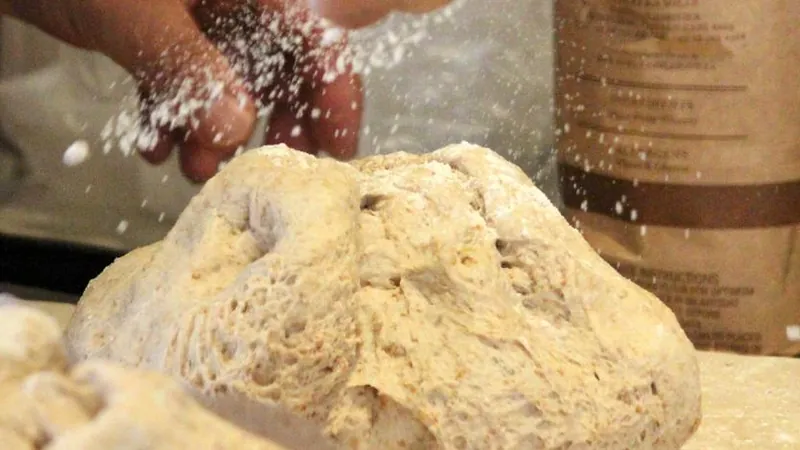
- Knead on a floured surface for about 10 minutes until smooth and elastic.
- Let the dough rise in an oiled, covered bowl until doubled, about 2 to 3 hours.
- Punch down and fold the dough, then leave it to rise again until doubled, about 1 hour.
- Divide, roll out thinly, top and bake in a very hot oven until the crust is golden and crisp.
Why Naples still owns pizza
Flatbreads with things on top are as old as bread itself, but pizza as we mean it — a soft, puffed, tomato-topped disc — took its modern shape in Naples in the eighteenth and nineteenth centuries, where it was street food for the working poor. The famous origin story credits a Neapolitan baker, Raffaele Esposito, with making a patriotic pizza for Queen Margherita of Savoy in 1889, topped with tomato, mozzarella and basil to echo the red, white and green of the Italian flag — hence the Margherita. The tale is probably tidied up in the retelling, but the pizza and the name both stuck.
What Naples got right, and what the modern Associazione Verace Pizza Napoletana still polices, is the dough: a slack, well-fermented, low-fat dough of flour, water, yeast and salt, stretched thin in the middle with a puffed rim called the cornicione, and baked ferociously hot and fast. A true Neapolitan wood-fired oven runs at around 485°C and cooks a pizza in 60 to 90 seconds. No home oven gets there, which is the single biggest obstacle to great pizza at home — and the one this recipe is designed to work around by leaning on fermentation for flavour and a very hot stone or steel for the base.
What each ingredient does
The dough here is deliberately simple, but it helps to know what each part is for, because that is what lets you adjust it.
Flour is the structure. Bread flour, with its higher protein, builds more gluten and gives a chewier, more elastic crust that stretches without tearing; plain all-purpose flour gives a softer, more tender bite. Both work — use bread flour if you want that classic pull, plain if you like it lighter. Italian “00” flour, finely milled and moderate in protein, is the traditional choice and sits pleasantly between the two.
Water hydrates the flour and lets the gluten develop; keep it lukewarm, around 30°C, warm to the wrist but never hot, because water above roughly 50°C starts to kill yeast. Yeast is the engine, feeding on the sugars and giving off the carbon dioxide that lifts the dough. Fresh yeast (50g) and active dry yeast (14g) are interchangeable here; fresh is crumbled straight in, dry is best woken up in the warm water first. The sugar gives the yeast a quick early meal and helps the crust brown, though it is optional if you are going for a long cold ferment, which develops plenty of its own sugars. Olive oil enriches the dough slightly and keeps it supple, making it easier to stretch. Salt seasons everything and, importantly, tightens the gluten and slows the yeast so the dough does not over-prove — which is why it goes in with the flour, never directly onto the yeast, where it can check the yeast too hard.
How to make it
Start by waking the yeast. Dissolve it in the 5dl of lukewarm water with one tablespoon of the sugar and leave it for about five minutes, until it turns frothy and smells faintly of beer; that froth is your proof the yeast is alive. In a large bowl, combine the kilo of flour, the remaining tablespoon of sugar and the tablespoon of coarse salt. Pour in the yeast mixture and the three tablespoons of olive oil and stir until it comes together into a rough, shaggy dough.
Turn it out onto a lightly floured surface and knead for about ten minutes, adding flour only sparingly and only if it sticks badly — a slightly tacky dough makes a better crust than a dry, over-floured one. You are kneading to develop the gluten, the stretchy protein network that traps gas and gives the crust its chew. The dough is ready when it is smooth and elastic and springs back when you press it, and passes the windowpane test: stretch a small piece thin enough to see light through it without tearing.
Put the dough in a lightly oiled bowl, cover it with cling film or a damp cloth, and leave it to rise at room temperature until doubled, roughly two to three hours depending on how warm your kitchen is. Then knock it back gently — press the air out and fold it over itself a few times to redistribute the yeast and strengthen the structure — and let it rise a second time until doubled again, about an hour. At this point divide it into four pieces, shape each into a tight ball, and use them as below.
The clever twist: a cold overnight rise
Here is where a good dough becomes a great one. Instead of the second room-temperature rise, portion the dough into balls after knocking back, put them on a lightly oiled tray, cover tightly, and refrigerate for anywhere from 12 to 72 hours. In the cold the yeast slows almost to a crawl, but the enzymes keep working, breaking starches into sugars and proteins into flavour compounds. The result is a dough that tastes of something — nutty, faintly sour, complex — with a crust that blisters and chars far more readily because those extra sugars caramelise fast. It is the same principle that makes a slow-risen loaf beat a quick one, and it costs you nothing but fridge space and forethought. Bring the balls back to room temperature for an hour before shaping.
Shaping and baking
Never use a rolling pin if you can help it: it crushes out the very gas bubbles you spent hours building, giving a flat, cracker-like base. Instead, stretch each ball by hand on a floured surface, pressing from the centre outward and leaving a thicker rim, then draping it over your knuckles and letting gravity pull it thin. Aim for a base you can almost see through in the middle, with a slightly raised edge.
Get your oven as hot as it will go, ideally with a baking stone or steel inside that has been preheating for a full 45 minutes to an hour — the stored heat in that stone is what crisps the base in the crucial first seconds. Dust a peel or the back of a tray with semolina or cornmeal so the pizza slides off cleanly, top it quickly and not too heavily, and launch it onto the hot stone. Bake until the crust is puffed, golden and spotted with brown, usually 6 to 10 minutes in a domestic oven. Keep the toppings restrained — a thin smear of sauce, a scatter of cheese, a few pieces of whatever else — because a waterlogged, overloaded pizza steams instead of crisping. My pizza sauce made from fresh tomatoes is thick enough to sit on the dough without soaking it.
Troubleshooting and make-ahead
If your dough tears and snaps back instead of stretching, it is under-rested; cover it and wait 15 minutes to let the gluten relax, then try again. If it is slack and impossible to handle, it may be over-proved or too wet — work in a little more flour and shape it quickly. A pale, tough crust usually means the oven was not hot enough or the stone under-heated; give both more time.
A word on kit: a baking steel beats a stone if you can get one, because steel conducts heat into the base far faster and gives you more char in a cooler home oven. If you have neither, a heavy cast-iron pan or an upturned oven tray, preheated hard, will do at a push. Whatever you use, resist opening the oven door more than you must, since every peek drops the temperature you worked to build.
The dough keeps in the fridge for up to three days, improving for the first two, and freezes well: freeze the balls after shaping, then thaw in the fridge overnight and bring to room temperature before stretching. For a thicker, softer base, press the dough into an oiled tin and let it rise again before topping, closer to a focaccia. For a laminated, buttery contrast to this lean dough, see how enriched doughs are built up in my Danish pastry dough, and for a deep-pan, crisp-bottomed alternative baked in a skillet, try the ricotta pan pizza. Master this base once and the toppings become the easy part.
Related Content