Petticoat Tails: Scottish Shortbread
A crisp round of shortbread, scored into wedges, scented with caraway
Contents
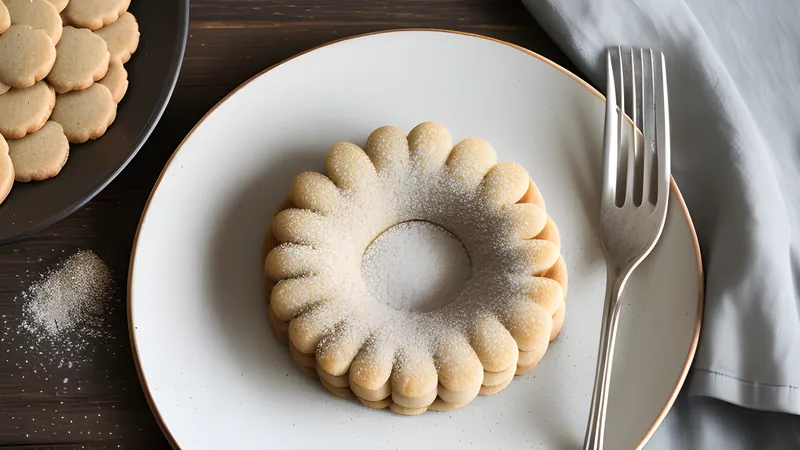
↓ Jump to recipeShortbread divides into two schools: fingers, cut into neat batons, and the round known as petticoat tails, scored into wedges with a crimped edge and a little hole punched from the middle. The round is the older and the prettier of the two, and it comes with a name that has confused people for four hundred years. My version keeps the classic butter-and-sugar simplicity but does two small things differently: a portion of the flour is swapped for rice flour, which gives that clean, sandy crumble that shatters rather than bends, and a teaspoon of toasted caraway is worked through the dough. The caraway is the surprise, and it is more traditional than it sounds.
Petticoat Tails: Scottish Shortbread
Ingredients
- 250g plain flour
- 50g rice flour (or fine semolina)
- 100g caster sugar, plus 1 tbsp for dredging
- 200g cold unsalted butter, cubed
- 1 tsp caraway seeds
- 1/4 tsp fine sea salt
Method
- Toast the caraway seeds in a dry pan over medium heat for 1 to 2 minutes until fragrant, then lightly crush half of them in a mortar and leave the rest whole.
- Preheat the oven to 150C fan and line a baking sheet with parchment.
- Beat the cold butter and caster sugar together for 1 minute until just combined and pale, without whipping in much air.
- Add the plain flour, rice flour, salt and caraway, and work with your hands until the mixture clumps into a firm dough. Do not add liquid.
- Press and shape the dough into a smooth 20cm round about 1cm thick directly on the parchment.
- Crimp the edge with finger and thumb, prick all over with a fork, and stamp a small circle out of the centre with a bottle cap or piping nozzle.
- Score deeply into 8 wedges with a knife, cutting most of the way through but not all the way.
- Bake for 38 to 42 minutes until an even pale gold with slightly deeper edges.
- Dredge with caster sugar while hot, re-cut along the score lines, and cool on the tray until firm.
Where the name comes from
Petticoat tails have been part of Scottish baking since at least the sixteenth century, and the name has two competing stories, both worth telling. The romantic version links the biscuit to Mary, Queen of Scots, and claims the wedges echo the shape of the triangular panels, called tails or tallies, that were sewn together to make the bell-shaped petticoats of a Tudor court dress. Lay eight such panels flat in a circle and you have exactly the scored round on your baking sheet. The other explanation is quieter and probably closer to the truth: the words are a worn-down English rendering of the French petites gatelles, meaning little cakes, carried north through the long diplomatic and culinary traffic between Scotland and France known as the Auld Alliance. Both stories agree on the shape, so the name has stuck regardless.
The biscuit itself is a monument to restraint. Real shortbread contains flour, butter and sugar and nothing else, in the old 3-2-1 ratio by weight: three parts flour, two parts butter, one part sugar. There is no egg, no raising agent, no liquid to bring it together, which is why it depends entirely on the quality of the butter and on your technique. F. Marian McNeill, whose 1929 book The Scots Kitchen is the closest thing Scottish cookery has to a founding document, records petticoat tails as a festive biscuit, and caraway seed appears again and again in these older recipes, a hangover from the days when caraway comfits were a genuine luxury. My caraway is a nod to that history rather than an invention.
Why rice flour, and why caraway
The one change I make to the McNeill-era formula is to replace a sixth of the plain flour with rice flour. Plain wheat flour alone gives a shortbread that is tender but can turn slightly dense and cakey if you overwork it, because the gluten starts to develop. Rice flour has no gluten and a faintly gritty particle that behaves like fine sand in the dough, propping the crumb apart so the finished biscuit is drier, crisper and cleaner-breaking. Fine semolina does the same job if you have no rice flour, and some Highland bakers have always used a spoon of it for exactly this reason. The effect is subtle on the plate and unmistakable in the mouth.
The caraway earns its place because its aniseed-and-citrus warmth cuts the richness of all that butter. Toasting the seeds first is the step people skip, and it is the step that matters: a minute in a dry pan wakes up the aromatic oils and turns the flavour from harsh and medicinal into something mellow and almost orange-peel sweet. I crush half the seeds so their perfume runs through the whole dough, and leave the other half whole so you get the occasional pop of texture and a clearer hit of flavour. If caraway is genuinely not for you, the biscuit is lovely plain, or with the finely grated zest of a lemon worked in instead.
Making the dough
Beat the cold butter and sugar together only until they combine and lose their separate identities, no more. This is the point where shortbread technique parts company with cake technique. For a sponge you cream butter and sugar hard to beat in air; here you want the opposite, because air bubbles make the biscuit rise unevenly and lose that dense, close, sandy texture. A minute of gentle beating is plenty. The butter should be cold, so it stays cold, so the fat coats the flour rather than melting into it.
Add both flours, the salt and the caraway, and bring it together with your hands. It will look like dry rubble for an alarming while before it suddenly clumps into a dough, and the temptation at that dry stage is to add a splash of water or milk to help it along. Resist it completely, because any liquid activates the gluten and gives you a tough, snappy biscuit instead of a short, melting one. Press the rubble firmly against the side of the bowl and it will come together from the warmth of your hands and the moisture in the butter alone. The finished dough should be smooth and hold a fingerprint.
Shaping and baking
Shape the dough into a round about a centimetre thick directly on the lined tray, patting it out with your hands or rolling gently. Crimp the edge with finger and thumb the way you would a pastry rim, both for looks and because a decorated edge browns a touch more and gives you something to hold. Prick the surface all over with a fork so steam can escape and the biscuit stays flat rather than blistering, then stamp a small circle out of the very centre. That central hole is traditional and practical: it lets the middle, which is slowest to cook, bake through evenly. Score deep wedge lines almost all the way through, so you can snap the cooked round into clean petticoat tails later.
Bake low and slow, at 150C fan, for the best part of forty minutes. Shortbread is not meant to colour much: you are drying it out and setting it rather than browning it, and a high oven will give you dark edges and a raw, sad centre before the butter has had time to do its work. You are looking for an even, pale gold across the whole round, with the edges just a shade deeper. The moment it comes out, while it is still hot and soft, dredge it with caster sugar so the crystals stick, and run your knife back along the score lines, because shortbread firms as it cools and cracks messily if you try to cut it cold.
What can go wrong
The two classic failures both come down to temperature and time. A shortbread that bakes up hard and tough, snapping like a ship’s biscuit, has almost always been overworked or had liquid added: the gluten has developed and tightened. Handle the dough as little as possible and never wet it. The opposite fault, a pale and slightly raw centre with a greasy feel, means the oven was too hot or the biscuit came out too soon; it needs longer at a lower temperature so the whole round dries evenly. If the dough cracks badly as you shape it, it is a little too cold or too dry, so knead it briefly in your warm hands to bring it back together.
For the same butter-forward pleasure in a different shape, my melting moments with custard buttercream push the tender, sandy texture even further with cornflour, and my gingerbread men, properly spiced sit at the snappier, spicier end of the biscuit tin.
Storage and getting ahead
Petticoat tails are one of the great keeping biscuits, which is exactly why they were a festive bake in the days before airtight anything. Stored in a proper tin with a tight lid, they hold their crispness for a fortnight and arguably improve after a day, as the caraway settles into the crumb. Keep them away from anything soft or moist, a slice of cake or fresh bread in the same tin, because they will draw in humidity and go from short to leathery. The raw dough freezes beautifully too: shape your round, open-freeze it on the tray until solid, then wrap it well and bake straight from frozen with an extra five minutes. That means fresh shortbread from the oven whenever the occasion calls for it, which in Scotland is most occasions.
Related Content