Peri-Peri Spatchcock Chicken
Flattened, marinated and blistered, with smoked paprika in the baste
Contents
↓ Jump to recipePeri-peri chicken is the sort of thing you order out and assume you could never touch at home, all fire and char and that glossy red skin. The truth is friendlier: a whole bird, a blender, and a good long marinade will get you most of the way there in your own oven, no restaurant grill required. Spatchcocking is the trick that makes it work on a weeknight, and one smoky addition to the sauce closes the gap on the flame-grilled original.
Peri-Peri Spatchcock Chicken
Ingredients
- 1 whole chicken (about 1.6kg)
- 8 red bird's-eye chillies (adjust to taste), roughly chopped
- 1 red pepper, roughly chopped
- 6 garlic cloves, peeled
- Zest and juice of 2 lemons
- 3 tbsp red wine vinegar
- 2 tsp smoked paprika
- 1 tbsp dried oregano
- 1 tsp sweet paprika
- 1 tbsp soft brown sugar
- 80ml olive oil
- 1.5 tsp fine salt
- 1 tsp black pepper
- 1 bay leaf
Method
- Spatchcock the chicken: place it breast-side down, and with sturdy scissors cut up each side of the backbone and remove it. Turn the bird over and press firmly on the breastbone to flatten. Pat dry.
- Make the peri-peri: blend the chillies, red pepper, garlic, lemon zest and juice, vinegar, smoked paprika, oregano, sweet paprika, sugar, salt, pepper and half the olive oil to a smooth sauce. Blitz in the remaining oil.
- Reserve a third of the sauce for basting. Rub the rest all over the chicken, working it under the skin where you can. Marinate in the fridge for at least 4 hours, ideally overnight.
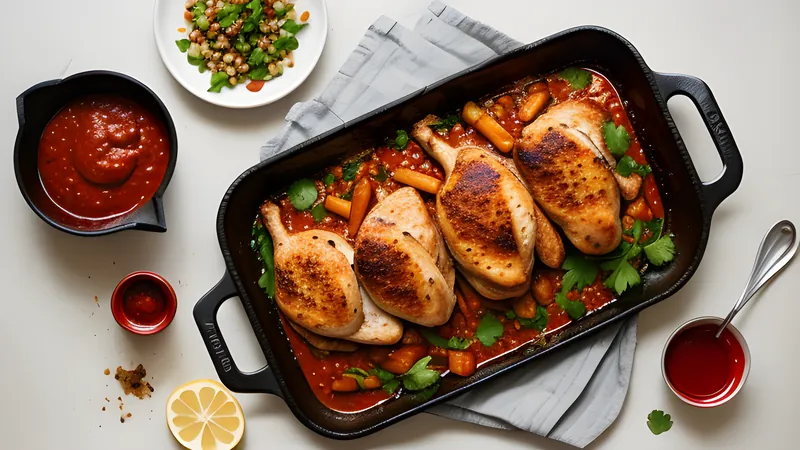
- Heat the oven to 200C fan. Sit the flattened chicken skin-side up on a rack over a lined tray. Roast for 40 to 45 minutes, basting with the reserved sauce twice, until the skin is blistered and the juices run clear (75C in the thigh).
- Rest for 10 minutes, then cut into pieces. Warm any leftover reserved sauce and serve alongside for spooning over.
Where peri-peri comes from
Peri-peri — also written piri-piri, and meaning simply “pepper-pepper” in Swahili — is the child of two continents. When Portuguese traders and settlers arrived in south-east Africa from the sixteenth century, they encountered the fierce little African bird’s-eye chilli, brought there earlier from the New World along the same trade routes. Portuguese cooks in Mozambique and Angola took to it, blending the chillies with garlic, citrus, oil and vinegar into a marinade for grilled chicken. The dish travelled back to Portugal and outward through the Portuguese-speaking world, and in the late twentieth century it went global through South African and British restaurant chains. The heat, then, is African; the lemon, garlic, oil and vinegar are Portuguese; the marriage is genuinely Afro-Portuguese.
The essential character is a balance of four things: heat from the chillies, sourness from lemon and vinegar, pungency from raw garlic, and a savoury, slightly sweet base to carry them. Get those in tune and the sauce sings. It has the same big, bright, chilli-forward appeal as a good Nashville hot chicken, and if you like roasting a whole bird with real flavour it is a spicier cousin to roast chicken with tarragon butter, done right.
The twist: smoked paprika
An oven cannot give you the smoke of a charcoal grill, and that smoke is a big part of what makes takeaway peri-peri taste the way it does. My workaround is two teaspoons of smoked paprika — pimentón — blended into the sauce. Spanish smoked paprika is made from peppers dried slowly over oak fires, so it carries real woodsmoke in powdered form. Stirred into the marinade it lends the finished chicken a rounded, barbecue-like depth that plain chilli heat lacks, and it deepens the colour of the skin to that proper brick red. If you own a grill or barbecue, by all means cook the flattened bird over coals for the real thing; if you are working with a domestic oven, the smoked paprika is how you cheat the smoke.
Why spatchcock
Spatchcocking — cutting out the backbone and flattening the bird — is the single best technique for roasting a whole chicken well, and it is easy. A flattened chicken has all its surface facing up in one plane, so the skin browns and blisters evenly and every part is exposed to the heat and the marinade. It also cooks far faster and more evenly than a trussed bird, in which the dense thighs need much longer than the breast and the breast dries out waiting. Flat, the thighs and breast finish close together, which is exactly what you want with lean chicken.
Use sturdy kitchen scissors or poultry shears. Sit the bird breast-side down, cut up either side of the backbone and lift it out (save it for stock), then flip the chicken over and press hard on the breastbone with the heel of your hand until you feel it give and the bird lies flat. That is the whole job, and it takes about two minutes once you have done it once. Many butchers and supermarkets will spatchcock a bird for you if you ask, so there is no reason to be put off by the knife work.
The marinade, and the long wait
Peri-peri is a marinade dish, so the time it spends in the sauce is where the flavour is built. Blend everything smooth, keep back a third for basting and serving, and rub the rest all over and under the skin. Getting sauce directly onto the flesh under the skin seasons the meat itself rather than only its surface. Then leave it: four hours at the very least, overnight for the best result. The acid from the lemon and vinegar gently tenderises the surface of the meat as it sits, and the garlic and chilli permeate.
Always reserve a portion of the sauce before it touches raw chicken. That untouched sauce is what you baste with and serve at the table, safe from any raw-meat contamination.
Roasting for blister and juice
Roast the bird skin-side up on a rack set over a tray, so hot air circulates underneath and the base does not stew in its juices. A hot oven, 200C fan, blisters the skin while the flat shape cooks the meat through in about forty-five minutes. Baste twice with the reserved sauce as it roasts to build up sticky layers of flavour, but avoid the last-minute sugar-heavy bastes catching — if the skin darkens too fast, drop the temperature slightly or shield the thinner edges with foil.
Check for doneness with a thermometer: 75C in the thickest part of the thigh, with clear juices. Then rest it for a full ten minutes before cutting, so the juices redistribute and stay in the meat instead of running out onto the board.
Tips and troubleshooting
- Too hot to handle? Bird’s-eye chillies are fierce. Start with four and deseed them for a milder sauce; you can always add heat, never take it away.
- Sauce too thin? Reduce the reserved portion in a small pan for a few minutes to a spoonable, glossy consistency for serving.
- Skin not blistering? Your oven may run cool, or the skin was wet going in. Pat it dry after marinating, and finish under a hot grill for two or three minutes.
- No blender? A stick blender in a jug works, or chop everything very finely by hand for a rougher, rustic sauce.
- Milder crowd? Make the base sauce mild and offer a fierce, chilli-heavy version on the side for those who want it.
Make-ahead, storage and serving
The sauce keeps for two weeks in a jar in the fridge and is worth making in a double batch — it is superb on prawns, halloumi, roast potatoes or a fried egg. The marinating is done ahead by design, so on the day you only roast. Leftover cooked chicken keeps for three days and is excellent cold, shredded into wraps with the extra sauce.
Serve it the way the restaurants do: with chips or spiced rice, a crisp slaw or a tomato-and-onion salad to cool the heat, and plenty of lemon wedges. Charred corn on the cob is a natural partner, and a cold beer or a sharp lemonade tames the chilli. For a lighter plate, buttered leeks with thyme and breadcrumbs round out the greens.
Variations
Blend a small bunch of coriander into the sauce for a fresher, greener peri-peri. Swap some of the bird’s-eye chillies for a milder red chilli if you want the flavour without the full burn. And the same marinade is brilliant on chicken thighs, drumsticks or wings alone for an easy barbecue tray, or brushed onto king prawns and griddled for a couple of minutes a side. Once the sauce is in your fridge, dinner more or less makes itself.
Flatten the bird, build the sauce with real chillies and a hit of smoked paprika, give it a night to work, and you will roast peri-peri chicken at home that stands up to any you have paid for.
Related Content