Peanut Butter Cookies with Flaky Salt
Fork-marked peanut cookies deepened with a spoonful of white miso
Contents
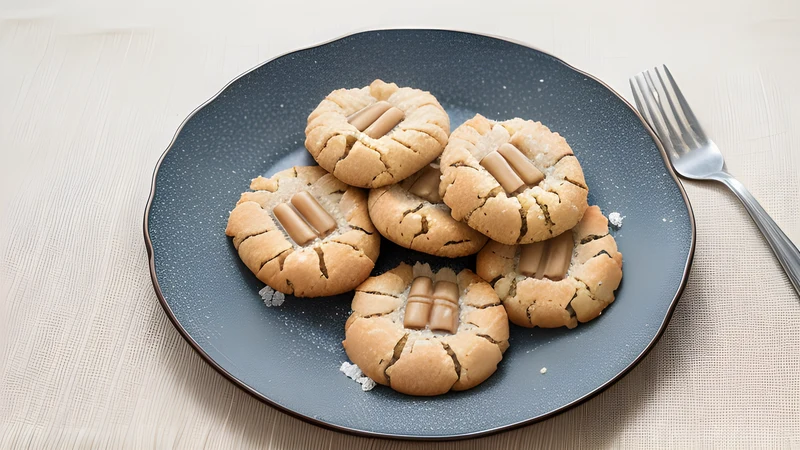
↓ Jump to recipeA peanut butter cookie is one of the great plain pleasures of home baking, and its criss-cross fork mark is one of the few genuinely functional decorations in all of biscuit-making. The classic is sweet, dense and nutty, and my version keeps every bit of that while stirring in a tablespoon of white miso, which sounds strange for a cookie and turns out to be the most natural partner peanut butter has. Miso is salty, savoury and gently fermented, and it deepens the roasted-peanut flavour into something rounder and more moreish, then a scatter of flaky salt on top does the rest.
Peanut Butter Cookies with Flaky Salt
Ingredients
- 125g unsalted butter, softened
- 200g soft light brown sugar
- 50g caster sugar
- 250g smooth peanut butter
- 1 tbsp white miso paste
- 1 large egg
- 1 tsp vanilla extract
- 190g plain flour
- 3/4 tsp bicarbonate of soda
- 1/2 tsp fine salt
- Flaky sea salt, to finish
Method
- Heat the oven to 180C fan and line two baking sheets with parchment.
- Beat the softened butter, brown sugar and caster sugar until creamy, about 2 minutes.
- Beat in the peanut butter and white miso, then the egg and vanilla, until smooth.
- Add the flour, bicarbonate of soda and fine salt, and mix to a soft dough.
- Roll into balls of about 35g and sit them well apart on the sheets.
- Press each ball flat with a fork in one direction, then again at a right angle to make the criss-cross pattern.
- Scatter a little flaky salt over each and bake for 10 to 12 minutes until the edges are set and golden but the centres still look soft.
- Cool on the sheet for 5 minutes to finish setting, then move to a rack.
The cookie the fork built
The peanut butter cookie is an American invention of the early twentieth century, and it followed peanut butter itself into the domestic kitchen with remarkable speed. Peanut butter was popularised in the United States around the turn of the century, promoted at first as a wholesome, protein-rich health food, and by the 1910s recipes for peanut butter cookies were appearing in American cookbooks and pamphlets. The George Washington Carver connection often cited in passing is real in spirit: Carver’s agricultural work at Tuskegee did an enormous amount to promote the peanut as a crop across the American South in the early 1900s, and his bulletins included peanut recipes that helped normalise the ingredient in home cooking.
The signature fork mark arrived a little later and, unusually for a decorative flourish, it does a real job. Peanut butter doughs are dense and high in fat, so the balls do not spread and flatten much on their own in the oven, and a ball left whole tends to bake with a raw, underdone centre while the outside sets. Pressing the dough flat with a fork before baking solves the problem by giving the cookie an even thickness that cooks through properly, and the criss-cross came about simply because pressing in two directions flattens the ball more evenly than one. A recipe printed by a peanut industry association in the 1930s is often credited with fixing the fork-mark as the standard, and it has been the cookie’s trademark ever since. The mark also became a rare instance of a home-baking instruction so specific that generations learned it by hand: press once, turn the fork ninety degrees, press again.
That combination of a genuinely useful technique and an instantly recognisable look is why the peanut butter cookie has stayed so constant while other biscuits have come and gone. It sits in the same weeknight, one-bowl, kids-can-help category as my oatmeal raisin cookies, the chewy kind, and both reward exactly the same restraint at the oven door.
Why miso belongs in a peanut cookie
The idea of putting miso in a sweet dough only sounds odd until you taste what it does. White miso, or shiro miso, is a mild, pale, relatively sweet fermented soybean paste, and it brings two things a peanut cookie loves: salt and glutamate, the savoury compound that makes food taste deeper and more satisfying. Roasted peanuts are already rich in the same kind of savoury, umami character, so a spoonful of miso amplifies a flavour that is already there rather than introducing a foreign one. The result reads as a more intensely peanutty cookie, with a background savouriness that keeps you reaching for another, and almost nobody guesses the ingredient responsible.
Beyond flavour, the miso contributes a little extra moisture and salt to the dough, which helps keep the baked cookie chewy in the middle. Because it is already salty, the tablespoon of miso replaces some of the salt you would otherwise add, which is why the fine salt in the dough stays modest at half a teaspoon. Use white miso specifically here; red or brown miso is far stronger and more assertively fermented, and it would push the flavour past peanut and into something too savoury to read as a biscuit. Stir the miso in with the peanut butter so it distributes evenly before the flour goes in.
The peanut butter itself matters too. A stabilised smooth supermarket peanut butter, the kind that does not separate, gives the most reliable texture, because natural peanut butters with a layer of oil on top vary too much in consistency and can make the dough greasy or dry depending on how well they were stirred. If you only have natural peanut butter, stir it thoroughly first and expect a slightly softer dough that may need ten minutes in the fridge before rolling. Whichever you use, smooth is the safer choice for a first batch, since crunchy versions vary widely in how much whole peanut they carry and can throw the moisture balance off.
Getting the chew right
The texture of a peanut butter cookie is controlled by its sugars and its bake time. This recipe leans on soft light brown sugar for the bulk of the sweetness, because brown sugar holds moisture and keeps the centre chewy, with a little caster sugar added to help the edges crisp and spread. An all-caster-sugar cookie bakes drier and crunchier, which some people prefer, but the brown-sugar version stays soft for days and has a gentle toffee note that flatters the peanut.
The single most important thing is to underbake them slightly. Pull the cookies when the edges are set and golden but the centres still look soft and slightly underdone, because they carry on cooking on the hot sheet for several minutes after they leave the oven, and a cookie baked until the middle looks done in the oven will be dry and hard once cooled. The five-minute rest on the sheet is not optional; it is where the centre finishes setting into that chewy, fudgy texture. Move them too early and they collapse, leave them too long in the oven and you lose the chew entirely. The same discipline that keeps my chocolate crinkle cookies fudgy applies precisely here.
The recipe
Heat the oven to 180C fan and line two sheets with parchment. Beat 125g softened butter, 200g soft light brown sugar and 50g caster sugar until creamy, about 2 minutes. Beat in 250g smooth peanut butter and 1 tablespoon white miso, then 1 egg and 1 teaspoon vanilla, until smooth. Add 190g plain flour, 3/4 teaspoon bicarbonate of soda and 1/2 teaspoon fine salt, and mix to a soft dough.
Roll into 35g balls, sit them well apart on the sheets, and press each flat with a fork in one direction and then at a right angle to make the criss-cross. Scatter a little flaky salt over each and bake for 10 to 12 minutes until the edges are set and golden but the centres still look soft. Cool on the sheet for 5 minutes, then move to a rack.
Tips, storage and variations
If your cookies come out cakey and puffed rather than chewy and slightly flat, the dough was likely too cold or over-floured, so measure the flour by weight and let a chilled dough sit at room temperature for a few minutes before shaping. If they spread into thin, greasy pools, the butter was too warm or the peanut butter too oily; chill the shaped balls for ten minutes and bake straight from cold. Baked cookies keep in an airtight tin for up to five days and stay pleasingly soft, and the raw dough balls freeze well, baked from frozen with an extra minute or two.
For variations, fold 100g of chopped dark chocolate or peanut butter chips into the dough for a richer cookie, or press a chocolate button into the centre of each ball before baking. Crunchy peanut butter in place of smooth gives welcome texture for those who like the bite. If the savoury-sweet idea appeals, the flaky-salt finish that works here is the same trick I use on my browned-butter and pecan blondies, where a little salt keeps a very sweet bake honest.
Related Content