Pavlova with Passionfruit and Cream
A marshmallow-centred meringue with a muscovado ripple and sharp fruit
Contents
↓ Jump to recipeThe pavlova has caused more cross-Tasman argument than any dessert deserves, and the argument is real scholarship, not pub bluster. Both Australia and New Zealand claim to have invented it, both name it after the Russian ballerina Anna Pavlova, who toured the region in the 1920s, and both have spent decades trying to settle the question of who whipped the first one. In 2010 the food historian Helen Leach, at the University of Otago, published a book that tracked down 667 pavlova recipes from 300 sources and concluded that the earliest recognisable version — a soft meringue cake topped with fruit and cream — appeared in New Zealand in 1929, ahead of the Australian claims. Australia disputes it still. The Oxford English Dictionary weighed in on New Zealand’s side; the argument continues regardless, which tells you how much both nations care.
What everyone agrees on is the shape of the thing: a meringue engineered to be two textures at once. A plain meringue is crisp all the way through, dry and shattering. A pavlova has a thin, crackling shell and, underneath it, a soft, chewy, almost marshmallow centre that pulls slightly as you spoon into it. That contrast is the entire point, and it is achieved by three small additions the ballerina’s namesake dessert cannot do without — cornflour, an acid, and a low, slow bake. Get those right and you have one of the great dinner-party puddings: cheap to make, impressive to look at, and endlessly forgiving of the fruit you have to hand.
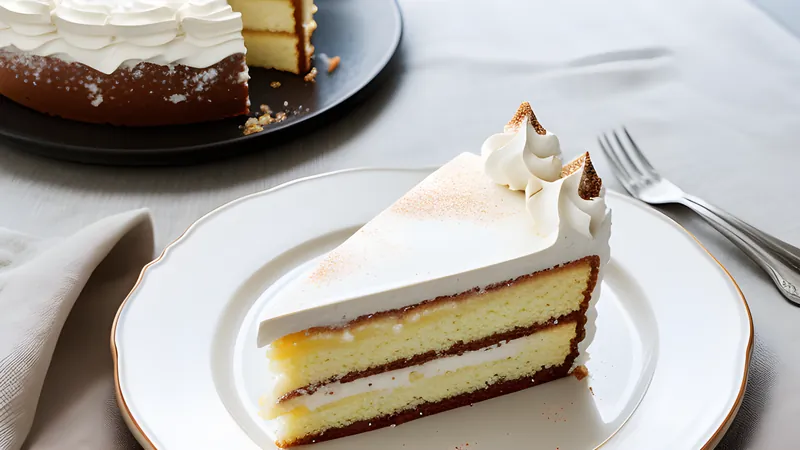
Pavlova with Passionfruit and Cream
Ingredients
- 4 large egg whites, at room temperature
- 225g caster sugar
- 1 tbsp dark muscovado sugar
- 1 tsp cornflour
- 1 tsp white wine vinegar
- 0.5 tsp vanilla extract
- 300ml double cream
- 1 tbsp icing sugar
- 6 ripe passionfruit
- 1 handful raspberries, to finish
Method
- Heat the oven to 150C fan and draw a 20cm circle on baking parchment, then flip it pencil-side down on a tray.
- Whisk the egg whites to stiff peaks, then add the caster sugar a spoonful at a time, whisking to a stiff, glossy meringue that no longer feels gritty between your fingers.
- Whisk in the cornflour, vinegar and vanilla.
- Sift the muscovado over the meringue and fold twice only, to leave a loose ripple.
- Pile onto the parchment inside the circle, shaping a slight hollow in the top.
- Turn the oven down to 120C fan, bake for 90 minutes, then turn the oven off and leave the pavlova inside until completely cold, ideally overnight.
- Whip the cream with the icing sugar to soft peaks and spoon into the hollow.
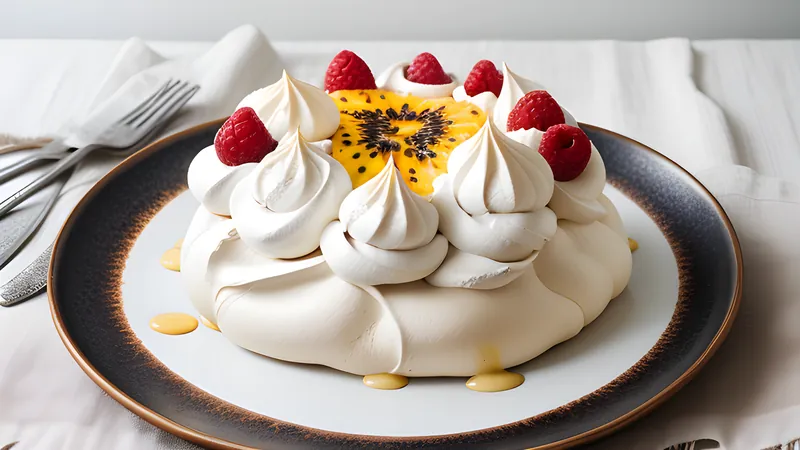
- Spoon over the pulp of the passionfruit, scatter with raspberries and serve within the hour.
The science that makes the middle chewy
A meringue is a foam of air bubbles held up by egg-white proteins, and sugar dissolved into a syrup around them. Whether it dries out or stays soft in the centre comes down to how the sugar and proteins behave as they cook. The cornflour interferes with the protein network just enough to keep the interior from setting fully crisp, trapping moisture and giving you that marshmallow pull. The acid — white wine vinegar, or lemon juice — lowers the pH, which relaxes the proteins so the foam is more stable and less likely to weep or collapse, and it also keeps the meringue white rather than letting it turn creamy-beige. Neither is optional if you want the true pavlova texture; leave them out and you have made a very large, very sweet meringue instead.
The low oven does the rest. You are not really baking a pavlova so much as drying it, which is why the temperature drops the moment it goes in. Too hot and the shell browns and cracks deeply and the outside sets before the inside has stabilised; too cool and it never forms a shell at all. And the single most useful instruction in the whole method is the one people skip: turn the oven off at the end and leave the pavlova inside to cool completely, for hours or overnight. A pavlova pulled straight into a cold kitchen suffers a thermal shock and cracks like a dropped plate. Slow cooling is what keeps it whole.
The muscovado ripple, which is the twist
A classic pavlova is bright white, and there is a purity to that I understand. But I fold a single tablespoon of dark muscovado sugar through the finished meringue in two lazy strokes, so it streaks rather than blends, and it changes the pudding. As the pavlova bakes, those dark ribbons caramelise faintly and take on a toffee, almost butterscotch note that runs through the marshmallow centre in veins. It gives a plain white dessert a little smokiness and depth that stands up beautifully to sharp fruit. The trick is restraint: fold twice and stop, because if you mix it in properly you lose both the marbling and the pockets of concentrated flavour, and you deflate the meringue while you’re at it. If you love that caramelised-sugar register, it is the same instinct that drives the torched crust on a crema catalana.
Why passionfruit, and why sharpness matters
A pavlova is sweet. Very sweet — it is essentially structured sugar. Everything piled on top has to fight that, which is why the cream is only softly sweetened and the fruit needs to be sharp. Passionfruit is the ideal partner because it is aggressively tart, floral, and its seeds add a faint crunch that plays against the soft meringue. The pulp of six ripe passionfruit, spooned straight over the cream, cuts the sugar and lifts the whole thing. Ripe passionfruit should feel heavy for their size and be wrinkled and dimpled rather than smooth; a smooth, taut skin means an underripe fruit with pale, sour pulp and little perfume. A handful of raspberries, themselves nicely acidic, rounds it out and adds colour. The same balancing act — sweet base, sharp fruit — is what makes a passionfruit and coconut loaf work.
Method, step by step
Heat the oven to 150C fan. Draw a 20cm circle on a sheet of baking parchment, then turn the parchment over so the meringue never touches the pencil, and set it on a baking tray. Make sure your bowl and whisk are spotlessly clean and free of grease, because even a trace of fat or a fleck of yolk will stop the whites reaching full volume.
Whisk four room-temperature egg whites on medium speed until they hold stiff peaks. Now add the 225g of caster sugar a tablespoon at a time, whisking well between each addition, until you have a thick, glossy meringue that stands in firm peaks. Rub a little between your fingers: if it feels gritty the sugar hasn’t dissolved, so keep whisking. Sprinkle over the teaspoon of cornflour, the vinegar and the vanilla, and whisk briefly to combine. Sift the muscovado over the surface and fold just twice with a spatula, leaving obvious dark streaks.
Pile the meringue onto the parchment inside your circle, using the back of a spoon to build it up and to hollow out the centre a little for the cream to sit in later. Turn the oven down to 120C fan, put the pavlova in, and bake for 90 minutes without opening the door. Then turn the oven off and leave the pavlova inside until it is stone cold, which is best done overnight.
To serve, whip 300ml of double cream with a tablespoon of icing sugar to soft, billowy peaks, and spoon it into the hollow. Halve the passionfruit and spoon the pulp and seeds over the cream, scatter with raspberries, and bring it to the table within the hour, before the cream softens the shell.
What goes wrong, and how to store it
Two things haunt pavlovas. Weeping — beads of syrup on the surface — usually means the sugar didn’t fully dissolve or the meringue was overbaked, so take the whisking to that grit-free stage and trust the timing. Cracking is mostly cosmetic and almost always down to fast cooling; a cracked pavlova buried under cream and fruit is a secret only you will know. If your kitchen is very humid, meringues struggle to dry out at all, so pick a dry day if you can, and resist the urge to peek — every time the door opens the temperature swings and the shell suffers for it.
The bare, unfilled meringue keeps beautifully. Baked and cooled, it will sit in an airtight container, or loosely wrapped somewhere dry, for two or three days — this is a pudding you can make well ahead and finish in five minutes. Once assembled, though, it is on a clock: the cream and juices soften the crisp shell into chewiness within a couple of hours, which is delicious in its own right but a different dessert. Fill it as late as you dare. And when berries are out of season, tart passionfruit alone carries it, or lean on poached rhubarb, sharp stewed apricots, or a tumble of pomegranate seeds for the same clean cut against all that sweetness.
Related Content