Portuguese Custard Tarts (Pastéis de Nata)
Blistered tops, molten centres, scandalously good
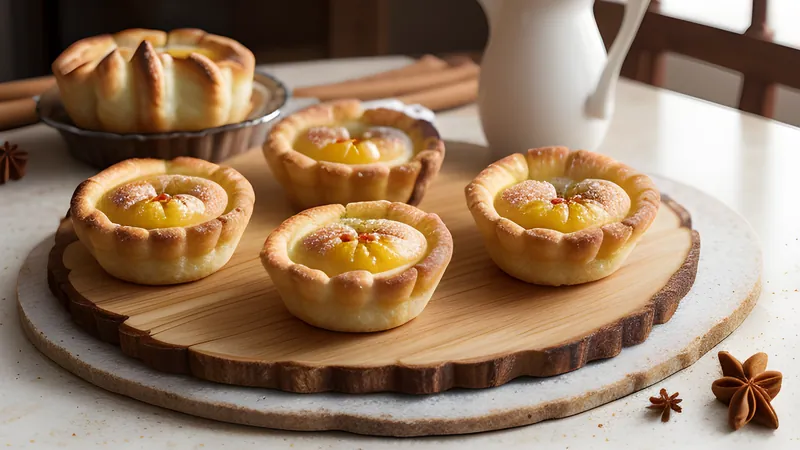
Portuguese Custard Tarts (Pastéis de Nata)
Ingredients
- 320g all-butter puff pastry (shop-bought or rough puff)
- 200g caster sugar
- 120ml water
- 1 cinnamon stick
- 1 strip of lemon peel
- 500ml whole milk
- 50g plain flour
- 6 large egg yolks
- 1 tsp vanilla extract
- 0.25 tsp fine salt
Method
- Make a sugar syrup by gently heating the sugar, water, cinnamon stick and lemon peel until the sugar dissolves and it reaches a light syrup, then remove from the heat.
- Whisk the flour with a little of the cold milk to a smooth paste, then whisk in the remaining milk and cook over medium heat, stirring, until thickened.
- Strain the warm syrup into the hot milk mixture in a steady stream, whisking constantly, then whisk in the egg yolks, vanilla and salt off the heat.
- Pass the custard through a sieve and let it cool slightly while you prepare the pastry.
- Roll the puff pastry into a tight spiral log, slice into 12 discs, and press each into a muffin tin, working the pastry up the sides into a thin cup.
- Fill each pastry cup three-quarters full with custard.
- Bake at the very top of an oven set as hot as it will go, ideally 250C or above, for 18 to 22 minutes until the tops are blistered and charred in spots.
- Cool briefly in the tin, then dust with cinnamon and serve warm.
If there is one pastry I would happily eat until I felt slightly unwell, it is the pastel de nata. Crisp, shattering pastry holding a wobbling, scorched custard that is somewhere between set and molten, eaten warm so the cinnamon catches in your throat a little. They are sold from glass cabinets all over Lisbon, and for years I assumed they were beyond a home cook. They are not. They are fiddly, yes, but the technique is learnable in an afternoon, and homemade ones eaten ten minutes out of the oven beat almost anything you can buy outside Portugal.
1 A Pastry Born in a Monastery
The story of the pastel de nata begins, as so many great things do, with monks and an enormous surplus of egg yolks. In the convents and monasteries of Portugal, egg whites were used in vast quantities to starch nuns’ habits and to clarify wine. That left mountains of yolks, and the resourceful religious orders turned them into rich, golden custards and sweets. The pastel de nata is the most famous survivor of this tradition, developed at the Jerónimos Monastery in the Belém district of Lisbon before the early nineteenth century.
When the monasteries faced closure during the liberal upheavals of the 1830s, the monks sold their recipe to a nearby sugar refinery to raise money. The owners opened the Fábrica de Pastéis de Belém in 1837, and the recipe has been kept a closely guarded secret there ever since, made by a handful of pastry chefs sworn to silence. The tarts sold elsewhere are technically pastéis de nata, while only those from that one factory may be called pastéis de Belém. It is a lovely bit of pedantry to deploy at a dinner party.
2 The Two Components
A pastel de nata is really just two things done well: laminated pastry and a thickened custard. For the pastry, all-butter puff is essential, and my rough puff recipe is perfect here. The trick to that signature spiral pattern in the base is to roll the pastry into a tight log, slice it into rounds, and press each round cut-side-up into the tin so the layers spiral outward. Work the pastry thin up the sides with damp thumbs.
The custard is a cooked one, stabilised with a little flour so it holds its shape and develops that characteristic dense, almost flan-like set rather than running. The clever twist, and the part most home recipes skip, is infusing the sugar syrup with cinnamon and lemon peel and then streaming that hot syrup into the cooked milk-and-flour base. Cooking the custard in two stages like this gives you a far smoother, glossier result than simply whisking everything together, and the citrus-and-spice perfume runs all the way through rather than sitting only on top.
3 Method Notes That Matter
Strain the custard. Always. Even careful cooking leaves the odd lump of set egg or flour, and the texture of a good nata is flawlessly silky. Fill the pastry cups only three-quarters full, because the custard rises and bubbles as it bakes.
Then comes the single most important instruction in the whole recipe: heat. Pastéis de nata need a savage oven. The professionals bake them at temperatures of 350C or more, which is how they get those near-black blisters on top while the custard underneath stays barely set. A domestic oven cannot reach that, so set yours to maximum, usually 250C, put the tray as high as it will go, and accept that you will not get quite the same char. You can chase it by flashing the tarts under a hot grill for the final minute, watching them like a hawk.
4 Eating and Storing
Pastéis de nata are a warm pastry. Cold from the fridge they are still nice, but a little dull, the pastry softened and the custard stiff. Eat them within a couple of hours of baking if you can, dusted with extra cinnamon and, if you are feeling traditional, a whisper of icing sugar. A short, sharp espresso alongside is non-negotiable in my house.
If you must store them, keep them at room temperature for a day, then revive in a hot oven for a few minutes to re-crisp the pastry before serving. They never quite return to that first-bite glory, but reheated they are still worlds better than most things you could be eating instead. Make a full dozen. You will not regret it, and you will not have leftovers.
Related Content