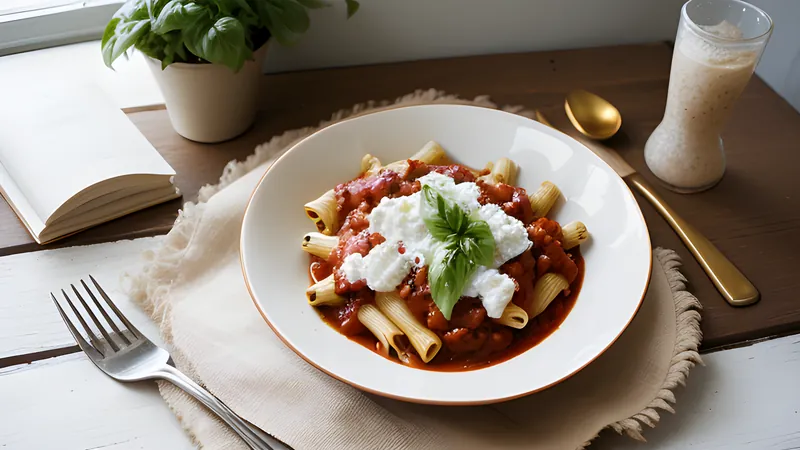
Pasta alla Norma with Fried Aubergine and Ricotta Salata
Sicily's aubergine pasta, with one aubergine charred over the flame
Contents
↓ Jump to recipeThere is a story Sicilians tell about this dish, and like most food stories it is probably half true, which is the best kind. The tale goes that a Catania playwright, tasting a plate of aubergine pasta so good it silenced the table, declared it “a real Norma” — a comparison to Norma, the Bellini opera that is the city’s proudest export. Bellini was born in Catania in 1801. The pasta was named in his honour, an edible round of applause. Whether any single diner ever actually said it hardly matters. What matters is that Catania decided the dish was worth the highest compliment it had, and Catania was right.
Norma is a summer plate built from four cheap things: aubergine, tomato, hard salted ricotta, and basil. It reads like nothing on paper. On the plate it is one of the great arguments for Sicilian cooking, where poverty and sunshine conspired to make something richer than money could buy. Every element does a job. The aubergine brings silk and body, the tomato brings acid and brightness, the ricotta salata brings the salt-slap that ties it together, and the basil brings green perfume over the top. Miss any one and you feel the gap.
Pasta alla Norma with Fried Aubergine and Ricotta Salata
Ingredients
- 3 medium aubergines (about 750g)
- Fine salt, for degorging
- Sunflower or light olive oil, for frying (about 400ml)
- 4 tbsp extra-virgin olive oil
- 3 fat garlic cloves, thinly sliced
- 1 tsp dried oregano
- Pinch of dried chilli flakes
- 700g passata or tinned whole tomatoes, crushed by hand
- 1 tsp caster sugar (if needed)
- 400g dried short pasta, ideally rigatoni or maccheroni
- A large handful of basil leaves
- 100g ricotta salata, plus more to serve
- Sea salt and black pepper
Method
- Cut 2 aubergines into 2cm cubes, salt generously, and leave to drain in a colander for 30 minutes. Pat thoroughly dry.
- Char the third aubergine whole over a gas flame or under a hot grill until collapsed and blackened, about 12 minutes. Cool, peel, and chop the smoky flesh.
- Heat 2cm of frying oil to 180C and fry the cubed aubergine in batches until deep gold, 3-4 minutes per batch. Drain on kitchen paper and season.
- In a wide pan, warm the extra-virgin olive oil with the garlic, oregano and chilli over low heat until fragrant, about 2 minutes.
- Add the passata and the chopped charred aubergine. Simmer 15 minutes until thick and glossy; taste and add sugar if sharp. Season.
- Boil the pasta in well-salted water until al dente. Reserve a mugful of water, then drain.
- Toss the pasta through the sauce with most of the fried aubergine and a splash of pasta water. Tear in the basil.
- Serve topped with the remaining fried aubergine and a generous grating of ricotta salata.
The aubergine question
Everything in Norma stands or falls on the aubergine, so let me be blunt about it. Aubergine is a sponge with ambitions. Fry it badly and it drinks a swimming pool of oil and turns to grey mush; fry it well and it collapses into something almost custardy inside a crisp gold shell. The difference is heat and patience.
First, salt the cubes and let them sit for half an hour. This draws out moisture and a little of the bitterness older aubergines carry, and it collapses the flesh slightly so it absorbs less oil in the pan. Pat them properly dry afterwards, because wet aubergine hitting hot oil will spit at you and steam rather than fry. Then get your oil genuinely hot, around 180C — a cube dropped in should sizzle eagerly and float within a second or two. Fry in batches with room to move. Crowd the pan and the temperature crashes, and you are back to grey mush.
Here is my one small twist, and it is the thing that turns a good Norma into one people remember. Take a third aubergine and char it whole, straight over the gas flame or under a fierce grill, turning until the skin is black and blistered and the inside has slumped to nothing. Peel it, chop the smoky flesh, and stir it into the tomato sauce. It dissolves almost completely, leaving behind a low, woodsmoke hum under the fruit. Nobody at the table will be able to name it. They will just know your sauce tastes deeper than theirs. It is the same trick that gives Baingan Bharta with Smoked Aubergine its backbone, and the same smoke that makes Moutabal, smoked aubergine with yoghurt and pomegranate sing.
Building the sauce
The tomato sauce should be quick and lively, cooked just long enough to lose its raw edge and thicken. Warm good olive oil with sliced garlic over gentle heat — you want the garlic to soften and perfume the oil, going pale gold and no further. Burnt garlic is bitter and it will haunt the whole dish. Dried oregano and a pinch of chilli go in with the garlic so their oils bloom.
Then the tomatoes. Passata is convenient and fine; tinned whole tomatoes crushed by hand are better, because you keep control of the texture and the juice tastes brighter. In goes the chopped charred aubergine too. Fifteen minutes of gentle simmering is plenty. If your tomatoes are sharp, a teaspoon of sugar rounds them off, though a ripe August tin rarely needs it. You want a sauce that is thick enough to cling but still loose and glossy, never claggy.
Shape matters
Catania argues about the pasta shape the way other cities argue about football. Some swear by short tubes, maccheroni or rigatoni, whose ridges and hollows trap sauce and hide little cubes of aubergine. Others insist on spaghetti. I am firmly in the short-tube camp: you want something that catches the fried aubergine so every forkful carries a piece. Cook it in water as salty as a good broth and pull it out a minute before the packet says, because it will finish in the sauce.
Fold most of the fried aubergine through the pasta with the sauce and a good splash of the starchy cooking water, which loosens everything and helps it emulsify into a proper coating. Save a little of the fried aubergine to pile on top, so the plate has both the melted cubes and some that keep their crisp edge. Tear the basil in at the last second — chopped basil bruises and blackens, torn basil stays fresh and fragrant.
Ricotta salata, the salty full stop
Ricotta salata is not the soft ricotta you dollop on toast. It is ricotta that has been pressed, salted and aged into a firm, crumbly, sharply salty cheese you grate or shave. It is the signature of Norma and there is no true substitute, though a young pecorino comes closest in a pinch. Grate it over at the table in a generous drift. It is the ingredient that stops the dish being merely a nice aubergine pasta and makes it Norma — the salt that lifts the sweet tomato and the rich aubergine into focus.
What can go wrong
Oily, heavy aubergine. You skipped the salting, or your oil was too cool. Cool oil is absorbed; hot oil sears a seal and stays out. Keep the temperature up and fry in small batches.
A flat, dull sauce. Undercooked garlic, no seasoning, or tinned tomatoes that needed a pinch of sugar and did not get one. Taste as you go. The sauce should taste finished before it ever meets the pasta.
Sad, grey basil. Added too early or chopped with a knife. Tear it in off the heat.
Make it your own
If you want to lean richer, a spoonful of the fried-aubergine oil stirred into the sauce carries beautiful flavour. For a vegan version, skip the ricotta salata and finish with toasted breadcrumbs seasoned with salt and a little dried oregano for the crunch and savour, much like the pangrattato over Spaghetti Aglio e Olio with Toasted Breadcrumbs. A few capers stirred into the tomato give a briny lift that suits the aubergine well, and if you like a fresher plate, halve some cherry tomatoes and add them at the end so a few burst and a few hold their shape.
Storage
The tomato-and-aubergine sauce keeps happily in the fridge for three days and freezes for a month, so it is worth making a double batch of the base. Fry the aubergine fresh though — reheated fried aubergine goes soft and loses its point. Dressed pasta does not keep; cook only what you will eat, and dress the rest to order.
Serve it in wide, shallow bowls with a cold glass of something Sicilian, a bottle of Etna Rosso if you are feeling faithful to Catania. It is a plate that tastes of a hot island and a long lunch, and the smoky aubergine folded into the sauce is the small secret that makes people ask for the recipe. Give it to them. Good things travel.
Related Content