Passionfruit and Coconut Loaf
A tender coconut loaf drenched in sharp passionfruit syrup while warm
Contents
↓ Jump to recipePassionfruit smells like it should be difficult and expensive, all tropical mystique, and it is neither. Cut one of the wrinkled purple orbs in half and the inside is faintly ridiculous: a spoonful of orange jelly studded with crunchy black seeds, tasting so intensely sharp and floral that a little perfumes a whole cake. The fruit is native to South America, carried across the world by Portuguese and Spanish traders, and it found an especially happy home in the kitchens of Australia and New Zealand, where a passionfruit is the near-obligatory finishing note on a pavlova and a summer of it drips off the vine in suburban back gardens.
Coconut is its natural ally, the soft, milky, mellow foil to all that acid, and the two of them together are one of the great tropical pairings. This loaf takes the easiest possible route to that combination: a plain, sturdy coconut cake baked in a tin you already own, then transformed while it is still warm by soaking it in sharp passionfruit syrup. It is the cake I make when I want something that punches well above the effort it took, and it needs no stand mixer, no layers and no piping.
Passionfruit and Coconut Loaf
Ingredients
- 200g unsalted butter, softened
- 200g caster sugar
- 3 large eggs
- 180g plain flour
- 1.5 tsp baking powder
- 60g desiccated coconut
- 1/4 tsp fine salt
- 100ml coconut milk (the tinned kind, well stirred)
- 8 ripe passionfruit (about 120ml pulp)
- 50g caster sugar (for the syrup)
- 150g icing sugar (for the drizzle)
- 25g coconut flakes, toasted, to finish
Method
- Heat the oven to 160C fan. Butter and line a 900g (2lb) loaf tin with paper, leaving an overhang.
- Cream the butter and 200g caster sugar for 4-5 minutes until pale and fluffy. Beat in the eggs one at a time, adding a spoon of the flour with each to stop it splitting.
- Fold in the remaining flour, baking powder, desiccated coconut and salt, then the coconut milk, to a smooth, soft dropping batter.
- Spoon into the tin, level the top, and bake 50-55 minutes until deep gold and a skewer comes out clean. Tent with foil at 40 minutes if it colours too fast.
- Meanwhile, halve the passionfruit and scoop the pulp into a small pan. Add the 50g sugar and warm for 2-3 minutes until the sugar dissolves and it is syrupy. Strain half through a sieve into a jug for the syrup; keep the other half, seeds and all, for the icing.
- As soon as the loaf comes out, prick it all over with a skewer and spoon the strained warm passionfruit syrup over so it soaks in. Cool in the tin 20 minutes, then lift out onto a rack to cool completely.
- Sift the icing sugar into the reserved seedy passionfruit and stir to a thick, just-pourable drizzle, loosening with a few drops of water if needed.
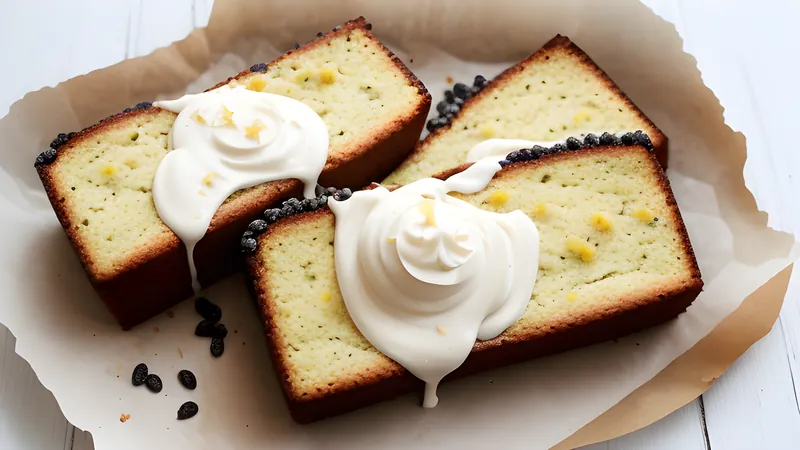
- Spoon the drizzle over the cooled loaf, letting it run down the sides, and scatter with toasted coconut flakes. Let it set before slicing.
An antipodean love affair
It is worth pausing on why passionfruit and coconut feel so instinctively “summer holiday” to so many people, because the pairing has a real geography behind it. In Australia and New Zealand, passionfruit is not exotic at all; it is a back-fence fruit, grown on rampant vines that swallow trellises and drop more fruit than a household can eat. That abundance made it the everyday finishing note on the pavlova, the passionfruit butter spread on scones, the icing on a passionfruit sponge at every school fete. Coconut arrived through the same Pacific and Southeast Asian trade routes that shaped so much antipodean baking, and the two settled into partnership the way local ingredients do. This loaf borrows that easy, sunlit combination and folds it into the very British format of a drizzle loaf, which is where the two traditions meet on my kitchen counter.
The drizzle-cake principle
This is, at heart, a drizzle cake, first cousin to the lemon drizzle in every British repertoire, and the technique is the whole reason it works. You bake a fairly ordinary butter sponge, and then, the moment it leaves the oven, you prick it all over and spoon a warm, sugary fruit syrup on top. Two things happen. The hot cake and warm syrup mean the liquid soaks straight in rather than sitting on the surface, so the crumb turns dense, damp and moist right to the middle. And because the syrup carries raw, uncooked passionfruit, the flavour stays bright and sharp in a way it never would if you baked the fruit into the batter, where heat dulls its perfume.
Timing is the only thing that matters here. The syrup must go onto a hot cake. Let the loaf cool first and the syrup pools on top and slides off the sides, leaving you with a soggy crown and a dry base. Have the syrup warm and ready the instant the skewer comes out clean.
Building coconut flavour in three ways
Coconut is deceptive; it can smell wonderful and taste of nothing, especially the desiccated sort that has sat in a cupboard. To get real coconut flavour into a cake you have to come at it from more than one direction, so this loaf uses coconut three ways. Desiccated coconut in the batter gives texture and body and a gentle chew. Tinned coconut milk, stirred well and used in place of ordinary milk, carries the fat that actually holds coconut flavour and keeps the crumb tender. And toasted coconut flakes on top bring aroma and crunch; toasting is what wakes coconut up, turning it nutty and fragrant, so never skip that step even if you skip everything else.
Desiccated coconut can dry a cake out, which is why the coconut milk and the syrup soak both matter here; they put back the moisture the coconut drinks. Get the balance right and you have a loaf that is moist and coconut-scented rather than the dry, worthy coconut cakes that give the ingredient a bad name.
The seedy drizzle, and the twist
Most passionfruit cakes strain the seeds out entirely, and I think that is a small missed opportunity. My twist is to split the passionfruit pulp: I strain half into a smooth syrup for soaking the cake, and I leave the other half seeds and all to stir into the icing. Those little black seeds earn their place beyond the way they look scattered through the pale drizzle. They give a faint, deliberate crunch against the soft cake and a hit of concentrated tartness, and they announce, honestly, exactly what fruit you are eating. A drizzle that crackles slightly is a better drizzle.
That sharp fruit-against-cream idea is the same one behind a good pavlova with passionfruit and cream, where the acid cuts the sweetness, and it is worth chasing in any coconut bake because coconut left to itself can turn cloying.
Tips, troubleshooting and swaps
Choose wrinkly fruit. A ripe passionfruit is heavy for its size with a deeply dimpled, wrinkled skin. Smooth, taut ones are underripe, sour without the floral top note, and short on pulp. If yours are smooth, leave them at room temperature for a few days to wrinkle.
Do not overbake. A loaf pushed too long goes dry, and the coconut makes that worse. Start checking at fifty minutes; a skewer with no wet batter is done, and the syrup will carry any last touch of dryness.
Prick deep and everywhere. The skewer holes are the channels the syrup travels down. Go right to the base of the loaf and cover the whole top so it soaks evenly.
If passionfruit is out of season or dear, the good-quality frozen passionfruit pulp sold in South American and Asian shops works beautifully; use about 120ml, and add the seeds from one fresh fruit to the icing for the crunch.
Storage. Because it is so moist, this loaf keeps exceptionally well: wrapped, it stays good for four to five days and is arguably better on day two once the syrup has fully settled through. It also freezes well, un-iced, for up to two months.
Serving
Slice it thick and serve it as it is, with tea or coffee. It is sturdy enough for a lunchbox and smart enough, warmed slightly with a spoon of coconut yoghurt or crème fraîche, to end a summer dinner. If you want to lean into the tropical theme, a scoop of vanilla or coconut ice cream alongside a warm slice turns it into a proper pudding, in the spirit of the toasted-coconut sweets I love, like lamingtons rolled in coconut.
It is a generous, uncomplicated cake, the kind that lives on a board under a cloth on the kitchen counter and quietly disappears over a week. The tropical fruit does the showing off; the method could not be plainer. Bake a simple loaf, drench it while it is hot, and let sharp passionfruit and mellow coconut do the rest.
Related Content