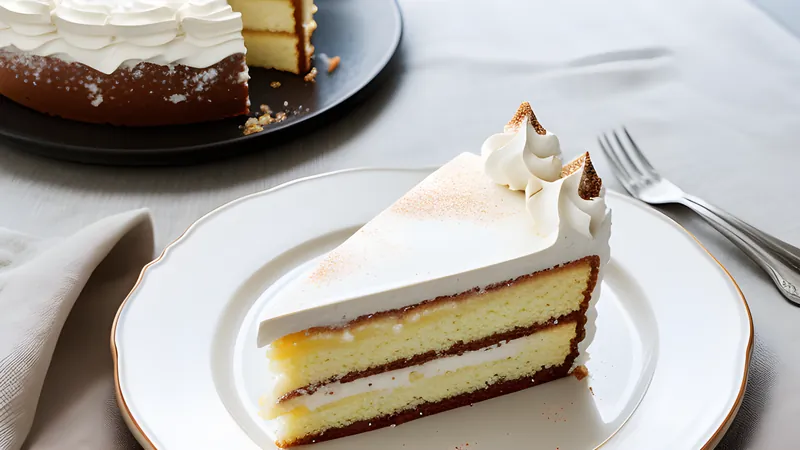
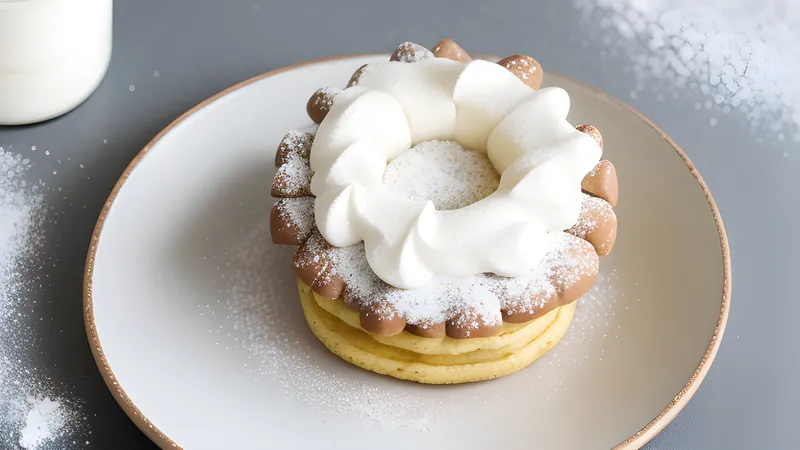
Paris-Brest with Praline Cream
A wheel of choux, hazelnut praline and salted cream
Contents
↓ Jump to recipeThere is a particular kind of French pudding that looks like it belongs behind glass in a patisserie and quietly convinces you that you could never make it at home. The Paris-Brest is one of those, a great golden wheel of choux pastry split and filled with hazelnut cream, and it has an unearned reputation for being fiddly. It is more forgiving than it looks. Master a good choux and a proper praline, and the rest is assembly. The single detail that lifts mine out of the ordinary is a good pinch of flaky sea salt beaten through the cream, which pulls the sweetness back and lets the toasted hazelnut sing.
A cake shaped like a bicycle wheel
The Paris-Brest was invented in 1910 by a pastry chef named Louis Durand, working in Maisons-Laffitte on the western edge of Paris. The occasion was the Paris-Brest-Paris cycle race, a punishing 1,200-kilometre round trip between the capital and the Breton coast that had been running since 1891 and passed directly by Durand’s shop. He shaped his cake as a wheel in honour of the riders, filled it with rich praline cream to fuel them, and the ring stuck. For years the Durand family claimed to hold the original recipe, and the ring shape remains the signature that tells you what you are looking at before you taste a thing.
The genius of the design is practical as much as decorative. The ring gives you a high ratio of crisp, almond-strewn crust to soft interior, and it slices cleanly into wedges so eight people get an equal share of pastry and cream. Choux itself is one of the oldest worked pastries in the French repertoire, a cooked paste that puffs on steam alone with no raising agent, and the same dough gives you profiteroles, éclairs and gougères. Once you understand how it behaves, a whole shelf of the patisserie window opens up.
Paris-Brest with Praline Cream
Ingredients
- For the choux: 125ml water
- 125ml whole milk
- 100g unsalted butter, cubed
- 1 tsp caster sugar
- 0.5 tsp fine salt
- 140g plain flour, sifted
- 4 large eggs, beaten (about 220g), plus 1 egg for glazing
- 50g flaked almonds
- For the praline: 150g blanched hazelnuts
- 150g caster sugar
- 2 tbsp water
- For the crème mousseline: 400ml whole milk
- 4 large egg yolks
- 90g caster sugar
- 35g cornflour
- 180g unsalted butter, softened, in two portions
- 0.5 tsp flaky sea salt
- Icing sugar, to finish
Method
- Toast the hazelnuts at 170C fan for 10 minutes. Boil the sugar and water to a deep amber caramel, stir in the nuts, tip onto baking paper and cool until hard.
- Blitz the set praline to a loose paste in a food processor, 3 to 5 minutes, scraping down as needed.
- Make a crème pâtissière: heat the milk; whisk yolks, sugar and cornflour; temper, return to the pan and cook to a thick custard. Beat in 40g butter, cover flush and chill cold.
- Bring water, milk, butter, sugar and salt to a rolling boil. Add all the flour at once and beat to a smooth ball, then dry it out over the heat for 2 minutes.
- Cool for 5 minutes, then beat in the eggs a little at a time to a glossy, dropping paste.
- Pipe an 18cm ring of choux onto lined trays, pipe a second ring inside touching it and a third on top of the seam. Glaze and scatter with flaked almonds.
- Bake at 190C fan for 25 minutes, then 170C for 15 to 20 minutes until deep gold and firm. Cool completely, then split horizontally.
- Beat the cold pâtissière smooth, beat the remaining 140g soft butter until pale, then beat the two together with the praline paste and sea salt to a light mousseline.
- Pipe the praline cream generously onto the base ring, set the lid on top and dust with icing sugar. Chill 30 minutes before serving.
Getting the choux right
Choux fails for two reasons, and both are easy to avoid. The first is a wet paste that will not rise: the fix is to dry the panade properly, beating it over the heat until a thin film forms on the base of the pan and the dough clumps into a single ball. The second is adding the eggs while the paste is still hot, which starts to cook them and leaves you with scrambled choux. Let it cool for a few minutes first, then add the egg gradually and watch the texture, because flour and eggs vary and the last spoonful is the one that tips a perfect paste into a runny one. You are aiming for a sheen and a slow, reluctant drop.
The bake matters as much as the paste. Choux needs a hot start to generate the steam that inflates it, then a longer, gentler stretch to set the walls so they hold their height once the steam escapes. Take it out too soon and the rings collapse into damp folds as they cool. Deep golden brown and rigid is what you want, and a skewer hole in the side after baking lets the last of the steam out and keeps the crust crisp.
Why the praline is worth making
Shop-bought praline paste exists, and it is fine, though homemade is another thing entirely because you control the roast on the nuts and the depth of the caramel. Take the caramel further than feels comfortable, to a genuine amber that smells almost of coffee, because that near-bitter edge is what stops the finished cream from cloying. This is the same principle behind a good coffee and walnut cake with espresso buttercream, where a bitter note keeps a sweet, nutty sponge honest. Blitz the set praline patiently and it will pass through a rubble stage before the oils release and it slackens into a paste; a splash more heat from a warm processor bowl helps it along.
Crème mousseline, the sturdy cream
The filling is a crème mousseline, which is crème pâtissière enriched with a large amount of beaten butter to make it pipeable and stable. The trick to a smooth mousseline is temperature: the pastry cream and the butter must both be at cool room temperature when you combine them, because a cold custard meeting warm butter will split into a greasy, curdled mess. If it does split, do not panic. Warm the bowl briefly over a pan of hot water while whisking and it will nearly always come back together. This same enriched cream fills a rum baba soaked in syrup and pipes into éclairs, so it is a genuinely useful thing to have in your hands.
Make-ahead, storage and variations
Every element can be made in advance, which is what makes this a manageable dinner-party pudding rather than a marathon. The praline paste keeps for weeks in a sealed jar. The choux rings can be baked a day ahead and re-crisped for 5 minutes in a hot oven, or frozen unfilled and refreshed straight from the freezer. The pastry cream base keeps two days covered in the fridge. Only the final mousseline and assembly need doing on the day, and even then the filled ring is happiest chilled for half an hour so the cream firms enough to slice cleanly.
For variations, the hazelnut is traditional, though a praline made with almonds nods toward a génoise with raspberry and chantilly in flavour, and a spoonful of good cocoa beaten into the cream gives you a chocolate-praline version. A few fresh raspberries hidden in the cream cut the richness with sharp bursts of fruit. Whatever you do, keep the salt, because it is the quiet thing that makes people go back for a second slice.
Related Content