Pappardelle with Beef-Shin Ragù
A three-hour braise that pays you back for every minute
Contents
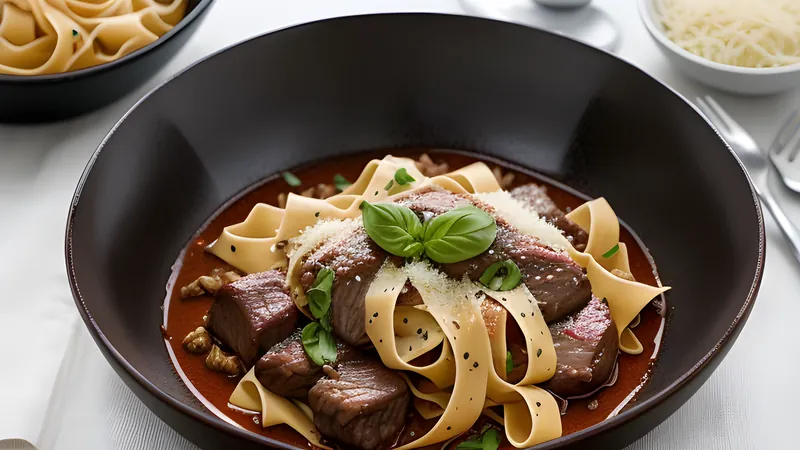
↓ Jump to recipeThere is a particular kind of Sunday that beef-shin ragù was built for. Rain on the window, nowhere urgent to be, and a pot on the back of the stove doing almost nothing for three hours while the flat fills with the smell of wine and browned meat. Shin is the cut for it: the hardest-working muscle on the animal, threaded with connective tissue that most cuts would envy. Roast it fast and it’s shoe leather. Braise it slow and that collagen melts into gelatine, giving the sauce a lip-sticking richness no lean mince can touch.
Pappardelle is the pasta it deserves. Those broad ribbons, a good centimetre or two wide, have the surface area to carry a heavy sauce without collapsing, and they catch the shreds of meat in their folds. Tagliatelle works at a pinch, and if you want the classic mince version look at my tagliatelle al ragù Bolognese, but shin ragù wants width under it.
Pappardelle with Beef-Shin Ragù
Ingredients
- 1.2kg beef shin, cut into thick slices, bone reserved if you have it
- 2 tbsp olive oil
- 1 large onion, finely diced
- 2 carrots, finely diced
- 2 celery sticks, finely diced
- 4 garlic cloves, sliced
- 3 anchovy fillets in oil
- 2 tbsp tomato purée
- 250ml red wine
- 1 x 400g tin plum tomatoes, crushed by hand
- 500ml beef or chicken stock
- 2 bay leaves, 1 sprig rosemary
- Salt and black pepper
- 400g dried pappardelle
- 50g Parmesan, finely grated, plus more to serve
- A knob of butter
Method
- Pat the beef shin dry and season well. Heat the olive oil in a heavy casserole and brown the shin hard on both sides, about 4 minutes a side, until deeply coloured. Work in batches so the pan stays hot. Set the meat aside.
- Lower the heat. Add the onion, carrot and celery to the same pan with a pinch of salt and cook gently for 12–15 minutes until soft and sweet. Add the garlic and anchovies and stir for 2 minutes until the anchovies dissolve.
- Stir in the tomato purée and cook for 2 minutes until it darkens. Pour in the wine, scrape the base clean and let it bubble down by half.
- Add the crushed tomatoes, stock, bay, rosemary and the browned shin with its bone and any juices. Bring to a bare simmer, cover with the lid ajar, and cook very gently for 3 hours, turning the meat once, until it falls apart at a fork.
- Lift out the meat and bone. Discard bone, gristle and bay. Shred the meat coarsely and return it to the sauce. Simmer uncovered for 10–15 minutes to thicken. Taste and adjust salt and pepper.
- Cook the pappardelle in well-salted boiling water until just shy of al dente. Reserve a mugful of pasta water, then drain.
- Add the pasta to the ragù with a splash of pasta water, the butter and Parmesan. Toss over low heat for a minute until glossy and clinging. Serve with extra Parmesan.
Why shin, and why so slow
Butchers sometimes label beef shin as “leg” or sell it cross-cut as osso buco without the marketing markup. Ask for it bone-in if you can. That knuckle of marrow bone slipped into the pot does two things: it thickens the sauce as the marrow renders, and it deepens the savour in a way stock alone cannot. If your shin comes boneless, a single marrow bone from the butcher costs pennies and earns its place.
The three hours are non-negotiable, and here is the reason. Collagen begins to break down into gelatine at around 70°C, but the conversion is slow and temperature-dependent. Rush it at a rolling boil and the muscle fibres seize and squeeze out their moisture before the collagen has time to soften, leaving you with dry, stringy meat swimming in thin liquid. Hold it at a bare shiver instead, the odd bubble breaking the surface, and the fibres relax while the connective tissue dissolves. You are aiming for meat that yields to the side of a spoon, and a sauce that coats the back of it.
The anchovy trick
Here is the twist, and it is the one thing I would ask you not to skip: three anchovy fillets, melted into the softened vegetables before the wine goes in. You will not taste fish. What you will taste is a rounder, deeper savouriness, a backbone of umami that makes people ask what your secret is. Anchovies are essentially little sachets of glutamate, the same compound that makes Parmesan and slow-cooked tomato so moreish. They dissolve completely in the heat and vanish into the background, doing quiet structural work. I use the same trick in my braised short ribs in red wine, and nobody has ever guessed.
Cook them properly, though. Add the fillets to the soft vegetables and stir over gentle heat for a good two minutes until they collapse into the oil and lose their shape. Thrown in whole and rushed, they can stay assertive; given time, they surrender entirely.
The method, step by step
Start with a dry surface and a hot pan. Pat the shin dry with kitchen paper and season it generously, then brown it hard in batches. This is where a huge part of the flavour is made, so resist crowding the pan, which drops the temperature and steams the meat grey. You want a deep mahogany crust on both sides, roughly four minutes a side. The browned bits stuck to the base of the pot, the fond, are pure concentrated flavour; the wine will lift them off later.
Turn the heat right down before you add the vegetables, because a scorched onion turns the whole pot bitter. Give the onion, carrot and celery a proper fifteen minutes with a pinch of salt until they slump and sweeten. This soffritto is the foundation, and hurrying it is the most common way a ragù ends up tasting flat. Only once it is soft do the garlic and anchovies go in.
The tomato purée wants a couple of minutes to fry and darken, which cooks out its raw tinniness. Then the wine, scraped hard around the base to release the fond, bubbled down by half so the alcohol burns off and the flavour concentrates. Crush the tinned tomatoes with your hands as they go in; it gives a better texture than blitzing. Stock, herbs, the beef and its bone, then bring it to the gentlest simmer and leave it alone.
After three hours the meat should collapse. Fish it out, discard the bone and any rubbery gristle, and shred the beef coarsely with two forks. I keep the shreds generous, so you get proper forkfuls of meat rather than a smooth paste. Back into the pot it goes, then fifteen minutes uncovered to concentrate the sauce.
Pulling it together
The final toss matters as much as the braise. Cook the pappardelle a minute shy of the packet time, because it will finish in the sauce. Save a mugful of the starchy cooking water before you drain, then bring pasta and ragù together in the pot with a splash of that water, a knob of butter and the Parmesan. Toss it over low heat for a minute. The starch and cheese emulsify with the fat into a glossy coating that grips every ribbon. Dry ragù spooned on top of dry pasta is a sad thing; a proper emulsified toss is what separates a home plate from a trattoria one. It is the same finishing move behind a good bucatini all’Amatriciana.
Make-ahead, storage and variations
Ragù is one of those sauces that improves with a night in the fridge, so this is an ideal thing to make on Saturday for Sunday lunch. The flavours marry and deepen, and any fat sets on top where you can lift it off if you fancy. It keeps three days chilled and freezes beautifully for three months; portion it flat in bags so it thaws fast. Reheat gently with a splash of water to loosen.
A few honest variations. A grating of nutmeg or a strip of orange peel dropped in for the last half hour gives a subtle lift, especially into December. If you like a note of warmth, a single dried chilli in the pot does no harm. Pancetta or a rind of Parmesan added at the braising stage both deepen things further; fish the rind out before serving. And if beef shin is hard to find, oxtail makes a spectacular, if bonier, version, while boneless short rib gives you a richer, more luxurious result for a little more money.
The thing to hold onto is that this is a forgiving recipe. Once the pot is at a simmer there is nothing to do but wait, and the waiting is where all the magic happens. Put it on, go and read something, and let the collagen do its slow, generous work.
One last word on cheese. Parmesan is traditional and correct, but a hard aged pecorino gives a sharper, saltier edge that stands up well to the richness of the meat. Grate it fine so it melts cleanly into the toss rather than clumping, and always keep a little back for the table, where a final flurry over the hot plate is half the pleasure.
Related Content