Pão de Deus: Portuguese Coconut-Topped Sweet Rolls
Soft milk buns under a craggy, cardamom-spiked coconut crust
Contents
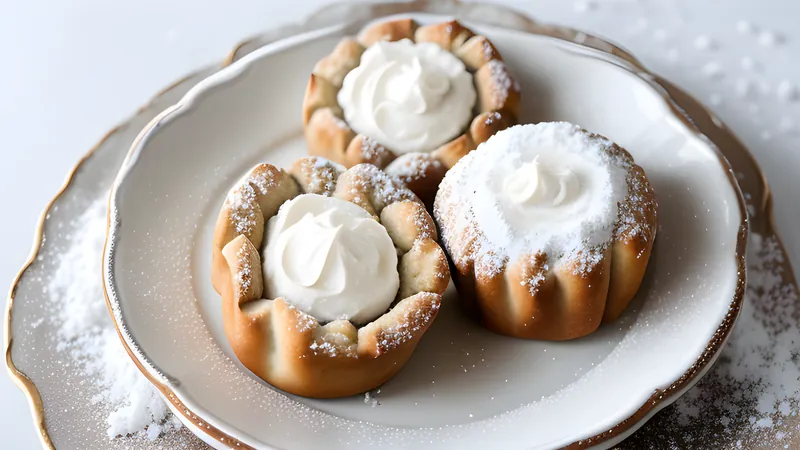
↓ Jump to recipePão de Deus means “bread of God”, which is a large claim for a breakfast roll, and yet the first time you tear one open you understand the naming committee’s enthusiasm. Underneath a craggy, golden, faintly chewy coconut crust sits a soft, pale, gently sweet milk bun, and the two textures together are so good that half of Portugal eats them for breakfast without a second thought. My one departure from the pastelaria standard is a whisper of ground cardamom in the coconut topping, which lifts the whole thing with a warm, resinous note that plain coconut on its own never quite reaches.
Pão de Deus: Portuguese Coconut-Topped Sweet Rolls
Ingredients
- 500g strong white bread flour
- 60g caster sugar
- 8g fine salt
- 7g fast-action dried yeast (1 sachet)
- 180ml whole milk, warmed
- 2 medium eggs
- 70g unsalted butter, softened
- 1 tsp vanilla extract
- For the coconut topping: 1 egg white
- 70g icing sugar
- 70g desiccated coconut
- 0.5 tsp ground cardamom
- 1 egg yolk beaten with 1 tbsp milk, to glaze
- Icing sugar, to finish
Method
- Warm the milk to blood temperature and whisk in the yeast with a pinch of the sugar. Leave for 5 minutes until foamy.
- In a large bowl, combine the flour, remaining sugar and salt. Add the yeasty milk, the eggs and the vanilla and mix to a rough dough.
- Knead in the softened butter a piece at a time, then knead for 8 to 10 minutes until smooth, elastic and only slightly tacky.
- Cover and prove for 1.5 hours until doubled.
- Make the topping: whisk the egg white to loose froth, then stir in the icing sugar, coconut and cardamom to a thick, spreadable paste. Cover and set aside.
- Knock back the dough and divide into 9 equal pieces. Shape each into a tight ball and space out on two lined trays.
- Cover and prove for 45 minutes until puffy.
- Brush each roll with the egg-yolk glaze, then spoon and gently spread a mound of coconut topping over the top of each, leaving the sides bare.
- Bake at 180C fan for 16 to 20 minutes until the buns are risen and the topping is golden and crackled. Cover with foil if the coconut colours too fast.
- Cool for 10 minutes, dust generously with icing sugar, and eat warm, split and buttered if you like.
From a Lisbon shop window to the national breakfast
The roll has a surprisingly precise origin. It was created in 1904 at the Casa Vitória, a pastelaria in Lisbon, by a baker named Amândio who was, the story goes, inspired by German and central-European sweet breads topped with sugar and coconut. He gave it the grand name and the shop trademarked it, and for a while pão de Deus was a genuinely commercial, protected product before the name slipped, as good names do, into common use. Today every padaria and supermarket in Portugal sells them, and the split-and-filled version, stuffed with ham and cheese or with a sweet egg-yolk cream called doce de ovos, is a fixture of Portuguese sandwich culture.
The topping is the signature and it descends from a family of coconut-sugar crusts you find across the old Portuguese trading world, a legacy of the spice and coconut routes that ran through Goa, Malacca and Brazil. Coconut arrived in the Portuguese kitchen early and stayed, which is why coconut turns up in so many Lusophone sweets. The bun beneath is a straightforward pão de leite, an enriched milk bread that is a cousin of every soft roll from tangzhong milk rolls to the braided Swiss Zopf; what makes pão de Deus its own thing is that lid.
Why cardamom, and why the topping goes on before baking
Desiccated coconut is lovely but one-dimensional: sweet, fatty, faintly toasty and not much else. A small amount of ground cardamom, half a teaspoon across the whole batch, does for coconut what a pinch of salt does for caramel. Cardamom and coconut share a background of warm, milky, slightly camphorous aromatics, so the spice does not fight the coconut; it deepens it, the way it does in a good kheer or a Scandinavian coconut bun. Use it with a light hand. You want people to taste something they cannot quite name rather than a mouthful of curry-cupboard.
The topping goes on raw and bakes with the bun, which is the technical heart of the recipe. As the roll rises and sets in the oven, the sugary coconut paste dries, caramelises and cracks into that distinctive crazed, golden crust, fusing to the surface of the bread. Spread it while the buns are on their second prove and brushed with egg glaze; the glaze helps it grip. Keep the topping to the top only. If it runs down the sides it sticks to the tray and burns before the crust up top is done.
Getting the topping consistency right matters. It should be thick and spoonable, holding a soft peak, so it sits in a generous mound rather than sliding off. Too wet and it pools and pales; too dry and it will not spread and bakes into hard nuggets. Start with a loosely frothed egg white, add the icing sugar and coconut, and judge by eye. A stray teaspoon of egg white loosens it if needed.
Building the dough
The bun is a classic enriched dough and it rewards the same care as any brioche-adjacent bread. Add the butter after the dough has come together and the gluten has begun to form, kneading it in a piece at a time. Butter added too early coats the flour and stops the gluten linking up, giving you a short, cakey crumb instead of the soft, tearable one you want. Once all the butter is in, the dough will look briefly like a greasy mess and then, with two or three more minutes of kneading, pull itself back into a smooth, glossy, slightly tacky ball.
Whole milk and two whole eggs give the crumb its plush, pale character. If you want to push the softness further, you could bring the same tangzhong flour-paste trick used in the milk rolls, but for pão de Deus I like the crumb a touch more substantial so it stands up to the crust, so I keep the enrichment moderate.
Prove until properly doubled. Enriched doughs are slow, so allow an hour and a half for the first rise in a warm kitchen and longer if it is cold. Shape into tight balls with a smooth top, because a taut surface both holds the topping and gives an even, domed rise.
Serving, filling and the leftover trick
Fresh from the oven, dusted with icing sugar, a pão de Deus needs nothing. Split and spread with cold butter it is close to perfect breakfast food. The Portuguese move, though, is to split a day-old one and fill it. The sweet route is doce de ovos, an egg-yolk-and-sugar cream; the savoury route, and my favourite, is good ham and a slice of mild cheese, the sweet coconut lid playing against the salt exactly the way a maple-glazed pastry plays against bacon. It is the same sweet-savoury logic that makes a bacon, egg and cheese on a proper roll so satisfying, run through a Lisbon filter.
Tips, storage and variations
Make-ahead. The shaped, un-topped dough balls can be refrigerated overnight after their first prove; bring them to room temperature, add the topping and complete the second prove before baking. The topping itself keeps a day covered in the fridge.
Storage. Best on the day, still good on day two, and after that they are for splitting and toasting. They freeze well; wrap individually and reheat from frozen in a low oven for eight to ten minutes, which re-crisps the crust.
Bigger or smaller. Portuguese versions range from small breakfast rolls to a large sharing bun the size of a side plate. For one big pão de Deus, shape the whole dough into a single round, top generously and add ten minutes or so to the bake, checking the centre reaches about 92C.
Lemon variation. Add the grated zest of a lemon to the dough and a little to the topping for a brighter, more citrus-forward roll that suits a summer breakfast.
Troubleshooting. A crust that stays pale and soft rather than cracking golden usually means the topping was too wet or spread too thin, or the oven was too cool; these want a proper 180C fan. A dense bun points to under-proving or butter added before the gluten had a chance to form. And if the coconut catches and darkens before the buns are cooked through, tent them with foil for the last few minutes and finish the bake.
A roll named after God has a lot to live up to, and this one quietly does, largely on the strength of that contrast between soft crumb and crackled coconut lid. The cardamom is my small heresy, and I think Amândio would have forgiven it. Bake a tray on a slow Sunday, eat one warm at the counter before anyone else is up, and you will understand why Lisbon trademarked the name.
Related Content