Pad Thai with Tamarind, Palm Sugar and Toasted Peanuts
Balanced sweet-sour noodles, properly done at home
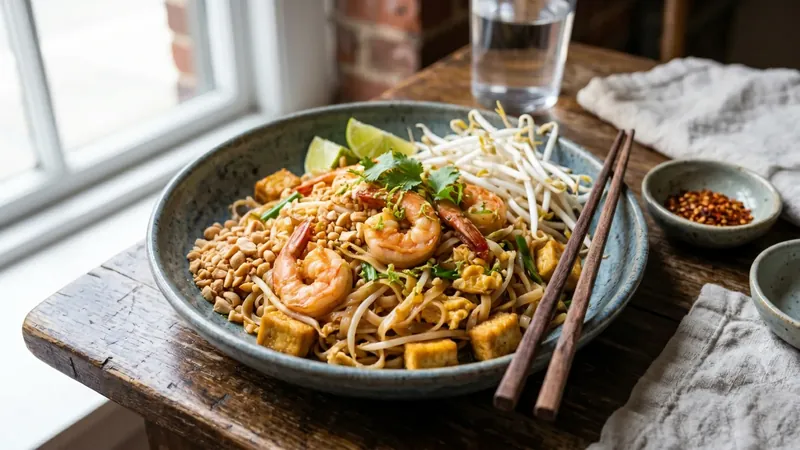
Real pad thai is a careful balancing act: sweet palm sugar, sour tamarind and salty fish sauce playing off slippery noodles. This version gets the proper tamarind-and-palm-sugar sauce right, finishes with peanuts toasted fresh for maximum crunch, and chars the lime halves so their juice turns smoky-sweet. It is faster than a takeaway and far more vivid, with that addictive sweet-sour tang.
Pad Thai with Tamarind, Palm Sugar and Toasted Peanuts
Ingredients
- 120g flat rice noodles
- 2 tbsp tamarind paste
- 2 tbsp palm sugar (or soft brown sugar)
- 2 tbsp fish sauce
- 200g raw king prawns (or sliced chicken or firm tofu)
- 3 tbsp vegetable oil
- 3 garlic cloves, finely chopped
- 2 shallots, thinly sliced
- 2 eggs, beaten
- 100g beansprouts
- 3 spring onions, cut into batons
- 50g roasted unsalted peanuts
- 1 lime, halved
- Dried chilli flakes, to serve
Method
- Soak the rice noodles in warm water for 15-20 minutes until pliable but not soft, then drain.
- Toast the peanuts in a dry pan until fragrant and golden, then roughly chop. Set aside.
- Make the sauce by warming the tamarind paste, palm sugar and fish sauce in a small pan until the sugar dissolves into a glossy syrup. Taste; it should be balanced sweet, sour and salty.
- Char the lime halves cut-side down in a hot dry pan until blackened. Set aside.
- Heat the oil in a wok over high heat. Add the prawns and stir-fry for 1-2 minutes until just pink, then push to one side.
- Add the garlic and shallots and stir-fry for 30 seconds until fragrant.
- Pour the beaten eggs into the empty side of the wok, let them set briefly, then scramble lightly.
- Add the drained noodles and the sauce, tossing constantly for 2-3 minutes until the noodles are tender and coated.
- Throw in the beansprouts, spring onions and most of the peanuts, tossing for another minute.
- Squeeze in the juice of one charred lime half and toss through.
- Pile onto plates, scatter with the remaining peanuts and chilli flakes, and serve with the other charred lime half.
3 The Story
Pad thai is probably the most internationally recognised Thai dish, a stir-fry of rice noodles tangled with egg, beansprouts and the bright sweet-sour sauce that defines it. It is street food at heart, cooked to order over fierce heat in woks across Thailand, and it rewards quick movements and good preparation far more than any single rare ingredient.
The dish rose to national prominence in the mid-twentieth century, encouraged as part of a wider effort to promote rice noodles and a sense of Thai identity. Whatever its precise path, it quickly became a beloved staple at home and abroad. Its enduring appeal lies in balance: no one flavour should dominate. Get that right and everything else falls into place.
That balance comes down to three ingredients. Tamarind, the sticky pulp of a tropical pod, provides a fruity sourness quite unlike lemon or vinegar; it is mellow and slightly sweet at the same time. Palm sugar, tapped from palm trees and sold in soft blocks or tubs, gives a caramel-like sweetness with more depth than refined sugar. Fish sauce brings the salt and a savoury, umami backbone. Warming the three together into a syrup before cooking, as here, means you can taste and adjust before the noodles ever hit the pan, which is the surest route to a properly balanced plate.
Texture matters as much as flavour. Soaking the noodles rather than boiling them keeps them springy, and they finish cooking in the wok as they drink up the sauce. Toasting the peanuts yourself just before serving makes a real difference; shop-bought roasted nuts are fine, but a few minutes in a dry pan wakes up their aroma and crunch.
The charred lime is a small flourish borrowed from the way smoky heat transforms citrus. Blistering the cut face in a dry pan caramelises its sugars, so the juice you squeeze over is rounder and a touch smoky rather than sharply acidic. A scattering of chilli flakes lets each person dial up the heat to taste, in the spirit of the condiment caddies found on Thai tables. Cook it fast, in small batches if you can, and serve straight away while the noodles are at their best.
Related Content