Pad Krapow with a Crispy Fried Egg
Thailand's fastest weeknight plate, holy basil hot off the wok, crowned with an egg blistered lacy at the edges
Contents
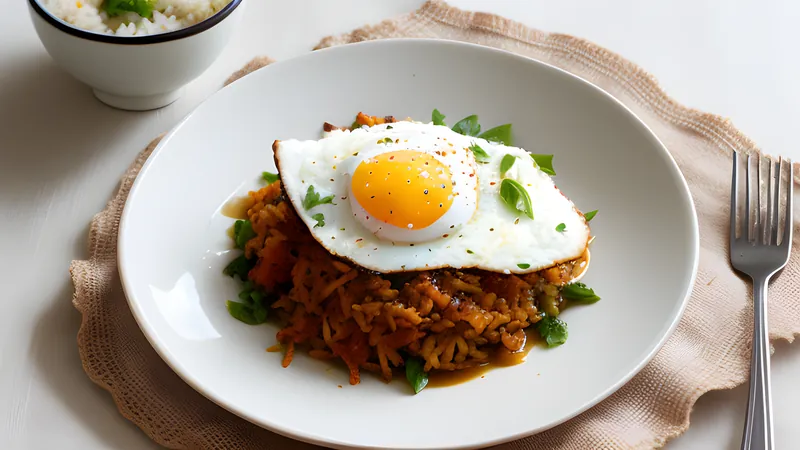
↓ Jump to recipeKrapow is the dish Bangkok eats when there is no time to think about what to eat: minced pork, blasted with garlic and chilli in a screaming-hot wok, sharpened with three kinds of soy and torn through with holy basil at the very last second. The twist here is the egg on top, fried the street-cart way: basted in hot oil until the white blisters into a lacy, crisp skirt around a yolk that’s still soft enough to break and run into the meat. Get that egg right and the whole plate lifts.
Pad Krapow with a Crispy Fried Egg
Ingredients
- 3 tbsp vegetable oil, divided
- 4 garlic cloves, roughly chopped
- 5 bird's eye chillies, roughly chopped (more or less to taste)
- 1 long red chilli, thinly sliced (optional, for colour)
- 400g minced pork (or chicken thigh, or a mix of firm tofu and mushrooms)
- 1 tbsp light soy sauce
- 1 tbsp oyster sauce
- 1 tsp dark soy sauce
- 1 tsp fish sauce
- 1 tsp caster sugar
- 2 tbsp water or chicken stock
- 60g holy basil leaves (bai kraphao), stems discarded
- 2 eggs
- Steamed jasmine rice, to serve
Method
- Pound the garlic and both chillies to a rough, wet paste in a mortar and pestle, or pulse briefly in a mini chopper. Stop before it turns to mush; you want texture, not a purée.
- Heat 1 tbsp of the oil in a wok over the highest heat your stove gives until it's just starting to smoke.
- Add the chilli-garlic paste and stir-fry for 20-30 seconds until fragrant but not browned.
- Add the minced pork, breaking it up with a spatula, and stir-fry for 3-4 minutes until cooked through and starting to catch and colour at the edges of the wok.
- Add the light soy, oyster sauce, dark soy, fish sauce, sugar and water. Toss constantly for 1-2 minutes until the sauce reduces and clings to the meat rather than pooling.
- Take the wok off the heat and fold through the holy basil leaves until just wilted by the residual heat, no more than 15-20 seconds.
- For the egg, heat the remaining 2 tbsp oil in a small frying pan until shimmering and very hot. Crack in one egg.
- Immediately tilt the pan so the oil pools to one side, and use a spoon to baste the hot oil over the white's edges for 60-90 seconds, until they blister, bubble and turn lacy and deep gold while the yolk stays soft. Repeat for the second egg.
- Spoon the krapow over bowls of hot rice, top each with a crispy egg, and serve immediately so the yolk breaks and runs into the meat when pierced.
The story: gaprao, the dish Thailand eats without thinking
Pad krapow — more properly gaprao, or kraphao — is possibly the most-ordered dish in Thailand, and almost nobody outside the country clocks quite how central it is. It isn’t a restaurant specialty; it’s what you order when you don’t know what you want, because every cart, canteen and roadside stall from Chiang Mai to Hat Yai has a version, usually written on a laminated sign as “ผัดกะเพรา” next to a photo of rice, minced meat and a fried egg with a runny yolk. Office workers eat it for lunch. Taxi drivers eat it at 2am. It’s breakfast if that’s what’s going, and it’s the dish most Thais would name if you asked them what they cook when they’re tired.
The defining ingredient, and the one that gives the dish its name, is holy basil — bai kraphao, Ocimum tenuiflorum — which is not the same plant as the sweeter, aniseed-leaning Thai basil (bai horapa) used in curries and the herb plate that arrives with chicken pho. Holy basil has a peppery, almost clove-like bite and a slightly furry leaf, and it turns bitter and grey if you cook it for more than a few seconds. That’s why it goes in last, off the heat, folded through rather than fried.
Regional versions branch off in a few directions worth knowing about. Along the southern coast, cooks often swap the pork for a seafood mix — squid rings, prawns, sometimes mussels — a version called krapow talay, whose seafood throws off a lot of moisture fast and demands an even hotter, quicker wok if the sauce isn’t to turn thin and watery. In the north and northeast, chopped long beans (thua fak yao) are a common addition, cut small and stir-fried in alongside the meat for a bit of snap and colour against all that green basil. And krapow’s reach into everyday Thai life now stretches to the convenience-store chiller: pre-packed microwave versions sit in nearly every 7-Eleven in the country, which says something about how completely the dish has moved from improvised cart food to nationwide staple — a dish born of speed and necessity now also exists shrink-wrapped, ready in ninety seconds, and Thais eat both without much sense of contradiction.
Traditionally the meat is pounded rather than minced fine — a rougher, more varied texture than the smooth pre-ground pork you get from a supermarket tray — and the garlic and chillies are pounded too, in a stone mortar, releasing their oils in a way a blender blade doesn’t manage. Street vendors cook it to order in seconds flat, wok held over a jet-engine burner that most home stoves can’t match, which is why getting real char at home means using the smallest amount of oil that will still let the pan run properly hot, and not crowding the wok.
The method, explained
Three things separate a good krapow from a flat one. First, the paste: pounding the garlic and chillies rather than finely chopping them bruises the cell walls and releases essential oils that a knife just slices past. You’re after a rough, wet paste with visible flecks, not a smooth chilli jam. Second, the sauce balance — light soy for salt, oyster sauce for a rounding sweetness and body, a small hit of dark soy for colour more than flavour, fish sauce for the savoury backbone, and a pinch of sugar to tie it together. None of these should dominate; taste as you go, because brands of fish sauce and oyster sauce vary hugely in saltiness. Third, timing the basil: it must go in only once the pan is off the heat, folded through by the residual warmth of the meat and sauce. Cooked in the pan over direct heat, holy basil wilts limp and turns a dull khaki within a minute — you lose both the peppery bite and the bright green colour that makes the dish look alive.
The egg is the one genuinely tricky part, and it’s worth practising separately from the main stir-fry. The oil needs to be hot enough that the egg white puffs and bubbles the instant it hits the pan — if the oil is only warm, you get a flat, rubbery fried egg with none of the lace. Tilting the pan so the oil collects in a shallow pool at one side, then spooning that hot oil continuously over the raised edges of the white, is what builds the crisp, frilled skirt street vendors are famous for, while the yolk in the centre — which never touches the hot oil directly — stays soft. It’s the same basting principle behind a well-cooked sunny-side-up, just taken further and hotter.
Home stoves are the real obstacle to getting the meat right, since most domestic hobs top out well below the output of a street vendor’s jet burner, and that gap matters more here than in slower dishes. Without real ferocity, the pork releases liquid before it has a chance to brown, and you end up braising rather than searing — the difference between a krapow with singed, savoury edges and one that just tastes boiled. Compensate with a wide, thin-based wok rather than a deep saucepan, since more of the metal stays in contact with the flame; keep the burner on its highest setting the whole time; and if your stove is modest, cook the 400g of pork in two batches rather than one; each batch gets room to actually touch the hot surface, which gets you far closer to that charred, cart-food flavour than crowding ever will. Judge the pork by sound as much as sight — a properly hot wok hisses and spits when the meat goes in, and if it goes quiet, the pan has already cooled too much to keep browning.
The recipe
Serves 2. Prep 10 minutes, cook 10 minutes.
For the krapow: 3 tbsp vegetable oil (divided), 4 garlic cloves, 5 bird’s eye chillies, 1 long red chilli (optional), 400g minced pork, 1 tbsp light soy sauce, 1 tbsp oyster sauce, 1 tsp dark soy sauce, 1 tsp fish sauce, 1 tsp caster sugar, 2 tbsp water or stock, 60g holy basil leaves, jasmine rice to serve.
For the eggs: the reserved 2 tbsp oil, 2 eggs.
- Pound the garlic and chillies to a rough, wet paste in a mortar and pestle. A mini food processor works in a pinch — pulse briefly, don’t purée.
- Get a wok smoking hot over your highest burner with 1 tbsp of the oil.
- Fry the paste for 20-30 seconds until fragrant, not browned.
- Add the pork, breaking it up, and stir-fry 3-4 minutes until cooked and catching colour at the edges of the wok.
- Add all the sauces, sugar and water, and toss for 1-2 minutes until the sauce clings rather than pools.
- Off the heat, fold through the holy basil until just wilted.
- In a separate small pan, heat the remaining oil until shimmering-hot, crack in an egg, and baste the hot oil over the white’s edges for 60-90 seconds until lacy, blistered and deep gold, yolk still soft. Repeat.
- Serve the krapow over rice, egg on top, and break the yolk in at the table.
Tips, substitutions and storage
Can’t find holy basil? Thai basil is the honest substitute — the flavour skews sweeter and less peppery, but the dish still works; ordinary Italian basil is a distant third option and best avoided if you can help it, since its flavour clashes with the fish sauce rather than complementing it. Minced chicken thigh (never breast — it dries out under this much heat) is the most common swap for pork, and a mix of finely chopped king oyster mushrooms and crumbled firm tofu makes a genuinely good vegetarian version if you swap the fish sauce for a splash of light soy and a few drops of mushroom soy.
The krapow itself keeps well: cool it fully and refrigerate for up to 3 days, reheating in a hot pan rather than the microwave so it doesn’t stew. Freeze it for up to 2 months, though the basil loses some vibrancy on thawing — a small handful of fresh leaves stirred through after reheating fixes that. The egg, unsurprisingly, is a cook-to-order job; don’t try to make it ahead.
If you’re doubling the recipe for a crowd, resist the urge to double it in the same wok — the extra volume drops the pan’s temperature and you’re back to braising rather than searing. Cook two separate batches instead, keeping the first warm in a low oven while the second goes, and the char on both will taste the same rather than the second batch tasting noticeably better than the first.
Variations
Swap the pork for prawns, added raw at the same point in the recipe and cooked only until pink, for a lighter version popular on the coast. For extra heat without extra sharpness, throw in a small handful of sliced Thai chillies rather than more bird’s eye — the flavour rounds out differently. And if you want the dish the way it’s often eaten on a hangover breakfast in Bangkok, spoon it over a fried instant noodle cake instead of rice; crunchy underneath, soft on top, and every bit as fast as the pad thai you’d otherwise be tempted to order in.
However you plate it, the rule holds: cook it fast, season it properly, and don’t let the basil sit in the pan a second longer than it needs to.
Related Content