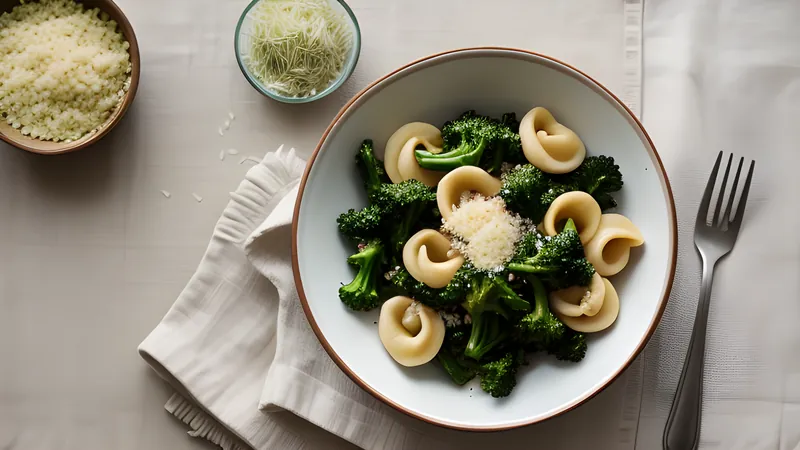
Orecchiette with Sausage and Broccoli Rabe
Puglia's little ears, bitter greens and a browned-butter finish
Contents
↓ Jump to recipeIn Puglia, the heel of Italy, this is simply orecchiette con le cime di rapa — the region’s signature plate, eaten so often it barely counts as a recipe. Bari grandmothers make the orecchiette by hand on marble slabs, dragging a knife across a rope of dough and thumbing each little disc inside out over their thumbnail so it curls into the shape that gives the pasta its name: little ears. Walk down Bari Vecchia’s Strada delle Orecchiette and you will still see women doing it at tables in the street, thousands a day, faster than you can watch.
The classic Pugliese version is meatless: just the bitter greens, garlic, chilli, oil and sometimes a melted anchovy. The sausage version you will find across southern Italy and, loudly, in Italian-American kitchens, where fennel sausage and broccoli rabe became one of those marriages so obvious you wonder who ever kept them apart. That is the one most people fall for, and it is the one I am giving you here, with a browned-butter finish that I will defend to anyone.
Orecchiette with Sausage and Broccoli Rabe
Ingredients
- 400g dried orecchiette
- 400g broccoli rabe (cime di rapa), or purple sprouting broccoli
- 4 good fennel sausages (about 400g), skins removed
- 3 tbsp extra-virgin olive oil
- 4 garlic cloves, thinly sliced
- 1/2 tsp dried chilli flakes
- 1 tsp fennel seeds, lightly crushed
- 30g unsalted butter
- Zest of 1/2 lemon
- 50g pecorino romano, finely grated, plus more to serve
- Sea salt and black pepper
Method
- Trim the broccoli rabe and cut into 4cm lengths, keeping stalks and leaves. Bring a large pan of well-salted water to the boil.
- Blanch the greens for 2 minutes, lift out with a spider, and set aside. Keep the water boiling for the pasta.
- Warm the olive oil in a wide pan and fry the crumbled sausage over medium-high heat until deeply browned, about 8 minutes. Break it into rough nuggets.
- Push the sausage aside, add the garlic, chilli and fennel seeds, and cook 1 minute until fragrant.
- Cook the orecchiette in the blanching water until al dente. Reserve a mugful of water before draining.
- Add the blanched greens to the sausage pan with a splash of pasta water and cook 2 minutes to marry.
- Drop in the butter and let it foam and turn nut-brown, about 1 minute, swirling constantly.
- Add the drained pasta, lemon zest, pecorino and more pasta water. Toss hard until glossy. Season and serve with extra pecorino.
Broccoli rabe, and why the bitterness is the point
Broccoli rabe — cime di rapa, sometimes sold as rapini — is not broccoli. It is a leafy brassica closer to a turnip top, with thin stalks, ragged leaves and small green florets, and it carries a distinct, grown-up bitterness. That bitterness is the whole reason the dish works. It cuts through the fat of the sausage and the richness of the pecorino, and it stops the plate being heavy. If you fight the bitterness you lose the balance.
Good news for anyone outside Italy: purple sprouting broccoli is a superb stand-in and often easier to find, with a gentler bitterness and the same tender-stalk-and-floret structure. Ordinary broccoli, cut small, will do at a push, though you sacrifice character. Whatever you use, blanch it first in the pasta water for a couple of minutes. This softens the stalks, tames the harshest edge of the bitterness, and seasons the greens all in one go. Lift it out with a spider and keep the water boiling — you will cook the pasta in it, so the greens’ flavour carries through.
Sausage, browned properly
The sausage does the heavy lifting for flavour, so buy good ones. Coarse Italian fennel sausages are ideal; if you cannot find them, take the best plain pork sausages you can and add a teaspoon of crushed fennel seeds yourself, which is written into the recipe above anyway because the extra fennel is never a mistake.
Slip the meat out of the skins and fry it hard. The mistake most people make is stewing the sausage into pale, sad crumbs. You want proper colour — deep brown, caught edges, the fond building on the base of the pan. That browning is flavour you cannot get any other way, the same Maillard depth that makes Baked Ziti with Sausage and Three Cheeses worth the oven time. Break it into rough, generous nuggets rather than fine mince, so you get real bites of meat. Once it is browned, push it aside and give the garlic, chilli and fennel seeds a minute in the hot fat to bloom.
The twist: a browned-butter finish
The traditional dish is dressed with olive oil alone, and it is lovely that way. My small twist is a knob of butter, added at the end and allowed to foam and turn nut-brown before the pasta goes in. Browned butter — beurre noisette — smells of toasted hazelnuts and caramel, and it gives the sauce a rounded, savoury richness that plain oil cannot reach. It clings to the ridges of the orecchiette and softens the greens’ bitterness just enough. A little lemon zest thrown in with it keeps the whole thing bright and stops the richness turning cloying.
Watch the butter closely: it goes from foaming to golden to burnt in about the time it takes to read this sentence. The moment the foam subsides and you smell nuts, get the pasta in. The starchy pasta water and the pecorino then emulsify with the fat into a glossy, clinging sauce. Toss hard and keep it moving — the emulsion is what separates a proper plate from oily pasta sitting in a puddle. If it looks tight, another splash of pasta water loosens it; if it looks loose, a few more seconds over the heat and a little more cheese pulls it together.
Getting the shape right
Orecchiette are made to catch. Their concave little cups scoop up the sauce, the crumbs of sausage and the small florets, so every forkful is complete. Dried orecchiette from a decent Italian brand are excellent and what most of us reach for on a weeknight; they take a good 11 to 13 minutes and stay pleasantly chewy, which suits this robust sauce. Cook them a minute short of the packet and finish them in the pan with the greens and a splash of water so they drink up flavour. If you ever make them by hand, the same rules apply, only you will want to boil a test one first because home-made cook far faster.
A word on the little ears themselves
Orecchiette are one of the few pasta shapes still routinely made by hand at home in their region, and there is a reason they survived the industrial age. Made from semola rimacinata, the finely milled durum wheat of the south, and water alone — no egg — they are cheap, sturdy, and forgiving. The dough is stiff and takes some working, but it holds the thumb-print curl through boiling and keeps a satisfying chew. That chew is part of the pleasure here: against the soft greens and the crumbled meat, you want a pasta with backbone. Dried orecchiette from Puglia are milled from the same semola and give you most of that character with none of the labour, which is why they earn their place in a weeknight cupboard.
If you do try shaping your own, work with a dough that feels almost too firm, keep it under a cloth so it does not dry, and drag small pieces across an unfloured board with a round-tipped knife before flipping each over your thumb. Your first dozen will be ugly. Your fiftieth will be beautiful, and dinner will taste better for the effort.
What can go wrong
Watery, dull greens. You skipped the browning on the sausage or drowned everything in pasta water. Add water a splash at a time; you are making a glaze here, so keep it barely wet.
Bitter to the point of harsh. Your greens were old, or not blanched long enough. A minute more in the boiling water and a slightly heavier hand with the pecorino brings it back into line.
Burnt garlic. It went in over too-high heat or sat too long. Add it to the pan once the sausage is browned and the heat is a touch lower, and only give it a minute.
Variations and make-ahead
For the classic vegetarian Pugliese plate, drop the sausage and melt two or three anchovy fillets into the oil with the garlic; the anchovy brings savour and all but disappears. A handful of toasted breadcrumbs over the top adds crunch and turns it into something close to Spaghetti Aglio e Olio with Toasted Breadcrumbs in spirit. If you like heat, double the chilli — southern Italians would.
This is a cook-to-order dish and does not keep well dressed, so time it to land straight in the bowl. You can, though, brown the sausage and blanch the greens earlier in the day and hold them in the fridge, which turns the final assembly into a ten-minute job. Serve with plenty of extra pecorino, a wedge of lemon, and bread to wipe the plate. In Bari they would not give you a fork until the water was already boiling, and honestly that is the right attitude.
Related Content