Onion Bhaji with Green Chutney
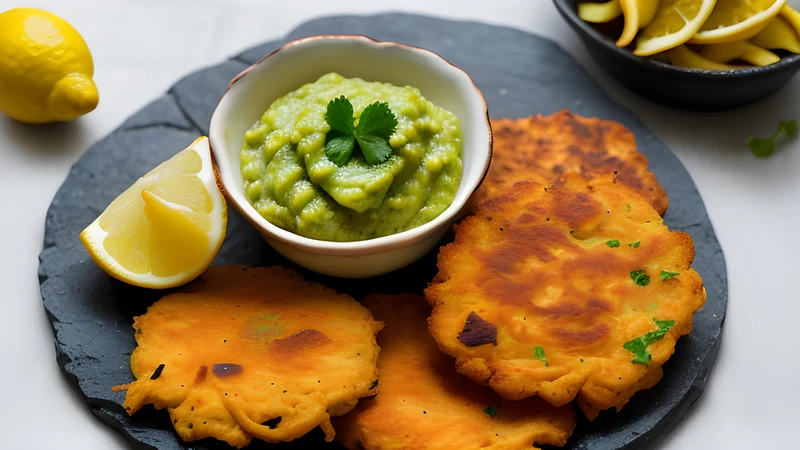
A craggy tangle of sweet fried onion, shatteringly crisp, with a bright green herb chutney
Contents
↓ Jump to recipeA good onion bhaji is a small argument won. Too many, from freezer boxes and tired takeaway lids, are dense golf balls of claggy batter with a whisper of onion somewhere inside. The real thing is mostly onion, sweet and softened by frying, held together by the thinnest possible jacket of spiced gram-flour batter, fried into a craggy, spiky tangle that shatters when you bite it. Get it right and you will never buy them again.
The dish belongs to the great family of Indian pakora — vegetables bound in seasoned chickpea-flour batter and deep-fried — and the onion version is the one that became a fixture of the British-Indian curry house, where it arrives as a starter with a little salad and a pot of something red and sweet. In India you are more likely to meet it as kanda bhaji or pyaaz pakora, sold from roadside carts in the monsoon, when the rain sets in and everyone wants something hot and fried. The pleasure is the same wherever you eat it: crunch, sweetness, spice, and a sharp dip to cut through the oil.
Onion Bhaji with Green Chutney
Ingredients
- 3 large onions (about 500 g), halved and thinly sliced
- 1 tsp fine salt (for drawing out the onions)
- 120 g gram (chickpea) flour
- 2 tbsp rice flour
- 1 tsp ground turmeric
- 1 tsp ground cumin
- 1 tsp ground coriander
- 1/2 tsp chilli powder, or to taste
- 1 tsp ajwain (carom) seeds
- 1 green chilli, finely chopped
- small handful fresh coriander, chopped
- 1/2 tsp bicarbonate of soda
- about 4 tbsp cold water
- 1 litre vegetable or sunflower oil, for deep-frying
- For the green chutney: 50 g fresh coriander (leaves and thin stems)
- 20 g fresh mint leaves
- 1 green chilli
- 1 small garlic clove
- 2 tbsp lemon juice
- 1/2 tsp caster sugar
- 1/2 tsp salt
- 2 tbsp cold water
Method
- Put the sliced onions in a colander, scatter over the 1 tsp salt, toss, and leave for 15-20 minutes. They will soften and weep. Squeeze out the liquid with your hands and keep the onions; the released moisture will hydrate the batter.
- In a large bowl, whisk the gram flour, rice flour, turmeric, cumin, coriander, chilli powder, ajwain, chopped green chilli and fresh coriander.
- Add the drained onions and toss with your hands so every strand is dusted with flour. Add just enough cold water, a tablespoon at a time, to make a thick, clinging batter that coats the onions and clings in loose clumps.
- Make the chutney: blitz all the chutney ingredients to a coarse purée, adding a little more water if needed. Taste and balance the lemon, salt and sugar. Chill.
- Heat the oil in a deep pan to 170°C (a cube of bread should turn golden in about 45 seconds). Just before frying, ladle 1 tablespoon of the hot oil into the batter and stir in the bicarbonate of soda — it will foam.
- Lower rough, craggy heaps of the onion mixture into the oil using two forks or your fingers, keeping the tangled shape loose. Fry 4-5 at a time so the oil stays hot.
- Fry for 4-5 minutes, turning, until deep golden-brown and crisp all over. Lift out onto kitchen paper.
- Serve hot, with the green chutney alongside and lemon wedges to squeeze over.
Slice, don’t chop, and salt first
The single biggest improvement you can make is to slice the onions thinly rather than chopping them. Long, thin ribbons tangle together and create those spiky, craggy edges that catch the oil and crisp; chopped chunks pack into a solid mass. Halve each onion pole to pole, then slice into fine half-moons.
Salting the sliced onions and leaving them to weep does two jobs. It softens them, so they finish sweet and tender in the short frying time, and the liquid they release does the work of hydrating your batter. Squeeze the onions after their rest — you want them limp and damp, with the excess water wrung out — and you will need only a splash more water to bring the batter together.
The batter, and the ladle of hot oil
Gram flour is the backbone: nutty, faintly bitter, and gluten-free, it fries to a distinctive crumbly crispness that wheat flour cannot match. I add a couple of spoons of rice flour to push the crunch further, a trick borrowed from South Indian frying, where rice flour keeps things brittle for longer. Ajwain seeds are the classic aromatic here; they taste of thyme crossed with oregano and are said to settle the stomach, which is a kindly thing to build into a fried snack.
Here is the clever bit, and it costs nothing. Just before you fry, ladle a tablespoon of the smoking-hot frying oil straight into the batter and stir it through with a pinch of bicarbonate of soda. The hot fat and the fizzing bicarb lighten the batter and start it crisping the instant it hits the pan, so you get lace-thin, shattering edges instead of a heavy coat. It is the same principle that makes a good tempura batter behave, done with what is already in front of you.
Keep the batter thick and clinging. If it slackens into a pouring consistency it will slide off and fry into flat crisps; you want it just wet enough to bind the onions into loose clumps.
Resist the urge to add the water all at once. The onions carry more moisture than you expect, and a batter that looked too dry a minute ago will loosen as it sits. Add a tablespoon, toss well, wait, and only add more if the flour still refuses to cling. A batter that ends up too wet is the commonest reason home bhajis turn out flat and oily, and there is no rescuing it once the water is in — so err on the dry side and let the onions do the rest.
Frying them craggy
Heat matters. Too cool and the bhajis drink oil and turn greasy; too hot and the outside scorches before the onion inside softens. Aim for 170°C and keep it there by frying only four or five at a time — crowd the pan and the temperature crashes.
Drop the mixture in as rough, open heaps rather than tidy balls. Pull a tangle up with two forks and let it fall into the oil keeping its spiky shape; those protruding strands are what crisp best. Fry until deep golden all over, turning once, and lift onto kitchen paper. Taste the first one and adjust your salt and chilli for the rest — the beauty of a batch is that you can correct as you go.
The green chutney
A good onion bhaji wants something sharp and herbal beside it, and the standard fluorescent takeaway dip does it no favours. Hari chutney — coriander and mint blitzed with green chilli, garlic, lemon and a whisper of sugar — is bright, hot and clean, and it takes two minutes in a blender. Keep it loose enough to spoon and taste it for balance: it should be tart and punchy, sharp enough to cut clean through the frying.
Use plenty of stem along with the coriander leaves; the stalks carry as much flavour as the leaves and blitz down smoothly. If you like it creamier, fold a couple of spoons of yoghurt through after blending, which tames the heat for anyone who wants a gentler dip. The chutney keeps for three days in the fridge but is at its most vivid on the day; the fresh green fades to olive over time even though the flavour holds. A squeeze more lemon just before serving lifts a day-old batch straight back to brightness.
Tips, storage and where to go next
Bhajis are best straight from the pan, but if you are feeding a crowd you can fry them a shade paler, drain, then crisp them back up in a 200°C oven for 5 minutes just before serving. Leftovers reheat well in an air fryer or hot oven; the microwave, sadly, turns them soft.
If this batch has you hooked on the frying pan, the same batter and technique carry straight into mixed vegetable pakoras with chaat masala, where you swap the onions for a medley of vegetables, and into the assembled, saucy world of aloo tikki chaat with yoghurt and tamarind, which puts a fried potato patty to work under a cascade of chutneys. Make the green chutney once and you will find yourself spooning it over all three.
The whole thing comes together in under an hour, most of it hands-off while the onions weep and the chutney chills. What you are really learning here is a technique — sliced onion, a thin spiced batter woken up with hot oil, a hot and steady pan — and once it is in your hands, a plate of proper bhajis is never more than half an hour away.
Related Content