Nihari: Slow-Cooked Beef-Shank Curry
An overnight shank curry thickened with toasted flour and kissed with charcoal smoke
Contents
↓ Jump to recipeNihari is a dish built for the very first meal of the day, and its name says so. It comes from the Arabic nahār, meaning morning or daybreak, and the traditional story is that it was cooked overnight on dying coals and eaten at dawn, a rib-sticking breakfast that would carry a labourer through until evening. These days it is more often a weekend feast or a special-occasion centrepiece, but the character is unchanged: a dark, deeply spiced gravy, meat so tender it gives way to a spoon, and a slick of ghee on top that tells you exactly how serious this dish is about richness.
Nihari: Slow-Cooked Beef-Shank Curry
Ingredients
- 1.5 kg bone-in beef shank, cut into thick rounds
- 2 pieces beef marrow bone
- 2 large onions, thinly sliced
- 6 garlic cloves, grated
- 1 thumb (30 g) ginger, grated, plus julienne to serve
- 150 ml ghee or neutral oil
- 4 tbsp plain flour (atta), for thickening
- 2 tbsp Kashmiri chilli powder
- 1 tbsp ground fennel seed
- 1 tsp ground turmeric
- 2 tsp ground coriander
- 1 tbsp nihari masala (or garam masala plus a pinch of ground nutmeg and mace)
- 1.8 litres water or light beef stock
- 1 tsp salt, or to taste
- 1 small piece natural lump charcoal, for smoking (optional)
- 3 green chillies, sliced, to serve
- 1 lemon, cut into wedges, to serve
- 1 small bunch coriander, chopped, to serve
Method
- Heat the ghee in a large heavy pot and fry the sliced onions for 12 to 15 minutes until deep brown, then remove half to garnish.
- Add the garlic and ginger to the pot, cook 2 minutes, then stir in the chilli, fennel, turmeric and coriander and toast for 30 seconds.
- Add the beef shank and marrow bones and sear for 5 minutes to coat in the spice.
- Pour in the water or stock, add 1 tsp salt, bring to a simmer, then cover and cook very gently for 3 hours until the meat is nearly falling apart.
- Whisk the flour with 200 ml cold water until smooth, then stir it gradually into the simmering gravy and cook 20 minutes until thickened and glossy.
- Stir in the nihari masala and simmer a further 10 minutes, then adjust salt.
- For the optional smoke, place a piece of red-hot charcoal in a small heatproof bowl set on the gravy, spoon over 1 tsp ghee, cover the pot for 3 minutes, then remove the coal.
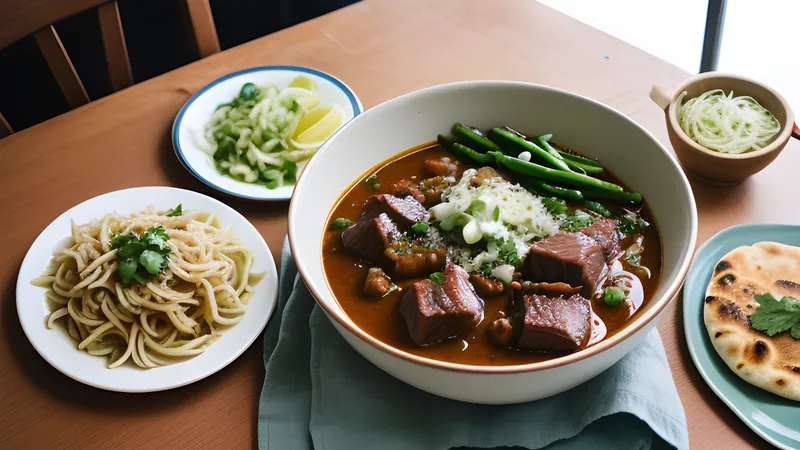
- Serve topped with the reserved fried onion, ginger julienne, green chilli, coriander and a squeeze of lemon, with naan alongside.
A dish with a lineage
Nihari is usually traced to the kitchens of late Mughal Delhi, sometime around the eighteenth or early nineteenth century, and it spread from there across northern India and, after Partition in 1947, into Pakistan, where Karachi and Lahore turned it into an obsession. The Karachi style is famously fiery and thick; the old Delhi style a touch more restrained. Whole clans of cooks built reputations on a single simmering pot, and some legendary nihari houses are said to keep a taar, a spoonful of yesterday’s gravy stirred into today’s, carried forward for decades like a sourdough starter.
The classic cut is shank, the hard-working lower leg of the animal, threaded with the connective tissue and marrow that only long, gentle cooking can unlock. As the shank braises, that collagen dissolves into the gravy and gives it a body and a mouth-coating gloss that no thickener alone could achieve. The marrow bones alongside are not optional in spirit: their soft, buttery centres are the prize, scooped out and spread on hot bread. This is a dish that turns the cheapest, toughest, most gelatinous parts of the animal into something people queue for.
The two things that make it nihari
Two techniques distinguish nihari from an ordinary beef curry. The first is the atta slurry, a paste of plain flour whisked with cold water and stirred into the simmering gravy near the end. It thickens the sauce to that characteristic clinging consistency and gives it a subtle, toasty roundness. Whisk it smooth and add it gradually, off a hard boil, or you will get lumps.
The second, and my one small twist on the home version, is dhungar, charcoal smoking. You heat a lump of natural charcoal until it glows, set it in a little heatproof bowl on top of the finished gravy, spoon a teaspoon of ghee over it so it smoulders and smokes, then clap on the lid for three minutes. The gravy drinks in a faint barbecue perfume that mimics the wood-fire cooking of the old nihari houses. It is a traditional Mughlai trick, usually reserved for kebabs and biryani, and it lifts a home nihari from very good to genuinely memorable. Skip it if you have no charcoal; the dish is still excellent.
Building the spice, and a note on masala
Nihari masala is a distinct blend, heavier on fennel, nutmeg, mace and long pepper than an everyday garam masala, and it is what gives the dish its unmistakable warm, faintly medicinal fragrance. If you can find a good ready-made one from a South Asian grocer, use it; otherwise a decent garam masala boosted with a pinch of ground nutmeg, mace and extra fennel gets you most of the way. Toast your ground spices in the hot ghee for only thirty seconds, just long enough to wake them up, because any longer over that fierce heat and they scorch and turn bitter. The Kashmiri chilli is doing colour work as much as heat work, so do not be alarmed by the two tablespoons; it is mild and fruity rather than punishing.
Cooking it, unhurried
Start with the onions, and give them their full twelve to fifteen minutes in the ghee until they are properly brown and sweet, because they are the backbone of the colour and flavour. Pull half out to use as a garnish later, then build the spice base in the same fragrant fat. Sear the shank and marrow bones in that spiced ghee just long enough to coat them, then pour in the water and settle in for the long haul.
Three hours at the barest simmer is the heart of it. You want the surface barely trembling, the lid on, and enough patience to leave it alone. Rushing with high heat toughens the meat and clouds the gravy; the collagen needs slow, steady warmth to melt. When the shank is on the edge of collapse, whisk your flour slurry and trickle it in, stirring constantly, then let it cook out for twenty minutes so it loses any raw, pasty taste and turns glossy. The nihari masala, that warm blend heavy on fennel, nutmeg and mace, goes in at the very end so its aromatics survive.
Where it can go wrong
The commonest disappointment is meat that is still chewy, and the fix is almost always more time. Shank is stubborn, and three hours is a minimum; if it resists a spoon, keep going and add a splash more water. The second is a lumpy or floury-tasting gravy, which comes from adding the slurry too fast, into liquid that is boiling too hard, or not cooking it long enough afterwards. Whisk the slurry perfectly smooth, lower the heat before you add it, and give it a proper twenty minutes to cook out.
Watch your salt at the end rather than the start, since the gravy reduces and concentrates as it cooks. And if the finished dish looks thin, do not panic and add more flour, because that mutes the flavour; simply simmer it uncovered for a few minutes to reduce. A good nihari should coat the back of a spoon and leave a lacy film on the side of the bowl.
Serving, storing and kin
Nihari is served with a deliberate flourish of garnishes laid over the top at the table: crisp fried onions, fine ginger julienne, sliced green chilli, chopped coriander and a hard squeeze of lemon to cut the richness. Warm naan or khameeri roti is the only sensible vehicle, torn and used to scoop meat, gravy and marrow together. A pot of nihari feeds a crowd and rewards planning, so it earns its place next to the other great make-ahead feasts like chicken dum biryani.
It keeps beautifully, four days in the fridge, three months frozen, and genuinely improves overnight as the fat sets and can be lifted and the flavours deepen; this is the dish that gave rise to the whole tradition of carrying gravy forward day to day. Reheat it gently with a splash of water to loosen.
For variations, lamb or mutton shank works wonderfully and cooks a little faster, and a nihari built on bone-in goat is superb if you can find it. If you love this style of long, spice-driven, communal cooking, its close cousin haleem takes the same patience in a different direction, and the spice-building technique is exactly the one behind a good keema matar. Learn to be patient with a pot of shank and a whole world of slow food opens up.
Related Content