Nasi Lemak with Sambal and Crispy Anchovies
Coconut rice under a slick of dark, sweet-hot sambal, with anchovies fried till they rattle
Contents
↓ Jump to recipeThere is a smell that means morning in Kuala Lumpur, and it is coconut rice steaming under a banana leaf while a pot of sambal turns dark and sticky in the next pan over. Nasi lemak is Malaysia’s unofficial national dish, sold from roadside warungs before dawn, wrapped in newspaper and pyramids of banana leaf, eaten standing up on the way to work. The name means “rich rice”, the richness coming from coconut, and around that fragrant mound gathers a small constellation of contrasts: sweet-hot sambal, salty fried anchovies, cool cucumber, a jammy egg and a scatter of peanuts for crunch.
My one liberty here is the anchovies. Instead of frying them in plain oil, I start them in a knob of butter that browns as they cook. The milk solids toast alongside the little fish and lend them a nuttiness that plain oil never gives, and the butter crisps them just as well. It is a tiny change that makes the crunchiest element on the plate taste of more.
Nasi Lemak with Sambal and Crispy Anchovies
Ingredients
- 300g jasmine rice
- 250ml coconut milk
- 150ml water
- 2 pandan leaves, knotted (or 1/2 tsp pandan extract)
- 3 thin slices fresh ginger
- 1 lemongrass stalk, bruised
- 1 tsp fine salt
- 60g dried anchovies (ikan bilis)
- 30g unsalted butter
- 1 tbsp neutral oil
- 8 large dried red chillies, soaked and drained
- 4 shallots, roughly chopped
- 3 garlic cloves
- 1 tsp belacan (shrimp paste), toasted
- 2 tbsp neutral oil, for the sambal
- 1 large onion, sliced into rings
- 1 tbsp tamarind paste mixed with 3 tbsp warm water
- 1.5 tbsp gula melaka (palm sugar), grated
- 1 tsp fine salt, for the sambal
- 4 eggs
- 1 cucumber, sliced
- 80g roasted peanuts
Method
- Rinse the rice until the water runs clear. Combine with coconut milk, water, pandan, ginger, lemongrass and salt in a pot or rice cooker.
- Bring to a gentle boil, stir once, cover and cook on the lowest heat for 12 minutes. Rest, covered, off the heat for 10 minutes, then fluff with a fork.
- Rinse the dried anchovies and pat them bone dry. Melt the butter with the oil over medium heat and fry the anchovies, stirring, for 5-6 minutes until deep gold and rattling-crisp. Lift out onto kitchen paper.
- Blend the soaked chillies, shallots, garlic and toasted belacan to a paste with a splash of water.
- Heat 2 tbsp oil in a wide pan. Fry the paste over medium heat for 12-15 minutes, stirring often, until it darkens and the oil splits out.
- Add the onion rings, tamarind liquid, gula melaka and salt. Simmer 8-10 minutes until glossy and jammy. Stir half the anchovies through; reserve the rest for scattering.
- Soft-boil the eggs for 7 minutes, cool under cold water and peel.
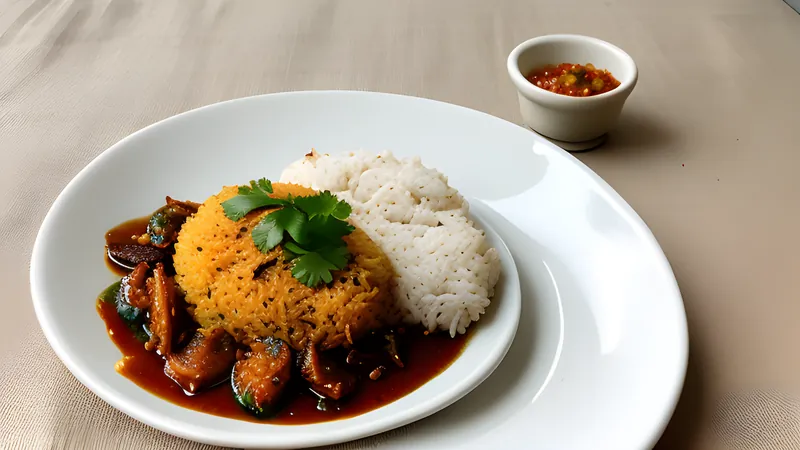
- Mound the coconut rice on plates. Add a spoonful of sambal, a halved egg, cucumber slices, peanuts and the reserved crispy anchovies.
A dish that belongs to everyone in Malaysia
Nasi lemak has been documented in Malay cookery for well over a century; the food writer Richard James Wilkinson recorded it in a 1907 glossary of Malay life, describing it plainly as rice cooked in coconut cream. What began as a Malay farmer’s breakfast, cheap and sustaining before a day in the fields or on the water, became the shared plate of a whole multi-ethnic country. You find it at Malay stalls, in Chinese kopitiams, at mamak shops run by Indian-Muslim families, each with a slightly different sambal and a slightly different set of extras.
That openness is the point. The base is fixed, the coconut rice and the sambal, and everything else is negotiable. A hawker might add fried chicken, a curried squid, a slick of rendang, a fish fritter. The humble version, sold cheapest and eaten most, is exactly what I make here: rice, sambal, anchovies, egg, cucumber, peanuts. Get that right and you understand the whole architecture of the dish.
Malaysians argue about nasi lemak the way the French argue about cassoulet. Whose sambal is best, whether the rice should carry a knot of pandan or a slice of ginger, whether the anchovies should be soft or shattering. The answer is always the stall your family went to. I cannot give you that, but I can give you a version that holds its own.
The coconut rice
Everything rests on the rice, so treat it with respect. Rinse jasmine rice until the water runs clear, which washes off the loose surface starch that would otherwise turn the grains gluey. You want each grain distinct, coated in coconut, not a coconut risotto.
The liquid is a blend of coconut milk and water. All coconut milk sounds tempting and tastes cloying, and it scorches easily on the base of the pot. A ratio of roughly five parts coconut milk to three parts water gives you richness without heaviness. Into the pot go the aromatics: knotted pandan leaves for that grassy, almost vanilla note that defines the dish, a few slices of ginger and a bruised stalk of lemongrass. Pandan is worth hunting down frozen at any Southeast Asian grocer; if you truly cannot find it, a half teaspoon of pandan extract stands in, though it lacks the perfume of the leaf.
Cook it gently and covered. A hard boil throws the coconut milk against the sides where it catches and burns. Bring it to a bare simmer, stir once so nothing sticks, then drop to the lowest heat your hob allows and leave it undisturbed for twelve minutes. The crucial part comes after: ten minutes resting off the heat, still covered, letting the grains finish steaming in their own trapped warmth. Only then do you lift the lid and fluff with a fork. A rice cooker does all of this beautifully; treat the coconut mixture exactly as you would water.
Building the sambal
The sambal is where a nasi lemak earns its reputation, and where most home versions fall short by rushing it. This is sambal tumis, meaning fried sambal, and the frying is not a step to hurry.
Start with dried red chillies, soaked in hot water until pliable. These bring colour and a rounded, raisiny heat rather than a sharp bite; if you want it fiercer, keep the seeds, and if you want it milder, discard them. Blend the chillies with shallots, garlic and a nub of toasted belacan into a rough paste. Belacan is fermented shrimp paste, pungent and low, and toasting it first, wrapped in foil in a dry pan for a minute a side, mellows the raw edge and deepens the savour. It smells alarming and tastes essential.
Now fry the paste, and keep frying. Over medium heat, stirring often, the paste slowly loses its water, darkens from brick to burgundy, and eventually the oil splits back out to the surface. This pecah minyak, the breaking of the oil, is your signal that the sambal is cooked through and the raw shallot and garlic have turned sweet. It takes twelve to fifteen minutes and cannot be faked; a pale, watery sambal fried for four minutes tastes exactly as underdone as it is.
Then the balancing act. Sliced onion rings go in to soften and sweeten. Tamarind loosened in warm water brings the sour that lifts everything. Grated gula melaka, the dark, smoky palm sugar of Southeast Asia, brings a caramel depth that plain sugar cannot match; if you only have brown sugar, use it, but seek out gula melaka once and you will keep a block in the cupboard. Salt ties it together. Simmer until it turns glossy and jammy, thick enough to hold its shape on the spoon. Taste and chase the balance: it should land sweet, hot, sour and salty all at once, with no single note shouting over the others.
The anchovies, in brown butter
Dried anchovies, ikan bilis, are the salty crunch that makes the plate. Rinse them briefly to knock off excess salt and dust, then dry them thoroughly, because water and hot fat is a fight you lose. Any dampness steams rather than fries and leaves them chewy.
Here is my one change. Melt butter with a little neutral oil, the oil raising the smoke point so the butter can brown without burning, and fry the anchovies gently. They sizzle, the butter foams and then quietens as the milk solids toast to hazelnut, and the little fish turn deep gold and crisp enough to rattle against the side of the pan. Lift them onto paper the moment they are done; they crisp further as they cool and scorch in seconds if you dawdle. Stir half through the finished sambal, where they soften slightly and soak up the sweetness, and keep half back to scatter over the top, where they stay shattering.
Bringing the plate together
Soft-boil the eggs for exactly seven minutes from a rolling boil for a yolk that is set at the edge and molten at the heart, then shock them in cold water and peel. Slice a cool cucumber. Have your roasted peanuts ready.
Mound the warm coconut rice in the centre of each plate. Traditionalists press it into a bowl and turn it out as a neat dome, which looks handsome and does no harm. Around or beside it goes a generous spoon of sambal, a halved egg, a fan of cucumber, a scatter of peanuts and the reserved crispy anchovies. Every mouthful should be a small negotiation between the elements: rich rice, hot-sweet sambal, salty crunch, cool cucumber, soft yolk.
Nasi lemak sits in the same breakfast family as the coconut-and-egg breakfasts I love from across the region, like the pandan-scented kaya toast with soft-boiled eggs that starts a Singapore morning. If you want to build a bigger Malaysian spread around it, the flaky, pull-apart roti canai with a proper flaky pull makes a fine companion for mopping up any leftover sambal.
Make-ahead, storage and variations
The sambal is your friend here, because it improves overnight and keeps for a week in the fridge, its flavours settling and deepening. Make a double batch; it is superb on toast, alongside grilled fish, or stirred into fried rice. The fried anchovies keep in an airtight jar for several days and stay crisp, so fry a big handful at once.
The rice is best fresh, but day-old coconut rice fries up brilliantly the next morning with an egg on top. If you want to turn this into a fuller meal, add fried chicken marinated in turmeric and coriander, or a spoonful of beef rendang. Vegetarians can drop the anchovies and belacan, leaning on a good miso or a spoon of fermented soybean paste for savour, and top with fried tempeh or extra peanuts for crunch.
The dish rewards a cook who respects its timing: rinsed rice, a slowly fried sambal, dry anchovies crisped in browning butter. None of it is difficult. It only asks that you not rush the parts that matter, and in return it gives you the best breakfast on either side of the equator.
Related Content