Naengmyeon: Cold Buckwheat Noodles in Chilled Broth
Icy, tangy broth and springy buckwheat noodles for high summer
Contents
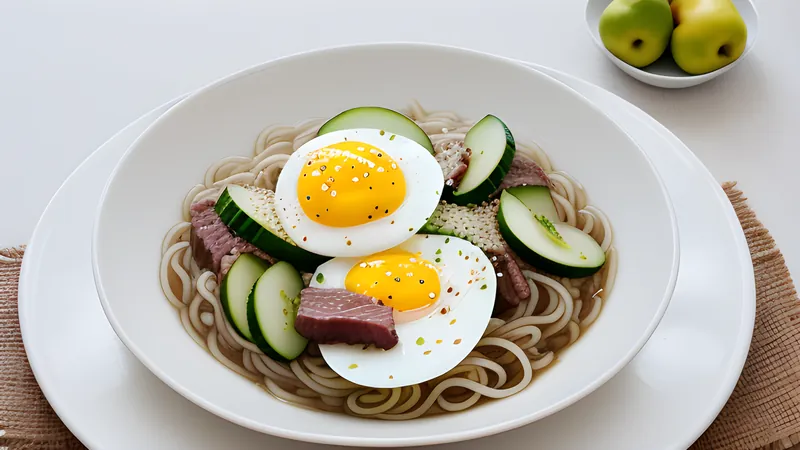
↓ Jump to recipeWhen Seoul hits thirty-five degrees and the air turns to soup, Koreans queue around the block for naengmyeon: a bowl of icy, tangy broth with a coil of springy buckwheat noodles submerged in it, crowned with cold beef, crisp pear and a jammy half-egg. It is one of the most refreshing things you can eat, a dish engineered against heat, and the moment the first spoon of that freezing, vinegary broth hits the back of your throat you understand why a whole country treats it as a summer ritual.
The version below is mul naengmyeon, the “water” style served in a proper broth, as opposed to bibim naengmyeon, which is tossed in a fiery gochujang sauce with no soup. Both use the same noodles. The soup version is the one I make when the kitchen is too hot to face anything cooked and hot, and it rewards a little planning because everything, broth and bowls included, wants to be genuinely cold.
Naengmyeon: Cold Buckwheat Noodles in Chilled Broth
Ingredients
- 300g dried naengmyeon (buckwheat) noodles
- 300g beef brisket or shin
- 1 small onion, halved
- 4 garlic cloves
- 1 thumb ginger, sliced
- 5cm piece Korean radish (mu) or daikon
- 6 spring onions (whites for stock, greens to serve)
- 1.5 litres cold water
- 3 tbsp rice vinegar, plus more to serve
- 1 tbsp light soy sauce
- 2 tsp caster sugar
- 1 tsp Korean mustard oil or English mustard (optional)
- 1 tsp salt, plus more to taste
- 1 Asian pear or crisp apple, julienned
- 1/2 cucumber, julienned
- 2 eggs, soft-boiled and halved
- Toasted sesame seeds and ice, to serve
Method
- Put the beef, onion, garlic, ginger, radish and spring onion whites in a pot with 1.5 litres cold water. Bring to the boil, skim, then simmer gently for 80 to 90 minutes until the beef is tender.
- Lift out the beef and wrap it; strain the broth and season with 1 tsp salt, the soy and 1 tsp of the sugar. Cool completely, then chill until ice-cold. For best results, freeze for an hour until slushy.
- Stir the vinegar and remaining sugar into the chilled broth and taste; it should be bracingly tangy, savoury and lightly sweet.
- Slice the rested beef thinly across the grain.
- Cook the noodles in plenty of boiling water for the time on the packet, usually 3 to 4 minutes, stirring so they do not clump.
- Drain and rinse the noodles under cold running water, scrubbing gently with your hands to remove surface starch, until they are icy and springy. Drain very well.
- Coil the noodles into two chilled bowls. Arrange the beef, pear, cucumber and egg on top.
- Pour the ice-cold slushy broth around the noodles, scatter with sesame seeds and spring onion greens, and serve with extra vinegar and mustard at the table.
A noodle from the north
Naengmyeon is a dish of the Korean north, and specifically of Pyongyang and Hamhung, the two cities whose names still label its two great styles. Pyongyang naengmyeon is the mild, clear-broth original, traditionally made with pure buckwheat noodles and eaten, remarkably, in the depths of winter, cooled by cold storage before refrigeration existed. Hamhung naengmyeon uses chewier potato- or sweet-potato-starch noodles and leans toward the spicy tossed style.
The dish travelled south in huge numbers with refugees during the Korean War, and those displaced northern cooks opened the restaurants that made naengmyeon a national summer staple below the border. There is real history in every bowl: it is one of the most tangible pieces of northern food culture still alive in South Korea, and the older Pyongyang-style restaurants in Seoul are treated with a reverence usually reserved for temples.
The noodles themselves are the giveaway. Buckwheat gives them their grey-brown colour, their earthy flavour and their distinctive springy, almost rubbery chew; they are traditionally so long they are cut at the table with scissors. For a warming winter counterpart from the same Korean-Chinese noodle world, see Jjajangmyeon: Korean Black-Bean Noodles, and for another cold-noodle tradition worth knowing, the Japanese Zaru Soba with a Cold Dipping Sauce plays a similar summer role.
My clever twist: freeze the broth to a slush
The single detail that turns a good home naengmyeon into a great one is temperature. Restaurant versions serve the broth so cold that shards of ice float in it, sometimes as a frozen slush called sarbet, and that shocking cold is half the pleasure. So after I make and season the beef-and-radish broth, I chill it hard and then freeze it for an hour until it turns slushy and half-crystalline before it goes into the bowl. A properly icy broth wakes up the vinegar, tightens the noodles and makes the whole dish sing on a hot day. Broth served merely “cold from the fridge” is a pale shadow of it.
Chill your serving bowls in the freezer too. Every degree matters here, and a warm bowl thaws the broth in seconds.
The broth, and the balance
The broth is a light beef stock, gently simmered with brisket, aromatics and a chunk of Korean radish, which lends a clean, slightly sweet, almost peppery background. Simmer it low so it stays clear; a hard boil turns beef stock cloudy and greasy. Skim it well at the start, strain it, and skim off the surface fat once it chills and the fat solidifies on top.
Seasoning is where naengmyeon comes alive. The finished broth should taste bracingly tangy from the vinegar, savoury from the beef and soy, and just faintly sweet, cold enough to make your teeth ache slightly. Taste it icy, because cold mutes both salt and acid; a broth that tastes balanced at room temperature will seem flat once frozen, so season it a touch more assertively than feels right. Keep extra vinegar and hot mustard on the table so each eater can sharpen their own bowl, which is exactly how it is served in Korea.
Handling the noodles
Buckwheat noodles cook fast, in three to four minutes, and the critical step is what happens after. Rinse them hard under cold running water, working them with your hands to scrub off the surface starch, until they are icy and squeaky and springy. Skip this and they turn soft, sticky and gluey, and the residual starch clouds your beautiful clear broth. Drain them thoroughly so they do not water down the soup, then coil each portion neatly into a chilled bowl.
Serve the moment they are dressed. These noodles firm up and clump if they sit, so have your beef sliced, your pear and cucumber cut, and your eggs peeled and halved before the noodles go in the water.
Tips, swaps and make-ahead
- The broth is the make-ahead hero. Make it a day or two in advance; it only improves as it chills, and the fat is easier to lift off once solid.
- Shortcut broth: in a genuine hurry, a good cold beef stock sharpened with vinegar, soy, sugar and a little radish brine will pass, though the homemade version is worth the simmer.
- The pear is essential. Korean pear or a crisp apple adds cold sweetness and crunch that balances the sour broth; it is not optional decoration.
- Bibim style: for the spicy tossed version, skip the broth, dress the drained noodles in a sauce of gochujang, vinegar, sugar, sesame oil and garlic, and top as above with a splash of the cold broth on the side.
A note on mustard: Korean naengmyeon uses a sharp, sinus-clearing mustard oil (gyeoja) stirred into the broth to taste. English mustard, used sparingly, is a fair stand-in and adds the same bright heat that lifts the cold soup.
Serving
Bring the bowls to the table brimming and frost-cold, pour the slushy broth around the coiled noodles at the last second, and let everyone add vinegar and mustard to their own taste. Cut the long noodles with kitchen scissors before mixing, as Koreans do, then stir everything together and eat quickly while it is still freezing. On a sweltering afternoon there is very little that beats it, and once you have made your own icy broth you will find yourself watching the forecast for an excuse.
What can go wrong
- Cloudy broth. You boiled the stock too hard or skipped the rinse on the noodles. Keep the simmer gentle and scrub the surface starch off the noodles under cold water.
- A flat, dull bowl. The broth was not cold enough or under-seasoned. Freeze it to a slush and season it assertively while it is icy.
- Sticky, clumped noodles. They sat too long after cooking, or were not rinsed enough. Dress and serve them straight away.
- Watery soup. The noodles went in wet. Drain them hard before they hit the bowl.
Get those four right and naengmyeon becomes the dish you crave every time the temperature climbs, cold and clean and sharp enough to reset a hot day.
Related Content