Mushroom and Spinach Lasagne
A rich vegetarian layer cake of comfort
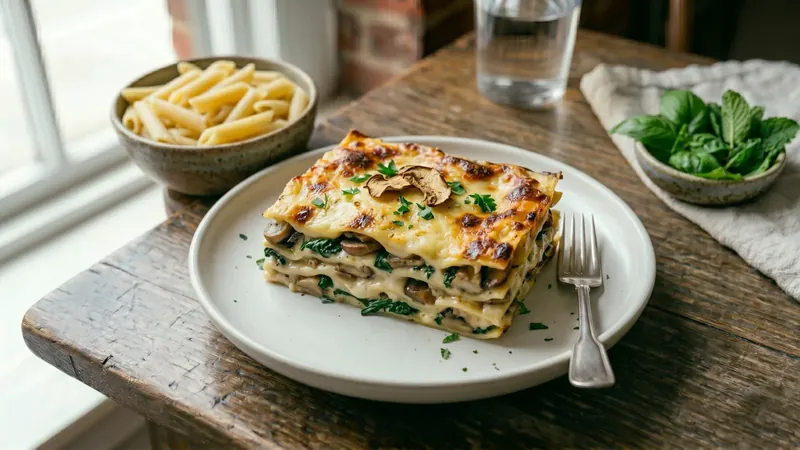
A meat-free lasagne lives or dies on depth, and this one finds it twice over: a handful of dried porcini, soaked and stirred through the chestnut mushrooms, lends an earthy backbone that fresh fungi alone never quite reach. The other twist sits in the white sauce, where wilted spinach and a generous grating of fresh nutmeg turn ordinary bechamel into something fragrant and green. Layered and baked until the top blisters, it is proper Sunday comfort with no need for mince.
Mushroom and Spinach Lasagne
Ingredients
- 25g dried porcini mushrooms
- 2 tbsp olive oil
- 1 onion, finely chopped
- 3 garlic cloves, crushed
- 600g chestnut mushrooms, sliced
- 1 tbsp fresh thyme leaves
- 100ml dry white wine
- 2 tbsp tomato purée
- 400g tin chopped tomatoes
- 500g fresh spinach
- 70g unsalted butter
- 70g plain flour
- 900ml whole milk
- Whole nutmeg, for grating
- 150g Parmesan-style hard cheese, grated
- 250g dried lasagne sheets
- Salt and black pepper
Method
- Soak the porcini in 250ml just-boiled water for 20 minutes. Lift out, chop finely, and reserve the soaking liquid.
- Heat the olive oil and soften the onion for 8 minutes. Add the garlic, then the chestnut mushrooms and thyme, and fry over a high heat until any liquid has evaporated.
- Stir in the chopped porcini, pour in the wine and let it bubble away. Add the tomato purée, chopped tomatoes and the strained porcini liquid. Simmer for 15 minutes, then season.
- Wilt the spinach in a dry pan, cool, squeeze out the water and chop roughly.
- Melt the butter, stir in the flour and cook for 1 minute. Whisk in the milk gradually until smooth and thick, then grate in plenty of nutmeg and season.
- Fold the chopped spinach and half the grated cheese through the bechamel.
- Heat the oven to 190C fan. Spread a little mushroom sauce in a baking dish, then layer pasta, mushroom sauce and spinach bechamel, repeating to fill the dish.
- Finish with a layer of bechamel and the remaining cheese.
- Bake for 40-45 minutes until bubbling and golden. Rest for 10 minutes before slicing.
3 The Story
Lasagne as we know it, with its alternating ribbons of pasta and sauce, is most closely associated with Emilia-Romagna and the city of Bologna, where the classic version is built on a slow-cooked ragù and a buttery bechamel. The dish travelled far beyond its home, and over the decades cooks across Europe and North America adapted it freely, swapping the meat for vegetables, mushrooms or pulses as tastes and household budgets shifted. A vegetarian lasagne is not a compromise so much as a different expression of the same idea: layers that meld in the oven into a single, sliceable whole.
The hero of this version is the mushroom, and specifically the partnership between fresh and dried. Drying concentrates a mushroom’s savoury character, and porcini, gathered wild in Italian woods and prized across the country, carry an especially deep, almost meaty flavour. Soaking them releases that intensity into the water, which is why the soaking liquid is too valuable to throw away. Stirred back into the sauce, it does much of the work that a long-simmered stock would, giving the dish a roundness that belies its short cooking time.
The spinach bechamel is the second small departure from tradition. A plain white sauce binds the layers, but folding in wilted, well-drained spinach turns it into something with colour and substance, while nutmeg supplies the warm, slightly sweet note that has paired with both spinach and milk-based sauces in European cooking for centuries. Nutmeg is the seed of an evergreen tree native to the Banda Islands of Indonesia, and its affinity for dairy is no accident of fashion; a little goes a long way, so grate it fresh and stop before it dominates.
The method rewards patience at the stove. Cooking the mushrooms hard until their moisture has driven off prevents a watery filling, and seasoning each component on its own keeps the finished bake from tasting flat. Let it rest after baking, too, so the layers settle and hold their shape when cut. The result is generous, satisfying and entirely free of meat, the kind of dish that quietly converts the sceptics at the table.
Related Content