Mushroom Bourguignon (the One That Makes Vegetarians Smug)
All the depth of the classic, none of the beef
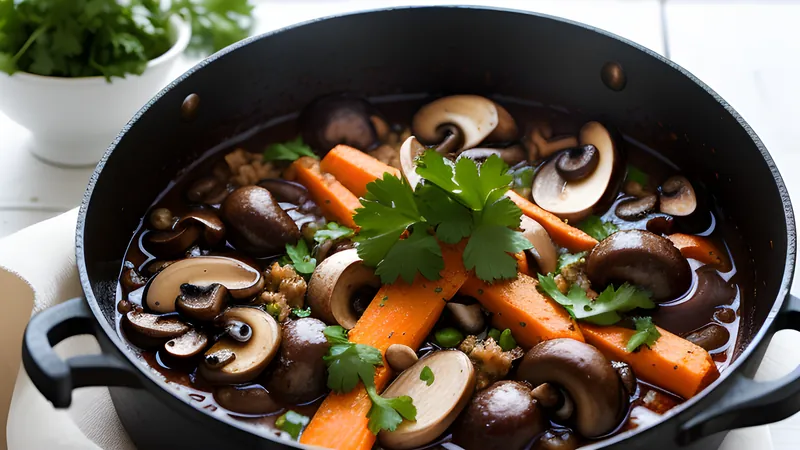
Mushroom Bourguignon (the One That Makes Vegetarians Smug)
Ingredients
- 800g mixed mushrooms (chestnut, portobello, a few dried porcini)
- 20g dried porcini mushrooms
- 3 tbsp olive oil
- 30g butter
- 250g shallots, peeled and left whole
- 3 carrots, cut into thick diagonal chunks
- 3 garlic cloves, crushed
- 2 tbsp tomato purée
- 2 tbsp plain flour
- 500ml red wine (a pinot noir if you can)
- 300ml vegetable stock
- 1 tbsp soy sauce or tamari
- 2 bay leaves
- 3 sprigs fresh thyme
- 1 tsp miso paste
- Salt and black pepper, to taste
- Chopped parsley, to serve
Method
- Cover the dried porcini with 250ml just-boiled water and leave to soak for 20 minutes, then lift out, chop, and reserve the soaking liquid.
- Cut the fresh mushrooms into large, chunky pieces so they keep some bite.
- Heat 2 tbsp oil in a large casserole over high heat and brown the fresh mushrooms in batches until deeply golden, then set aside.
- Add the remaining oil and the butter, then the whole shallots and carrots, and cook for 8 minutes until starting to colour.
- Stir in the garlic, tomato purée and chopped porcini and cook for 2 minutes, then scatter over the flour and stir for 1 minute.
- Pour in the red wine, scraping the base of the pan, and let it bubble and reduce for 3 minutes.
- Add the stock, the strained porcini soaking liquid, soy sauce, bay leaves and thyme, then return the mushrooms to the pot.
- Simmer gently, uncovered, for 30 to 35 minutes until the sauce is glossy and thickened and the carrots are tender.
- Stir the miso through at the very end, off the heat, and season to taste with salt and pepper.
- Scatter with parsley and serve over mash, polenta or buttered noodles.
There is a particular smugness that settles over a vegetarian who has just been served a stew this good, and I say that with love because I am usually the one being smug. Mushroom bourguignon takes everything that makes the beef version sing — the wine-dark sauce, the sweet whole shallots, the slow, savoury depth — and gets there without a scrap of meat. The secret is treating mushrooms with the same respect you would give a good piece of beef: browning them hard, in batches, until they are almost crisp at the edges. That single bit of patience is the difference between a sad grey puddle and something you will want to make on purpose.
1 Where it comes from
Boeuf bourguignon is the great peasant-turned-bistro dish of Burgundy, a region as famous for its red wine as for the cattle that graze its pastures. The original was a way of coaxing cheap, tough cuts into tenderness over a long, slow braise in the local wine — thrift dressed up as elegance. It became globally beloved largely thanks to Julia Child, who taught a generation that French cooking was not so frightening after all.
The mushroom version is a more recent, and frankly democratic, invention. As home cooks looked for ways to eat less meat without eating less well, the bourguignon method turned out to be perfectly suited to fungi. Mushrooms are full of glutamates, the same compounds that give meat and stock their moreish savour, so they slot into that wine-and-aromatics framework as though they were always meant to be there. Burgundy purists may grumble, but the dish honours the original’s real spirit: making something humble taste like a celebration.
What I find rather lovely is that the original was never grand to begin with. It was country cooking, the resourceful kind that turned a tough cut and a glass of the local red into a feast over a long, low oven. Swapping in mushrooms simply moves the thrift sideways: instead of stretching cheap meat, you are coaxing every scrap of depth out of an even cheaper ingredient. The same logic, the same generosity, just a different humble star.
2 How to make it
Start by soaking the dried porcini, because their dark, earthy soaking liquid is the backbone of the whole sauce. While they swell, cut your fresh mushrooms into proper chunks — too small and they vanish, too neat and they steam rather than fry. Brown them hard in a hot pan in batches; crowding the pan is the classic mistake that leaves them grey and weeping. You want real colour.
Once the mushrooms are set aside, build your base with the whole shallots and carrots, letting them catch a little colour before the garlic, tomato purée and chopped porcini go in. The flour thickens things and the wine deglazes, lifting all those caramelised scraps off the base of the pan. Then it is simply a matter of adding the stock, the precious porcini liquid and the herbs, returning the mushrooms, and letting everything simmer down into something glossy and intense. The miso, stirred in right at the end, is my one small cheat — a quiet hit of fermented savour that makes people ask what your secret is.
Do not be tempted to cover the pot for this final simmer. You want the sauce to reduce and concentrate, evaporating off the excess liquid until it coats the back of a spoon and clings to the mushrooms rather than pooling thinly around them. Keep the heat low and gentle; a hard boil will toughen the shallots before they have a chance to turn meltingly sweet. Give it the odd stir, taste as you go, and trust your eyes — when it looks glossy and reluctant to run, it is ready.
3 Tips and variations
Use a mix of mushrooms if you possibly can; chestnut for backbone, portobello for meatiness, and the porcini for that wild, woodland depth. If you want even more body, add a handful of cooked Puy lentils or some butter beans in the last ten minutes.
Wine matters more than you might think since it is doing so much of the flavouring. A pinot noir keeps it authentically Burgundian, but any decent dry red you would happily drink will work. Avoid anything labelled “cooking wine” — if it is not nice in a glass, it will not be nice in the pot.
This is genuinely better the next day, so make it ahead if you can and gently reheat. It also freezes beautifully for up to three months. For serving, I am firmly in the buttery mashed potato camp, but soft polenta or wide pappardelle make excellent rafts for that sauce. A final scatter of parsley keeps it looking fresh, and a sharp green salad on the side cuts through all that richness. Smugness optional, but understandable.
Related Content