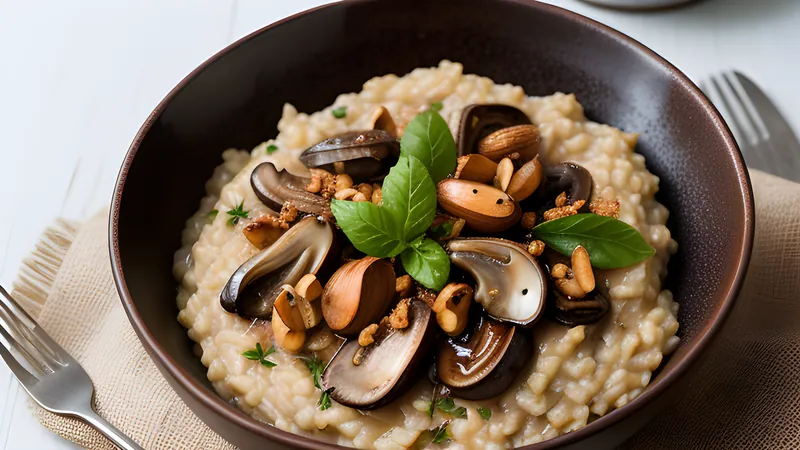
Mushroom and Taleggio Risotto
Autumn in a pan: earthy mushrooms and a molten Alpine cheese
Contents
↓ Jump to recipeMost mushroom risottos taste of not very much, and the reason is nearly always the same: pale, steamed mushrooms simmered straight into wet rice. Mushrooms are ninety per cent water. Crowd them in a cool pan and they release that water, poach in it, and go grey and flabby. The savour you’re after only appears once they’ve driven the water off and started to brown.
So this recipe does two things the lazy version skips. It roasts the fresh mushrooms hard and separately, folding them in near the end so they keep their bite. And it builds the base on a dried porcini soaking liquor, which is one of the great free flavour bombs in cooking. The molten Taleggio at the end is my twist, and it turns a good weeknight risotto into something worth lighting a candle for.
Mushroom and Taleggio Risotto
Ingredients
- 320g carnaroli or arborio rice
- 25g dried porcini mushrooms
- 400g mixed fresh mushrooms (chestnut, oyster, shiitake), sliced
- 1.1 litres vegetable or chicken stock, kept at a bare simmer
- 1 small onion, very finely chopped
- 2 garlic cloves, finely chopped
- 150ml dry white wine
- 120g Taleggio, rind removed, torn into pieces
- 50g cold unsalted butter, diced
- 40g Parmigiano-Reggiano, finely grated
- 3 tbsp olive oil
- 1 tbsp thyme leaves
- Fine sea salt and black pepper
Method
- Steep the dried porcini in 300ml just-boiled water for 20 minutes. Lift out, squeeze and chop, then strain the soaking liquor through paper to catch the grit and reserve it.
- Roast the fresh mushrooms: heat 1 tbsp oil in a large hot pan, add the mushrooms in a single layer and leave 2 minutes before stirring, working in batches. Season once coloured, add the thyme and a knob of the butter, toss, and set aside.
- Warm the remaining oil over medium-low heat and sweat the onion with a pinch of salt for 8 minutes until soft; add the garlic and chopped porcini and cook 2 minutes more.
- Turn the heat to medium, add the rice and toast for 2 minutes until the edges turn translucent.
- Pour in the wine and let it bubble away almost to nothing, then add the strained porcini liquor, stirring until nearly absorbed.
- Ladle in the hot stock a little at a time, stirring often and adding more as each is absorbed, for 16 to 18 minutes until the rice is cooked with a firm core just holding, all'onda.
- Fold in three-quarters of the roasted mushrooms and warm through 1 minute. Off the heat, beat in the torn Taleggio, the cold diced butter and the Parmesan for 1 minute until glossy, loosening with a splash of hot stock if it tightens.
- Check the salt, grind over black pepper, pile the reserved mushrooms on top and serve at once.
Two mushrooms, two jobs
Dried porcini and fresh mushrooms do completely different work here, and you want both. The dried porcini — funghi porcini secchi — carry an intense, almost meaty depth that fresh cultivated mushrooms can’t match, thanks to the glutamates that concentrate as they dry. Their soaking water becomes a mushroom stock in its own right, and it’s the secret backbone of the dish.
The fresh mushrooms bring texture and a fresher, woodsier top note. A mix is best: chestnut for body, oyster for silkiness, shiitake for a savoury edge. Whatever you use, buy them firm and dry, and never wash them under the tap — they’ll drink the water and refuse to brown. Wipe them with a damp cloth or a soft brush instead.
Taleggio is the wildcard. It’s a washed-rind cow’s-milk cheese from the Lombard valley of the same name, gentle and buttery when young, funkier and more barnyard as it ages. It melts into long, molten ribbons and brings a tang that cuts through all that earthiness. Cut the rind off before you use it or you’ll get a bitter, ammoniac edge in the pot.
Method
Start the porcini first. Put them in a bowl, pour over 300ml of just-boiled water, and leave to steep for 20 minutes. Lift them out, squeeze gently, and chop. Strain the soaking liquor through a fine sieve or a piece of kitchen paper to catch the grit that always settles at the bottom, and keep it — you’ll add it to the rice.
While they soak, roast the fresh mushrooms. Get a large frying pan properly hot with a tablespoon of oil, add the mushrooms in a single layer, and leave them alone for two minutes before stirring. Work in two batches if your pan is small; a crowded pan steams. Season with salt only once they’ve coloured — salt too early and they weep. When they’re deeply golden and their edges are crisp, add the thyme and a knob of the butter, toss, and tip them onto a plate. Set aside.
Now the risotto base. In a wide, heavy pan, warm the remaining oil over medium-low heat. Sweat the onion with a pinch of salt for eight minutes until soft, add the garlic and the chopped porcini, and cook another two minutes until fragrant. Turn up to medium, add the rice, and toast it for two minutes until the edges turn translucent and it smells nutty. This tostatura keeps the grains distinct.
Pour in the wine and let it bubble away almost to nothing. Add the strained porcini liquor first, stirring until it’s nearly absorbed, then begin ladling in the hot stock a little at a time, stirring often and adding more only when the last has almost gone. Keep it at a lively simmer. After 16 to 18 minutes the rice should be cooked through with a firm core just holding — loose and rippling, all’onda.
Fold in three-quarters of the roasted mushrooms and let them warm through for a minute. Pull the pan off the heat.
The finish
Off the heat, scatter in the torn Taleggio, the cold diced butter and the Parmesan, and beat hard for a minute until the cheese melts into ribbons and the risotto turns glossy. This mantecatura is where the whole thing pulls together; the cold butter emulsifies the starch instead of splitting, and the Taleggio gives it a molten stretch. If it tightens up, loosen with a splash of hot stock.
It should spread in a slow wave across a warm plate. Taste for salt — the porcini and Parmesan are salty, so you may need very little. Grind over black pepper, pile the reserved mushrooms on top for texture and a bit of drama, and serve at once.
What goes wrong, and why
Watery, grey mushrooms mean the pan was too cool or too crowded. Get it hot, work in batches, and don’t stir for the first two minutes.
A gritty risotto is unstrained porcini liquor. The grit always sinks; pour carefully and leave the last spoonful behind, or strain through paper.
Bitter, ammonia notes come from Taleggio rind left on, or cheese that’s over-ripe. Trim it hard and smell it first.
Claggy, stodgy rice is too much heat or over-stirring at the wrong moment. Keep it at a gentle simmer and save the vigorous beating for the very end.
Make-ahead, storage and variations
Like all risotto this is happiest eaten straight away, though you can par-cook it: stop at ten minutes, spread the rice thin on a tray to cool fast, then finish with hot stock and the mushrooms to order. Leftovers are best reborn as arancini — roll cold risotto around a cube of Taleggio, crumb, and deep-fry until the centre runs molten.
For a vegan version, drop the dairy and finish with a spoon of white miso and a slug of good olive oil beaten in off the heat; you’ll keep the savoury depth even without the cheese. To push the luxury, shave a little fresh truffle over the top, or stir in a few drops of truffle oil at the very end — go gently, it turns soapy fast.
If risotto has you in its grip, the classic gold-standard version is the risotto alla Milanese with saffron and bone marrow, which uses the same technique to a completely different end. And for another way to marry mushrooms with a rich, savoury pastry supper, the mushroom Wellington with chestnut and spinach leans on the same roast-them-hard principle to concentrate their flavour. Brown-butter fans should also look at butternut and sage ravioli with brown butter, which shares this dish’s autumn-in-a-bowl mood.
One last thing on the porcini: buy them whole rather than in dust or chips if you can. Whole dried caps hold more aroma and rehydrate into proper pieces you can chew, and 25g will flavour a risotto for four with plenty of soaking liquor to spare. Kept in a sealed jar in the dark, they’ll last a year and rescue a dozen suppers between now and next autumn.
Choosing and pairing
Carnaroli is worth seeking out for this one. It’s often called the “king of risotto rices” because it holds a firmer core than arborio and forgives a longer cook, which matters when you’re folding in roasted mushrooms and melting cheese at the end and the rice sits a moment longer than it should. Arborio works and is easier to find; just start tasting a minute earlier, because it tips from perfect to stodgy quickly.
The stock decides how much the mushrooms shine. A light vegetable stock keeps the porcini centre-stage and makes this a genuinely vegetarian dish; a chicken stock rounds it out and gives more body if you’re not fussed about that. Either way, keep it under-salted and let the porcini liquor do the seasoning work — that dried-mushroom broth is savoury enough that a heavily salted stock will tip the whole pan over the edge.
To serve, this is a course that wants nothing beside it but a sharp green salad — a few leaves of bitter radicchio or rocket dressed with lemon and good oil, to cut the richness. A glass of Barbera or an earthy Nebbiolo mirrors the mushroom depth without fighting it. Keep the portions modest: this is rich, and a smaller bowl eaten slowly beats a mountain you can’t finish. A little grating of extra Parmesan at the table is welcome, though with the Taleggio already in there, most people won’t reach for it.
If you can get hold of them, a few slices of fresh porcini in autumn, roasted alongside the cultivated mushrooms, lift this into special-occasion territory. Out of season, a spoonful of the soaked dried caps chopped very fine and stirred into the base does much of the same work. Either way, the dish rewards good mushrooms and punishes tired ones, so shop for them the day you cook.
Related Content