Mushroom and Gruyère Quiche with Thyme Pastry
A deep, savoury tart with earthy mushrooms and a herb-flecked crust
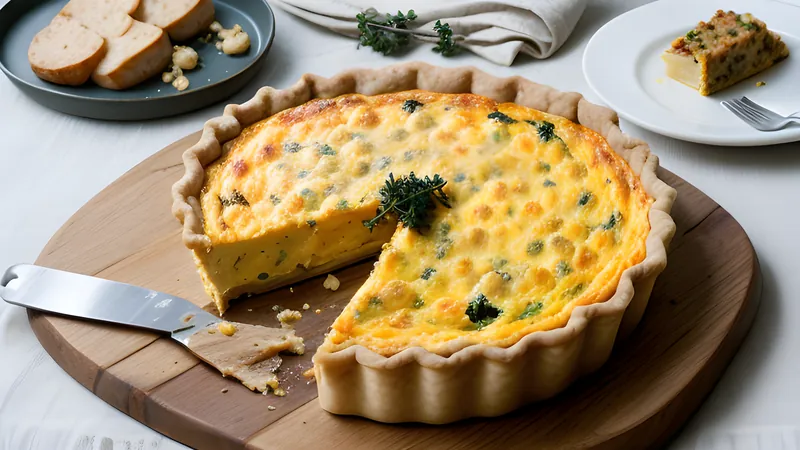
Mushroom and Gruyère Quiche with Thyme Pastry
Ingredients
- 200g plain flour, plus extra for dusting
- 100g cold unsalted butter, diced
- 1 tbsp fresh thyme leaves
- 0.5 tsp fine salt
- 2 to 3 tbsp ice-cold water
- 400g chestnut mushrooms, sliced
- 1 tbsp olive oil
- 1 large onion, finely sliced
- 2 garlic cloves, finely chopped
- 3 large eggs
- 200ml double cream
- 100ml whole milk
- 120g Gruyère, grated
- Salt and black pepper
Method
- Rub the cold butter into the flour, thyme and salt until it resembles coarse breadcrumbs, then add just enough ice-cold water to bring it into a dough.
- Flatten into a disc, wrap and chill for 30 minutes.
- Roll out and line a 23cm loose-bottomed tart tin, leaving a little overhang; chill again for 20 minutes.
- Heat the oven to 180C fan, line the pastry with paper and baking beans and blind-bake for 15 minutes, then remove the beans and bake for 8 minutes more until pale gold and dry.
- Meanwhile, fry the sliced mushrooms in the olive oil over a high heat until golden and any liquid has evaporated, then set aside.
- Soften the onion gently in the same pan, add the garlic for the last minute, and stir the mushrooms back through; season and cool slightly.
- Whisk the eggs, cream and milk together and season well.
- Scatter most of the Gruyère over the pastry base, spread the mushroom mixture on top, pour over the custard and finish with the remaining cheese.
- Bake at 160C fan for 30 to 35 minutes until just set with a slight wobble in the centre.
- Trim the pastry overhang, cool for 15 minutes and serve warm or at room temperature.
A proper quiche is a thing of quiet luxury: a crisp, buttery shell holding a custard so soft it barely sets, shot through with something savoury. This one leans into autumn, with deeply browned mushrooms, nutty Gruyère and a pastry that has fresh thyme worked right into the dough. That last detail is the small twist that lifts it; instead of a neutral case, you get a herb-scented crust that perfumes every forkful. It is the kind of tart that turns a bit of leftover salad into a proper lunch, and is honestly better the day it cools than straight from the oven.
1 From peasant tart to bistro classic
Quiche comes from the Lorraine region of north-eastern France, a borderland that has passed between French and German hands for centuries, and the dish carries that mixed heritage. The very word quiche derives from the German Kuchen, meaning cake, and the original quiche Lorraine was a rustic affair: an open tart of bread dough filled with eggs, cream and smoked bacon, baked until the custard set. Cheese, now so associated with quiche, was not part of the earliest versions at all.
Over time the bread base gave way to short pastry, the format spread across France and then the world, and quiche became shorthand for a certain kind of unfussy elegance. The mushroom and cheese version sits comfortably within this tradition; mushrooms and Gruyère, that firm Alpine cheese from the French-Swiss border, are natural partners, both earthy and savoury. Building thyme into the pastry is a more modern, homespun flourish, but it suits the woodland flavours beautifully and the principle, treating the crust as part of the seasoning rather than just a vessel, is one worth carrying into all your tart-making.
2 Pastry and the matter of a soggy bottom
The pastry is a standard shortcrust enriched with thyme. Keep the butter cold, the water minimal and your hands quick; warm, overworked pastry turns tough and shrinks. Chilling the lined tin before baking helps it hold its shape.
Blind-baking is non-negotiable and is the single thing that separates a good quiche from a disappointing one. Lining the case and baking it with beans before adding any filling dries and crisps the base so the wet custard cannot turn it to a pale, sodden mess. Bake it until properly pale gold and dry to the touch. Frying the mushrooms hard, until golden and any released water has cooked off, follows the same logic: dry, browned mushrooms add flavour, while watery ones water down the custard and the crust beneath.
3 The custard, and baking it gently
The filling is a classic ratio of eggs to cream and milk, seasoned generously. Whisk it just until combined, not frothy. Scatter cheese on the base before the filling goes in, which adds a flavour layer and a little extra waterproofing, then arrange the mushrooms and pour the custard over.
The real secret to a silky quiche is a low, gentle oven. Bake at around 160C fan and pull it out while the centre still has a faint wobble; carryover heat sets it the rest of the way as it cools. Push it too far and the custard curdles, weeps and develops a grainy, scrambled texture. A just-set quiche, by contrast, slices into clean wedges with a soft, almost trembling interior.
4 Make-ahead and variations
This quiche is brilliant for entertaining because it is arguably nicer at room temperature, so you can bake it hours ahead. It keeps in the fridge for three days and reheats gently in a low oven. The pastry case can be blind-baked a day in advance too.
For variations, stir a handful of cooked, drained spinach through the mushrooms, or add a few snipped chives. A little crisp bacon or lardons nods to the original Lorraine. Swap Gruyère for Comté, Emmental or a sharp Cheddar depending on what is in the fridge, or use a mixture for more complexity. A scrape of nutmeg in the custard is a classic touch that flatters both eggs and cheese.
The choice of mushroom matters more than you might think. Chestnut mushrooms have more flavour than plain white button mushrooms and hold up better, but a handful of dried porcini, soaked and chopped, will push the earthiness much further, and the soaking liquid can be reduced and stirred into the custard for an extra savoury depth. A mixture of wild mushrooms in season makes this genuinely special. Whatever you use, slice them thickly and brown them hard, in batches if the pan is crowded, because steamed grey mushrooms are the enemy of a good quiche.
Serve with a sharply dressed green salad, because the bitter, acidic leaves of frisée, rocket or watercress are exactly what the rich filling needs to balance it. A glass of dry white wine, or indeed a glass of crisp cider in a nod to no particular region at all, completes a lunch that feels far grander than the effort it took.
Related Content