Mozzarella Sticks with Marinara
Double-crumbed, frozen solid, fried gold, with a Parmesan-laced crust
Contents
↓ Jump to recipeThe mozzarella stick is Italian-American cooking at its most gleefully unrepentant, and it is older than the diners and sports bars that made it famous. Fried cheese has a long European pedigree: mozzarella in carrozza, the Neapolitan fried cheese sandwich, dates to the nineteenth century, and medieval French cookbooks describe battered fried cheese fingers with something close to the modern method. What the twentieth-century American kitchen added was the industrial context — the low-moisture block mozzarella that could survive freezing and frying, the deep fryer, and the tub of marinara on the side — and turned a regional trick into a national bar snack.
The engineering problem at the heart of a mozzarella stick is a good one. You are trying to melt the inside of something while frying the outside, and get both to finish at the same moment, all while containing a filling that turns to hot liquid and desperately wants to escape. Get it wrong and you have a scene familiar to anyone who has tried: a cage of empty crumb and a scorched puddle of cheese welded to the pan. Get it right and you pull the two halves apart to a long, glossy string of molten mozzarella. The whole recipe is a set of defences against the leak.
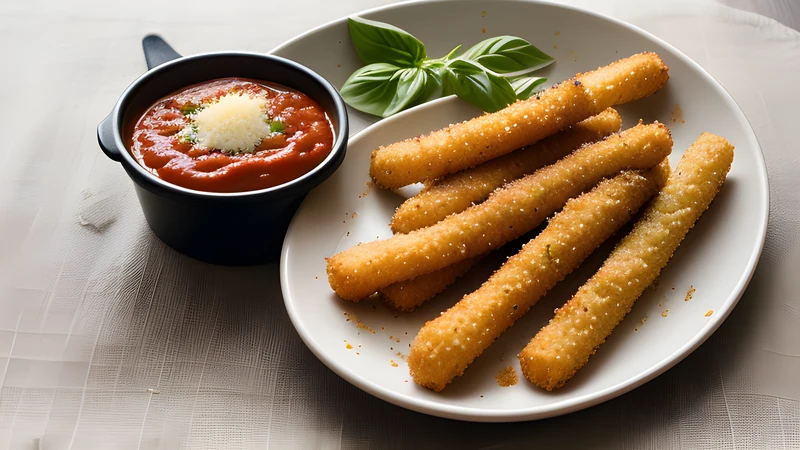
Mozzarella Sticks with Marinara
Ingredients
- 2 x 125g blocks of low-moisture mozzarella (the firm, block kind)
- 60g plain flour
- 2 large eggs, beaten
- 120g fine dried breadcrumbs or panko
- 30g Parmesan, finely grated
- 1 tsp dried oregano
- 0.5 tsp garlic powder
- 0.25 tsp fine salt
- 1 litre sunflower oil, for deep-frying
- 1 tbsp olive oil (for the sauce)
- 2 garlic cloves, thinly sliced
- 1 x 400g tin quality chopped tomatoes
- 1 pinch caster sugar
- 1 small handful basil leaves, torn
Method
- Cut each block of mozzarella into 8 batons, roughly the size of a thick finger, to give 16 sticks.
- Set up three bowls: flour in the first; beaten egg in the second; breadcrumbs mixed with Parmesan, oregano, garlic powder and salt in the third.
- Roll each baton in flour, then egg, then crumb. Return it to the egg and crumb a second time for a double coat, pressing the crumbs on firmly.
- Lay the coated sticks on a lined tray and freeze for at least 2 hours, or until rock solid.
- Make the sauce: warm the olive oil, soften the garlic for 1 minute, add the tomatoes and sugar, and simmer for 12 minutes until thick. Stir in the basil and season.
- Heat the frying oil to 190C. Fry the sticks in batches of four for 60 to 90 seconds, until deep golden and crisp, turning once.
- Drain on kitchen paper for a moment, then serve immediately with the warm marinara for dipping.
Why block mozzarella, and why it must freeze
The choice of cheese is the first line of defence. Fresh mozzarella, the soft white ball sitting in brine, is wonderful in a salad and hopeless here; it holds far too much water, which turns to steam in the oil and blows the coating apart. You want low-moisture block mozzarella, the firm, slightly rubbery kind sold for pizza. It has been made specifically to melt into strings rather than spread into a puddle, and its lower water content means less pressure building inside the crumb as it heats.
Freezing is the second and most important defence, and it is the step people skip and regret. A frozen stick gives you a head start: the crumb crisps and colours in the hot oil while the cheese inside is still climbing from frozen up towards melting point. That gap in temperature is your window. Fry a fridge-cold stick and the cheese hits liquid before the coating has set, and out it comes through the nearest seam. Two hours in the freezer, until the sticks are genuinely solid, buys you the sixty to ninety seconds you need.
The twist: a double crumb with Parmesan in it
The coating is the wall, so I build it thick and I build it tasty. A single layer of breadcrumb has too many weak points; the standard flour-egg-crumb sequence, repeated so the stick goes back through the egg and crumb a second time, gives a double wall with no gaps for the cheese to find. Press the crumbs on firmly at each stage, especially over the cut ends where leaks begin.
The clever change is what goes into the crumb. Most recipes use plain breadcrumb and rely entirely on the dip for flavour. I mix finely grated Parmesan straight into the coating, along with dried oregano and garlic powder. The Parmesan toasts and crisps in the oil and brings a deep, salty, umami savour to the crust itself, so the stick tastes of something before it ever meets the sauce. That instinct to build seasoning into the shell rather than leaning on the dip is the same one behind the spiced Jamaican beef patties, where the pastry does as much flavouring as the filling.
The marinara, quickly
Marinara has a nice etymological accident behind it. The name comes from alla marinara, in the sailor’s style, not for any seafood in it; rather because it was the quick tomato sauce sailors’ families could throw together, made from cupboard tomatoes, garlic and oil while the men were at sea. Its whole virtue is speed and freshness, and it wants no long simmering. Soften a little sliced garlic in olive oil, tip in a tin of good chopped tomatoes with a pinch of sugar, and cook it hard for twelve minutes until it thickens and loses its raw edge. Torn basil and seasoning at the end, and that is the sauce. Fresh, sharp and garlicky, it cuts the richness of the fried cheese exactly, the way a bright tomato sauce always lifts something fatty.
The pull, and the science of a good string
The long, dramatic string of cheese is not showmanship for its own sake; it is a signal that the mozzarella has been made and treated correctly. Mozzarella is a pasta filata cheese, meaning the curd is stretched and folded in hot water until its proteins line up into long, parallel fibres. When you reheat it gently, those aligned fibres soften and slide but stay linked end to end, so the cheese pulls into strands rather than collapsing into a shapeless blob. A low-moisture block, with its ordered protein structure and modest fat, gives the cleanest, longest pull of all.
Temperature is what preserves it on the plate. The pull is at its most impressive in the first minute or two out of the oil, while the cheese is hot and molten; let a stick sit and cool and the proteins re-tighten and the strands turn short and rubbery. This is the real reason to fry these to order and eat them at once, and the reason a plate of them never survives long enough to photograph properly at the table.
Method, step by step
Cut each 125g block of mozzarella into eight thick batons for sixteen sticks. Set out three bowls: 60g of plain flour in the first, two beaten eggs in the second, and 120g of breadcrumbs mixed with 30g of grated Parmesan, a teaspoon of dried oregano, half a teaspoon of garlic powder and a quarter-teaspoon of salt in the third. Coat each baton in flour, then egg, then crumb, then send it back through the egg and crumb once more, pressing firmly so no cheese shows. Lay the sticks on a lined tray and freeze for at least two hours until solid.
Make the sauce while they freeze. Warm a tablespoon of olive oil, soften two sliced garlic cloves for a minute without colouring, add a tin of chopped tomatoes and a pinch of sugar, and simmer for twelve minutes until thick. Stir in torn basil and season. When you are ready to fry, heat a litre of sunflower oil to 190C — a cube of bread should turn gold in about forty seconds. Fry the sticks in batches of four for sixty to ninety seconds, turning once, until deep golden. Any more than four at a time and the oil temperature drops, the frying slows, and the cheese has time to escape. Drain briefly on kitchen paper and eat straight away, while the pull is at its best.
Getting ahead, and what goes wrong
This is a superb make-ahead snack, because the freezing is built into the method. Coat a big batch, freeze the sticks solid on a tray, then bag them and keep them frozen for up to a month; fry them from frozen whenever you want them, no thawing. That makes them a genuinely useful thing to have on hand for an unplanned crowd.
When they do go wrong, it is almost always one of three faults. A stick that leaks was either not frozen hard enough or the coating had a gap, usually at a cut end, so freeze longer and crumb more carefully. A pale, greasy stick means the oil was too cool, so let it come back up to 190C between batches. And a burnt shell around cold cheese means the oil was too hot and the outside raced ahead, so drop the heat a little. Serve them with the marinara, and if you like a herby, green counterpoint alongside the tomato, a small bowl of salsa verde is a very good idea indeed.
Related Content