Moutabal: Smoked Aubergine with Yoghurt and Pomegranate
Charred aubergine, tahini and yoghurt, jewelled with pomegranate
Contents
↓ Jump to recipeMoutabal is what happens when baba ganoush grows up and gets a little richer. Both start with aubergine charred until its skin blisters black and its insides go to silk, but where baba ganoush leans lean and lemony, moutabal folds in yoghurt and a generous spoon of tahini to make something creamier and rounder. The word comes from an Arabic root meaning spiced or seasoned, and across Syria, Lebanon and Jordan it is a fixture of the mezze table. My finishing flourish is a handful of pomegranate seeds scattered over the top, which pop with sweet-sour brightness against the smoke and stop the whole thing feeling too heavy.
The magic is entirely in the char. You are not really cooking the aubergine so much as smoking it from the outside in, letting the flesh steam inside its own scorched skin until it collapses. Get that right and the rest is a two-minute stir. It sits proudly on a table alongside souvlaki with tzatziki and charred pitta or a halloumi and vegetable traybake with harissa, and it is my go-to when someone drops round and I want to look as though I made an effort.
Moutabal: Smoked Aubergine with Yoghurt and Pomegranate
Ingredients
- 2 large aubergines (about 700g)
- 2 tbsp tahini, well stirred
- 3 tbsp thick Greek-style yoghurt
- 1 small garlic clove, finely grated
- Juice of half a lemon, plus more to taste
- 3 tbsp extra-virgin olive oil, plus more to finish
- 1/2 tsp fine sea salt, plus more to taste
- 2 tbsp pomegranate seeds
- 1 tbsp chopped flat-leaf parsley or mint
- Pinch of Aleppo pepper or sweet paprika
- Warm flatbread, to serve
Method
- Prick each aubergine a few times with a knife. Char whole over a direct gas flame, on a barbecue, or under a very hot grill, turning with tongs every few minutes, until the skin is blackened all over and the flesh is completely collapsed and soft, 15 to 25 minutes.
- Transfer to a colander set over a bowl and leave until cool enough to handle, about 10 minutes. Slit open and scoop the soft flesh into the colander, discarding the charred skin and any large seed pockets. Let the flesh drain for 10 minutes to lose its bitter liquid.
- Chop the drained flesh on a board until fairly smooth but still with some texture. Tip into a bowl.
- Add the tahini, yoghurt, grated garlic, lemon juice, olive oil and salt. Stir vigorously with a fork until creamy and pale. Taste and adjust with more salt or lemon until it is bright and savoury.
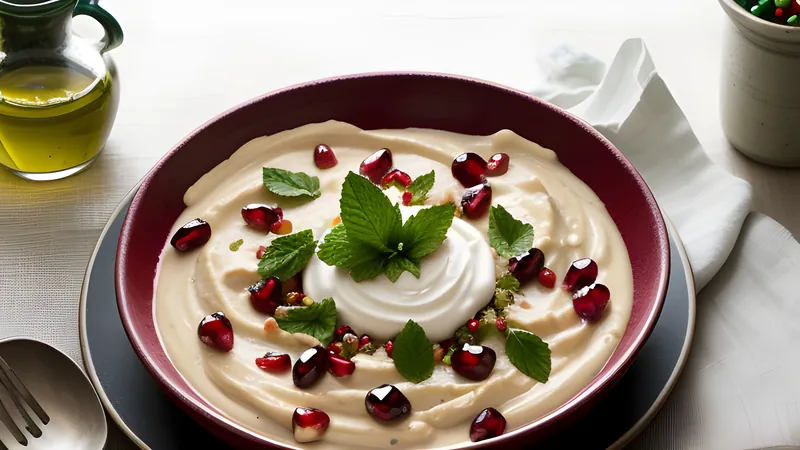
- Spread onto a plate with the back of a spoon, making swooshes to catch the oil. Drizzle with more olive oil, scatter over the pomegranate seeds, herbs and Aleppo pepper. Serve with warm flatbread.
A dish about smoke
The aubergine arrived in the Levant along the medieval trade routes from India and Persia, and cooks in the region developed an entire repertoire around one problem and one gift. The problem is that raw aubergine is spongy and slightly bitter; the gift is that its flesh, once softened, is a blank, luxurious canvas that drinks up fat and smoke. Charring solves both at once. The intense dry heat collapses the cell structure so the sponginess disappears, drives off the bitter compounds, and, crucially, perfumes the flesh with the smoke of its own burning skin.
That smoke is the difference between a good moutabal and a forgettable one. You genuinely cannot fake it with a roasted aubergine, however soft. Roasting in the oven gives you sweet, tender flesh but none of the campfire depth that defines the dish. If you have a gas hob, sit the aubergine straight on the burner over a medium-high flame and let the skin blacken and split, turning it with tongs as each face chars. A barbecue is even better. If you cook on electric or induction, get your grill as hot as it goes and char the aubergines close to the element, turning often, accepting that the smoke note will be gentler; a pinch of smoked paprika at the end helps bridge the gap.
Char, drain, then build
You want the aubergine truly, alarmingly collapsed before you take it off the heat. A common mistake is pulling it too early, when the skin looks black but the centre is still firm; the flesh then tastes green and refuses to go creamy. Press the side with your tongs and it should feel like a deflating balloon, the whole thing slumping in on itself. That usually takes fifteen to twenty-five minutes depending on size and heat, and it is fine, even good, if the skin is properly incinerated.
Once charred, let the aubergines cool in a colander for ten minutes so you can handle them, then slit them open and scoop the smoky flesh away from the blackened skin. Do not rinse the flesh, whatever you may have read, because you will wash the smoke straight down the sink. A few flecks of black skin clinging on are honest and add to the flavour. Now leave the scooped flesh to drain in the colander for a further ten minutes. Aubergine holds a surprising amount of bitter, watery liquid, and if you skip this step your moutabal turns out loose and slightly sharp. Those ten patient minutes are the secret to a dip that holds its shape on the plate.
Chop the drained flesh on a board rather than blitzing it in a processor. A food processor makes it gluey and pale, whereas a rough chop keeps a pleasant, spoonable texture with a bit of body. Then it is simply a matter of stirring in the tahini, yoghurt, grated garlic, lemon and olive oil with a fork until the mixture turns pale, thick and creamy.
Seasoning is everything
With so few ingredients, the balance of salt, acid and garlic is the whole game. Tahini can be quietly bitter, so it needs enough lemon and salt to counter it. Add the lemon in stages and keep tasting; you are looking for the point where the dip tastes bright and alive rather than flat and beige. Go easy on the garlic. One small clove, finely grated so it disappears, is plenty; raw garlic grows stronger as the dip sits, and a heavy hand will have it dominating the smoke within the hour.
Stir the tahini in its jar before you measure it, too, because the oil separates and settles, and a spoonful from the top will behave very differently from a spoonful from the bottom.
Finishing and serving
To serve, spread the moutabal across a plate and use the back of a spoon to make a shallow, swirling well that catches a good pour of your best olive oil. Scatter over the pomegranate seeds, a little chopped parsley or mint, and a pinch of Aleppo pepper for warmth and colour. The pomegranate is my small twist and I would not skip it: those bursts of tart sweetness cutting through the rich, smoky base are what lift this above a standard dip and make people go quiet for a second.
Eat it with warm flatbread torn straight from the oven, or alongside a spread of other mezze. It is also a brilliant partner to grilled lamb or the smoky aubergine in baingan bharta, which shares its DNA of charred aubergine treated with real respect.
Make-ahead, storage and variations
Moutabal is a good make-ahead dish, arguably better after a few hours in the fridge, which lets the flavours settle and marry. Keep it covered for up to three days; bring it back to room temperature and add the fresh herbs, pomegranate and oil only when you serve, so the toppings stay vivid. If it firms up too much in the cold, loosen it with a splash of water or a little extra oil and re-taste for salt and lemon.
A word on tahini, because the brand you buy changes the dish more than anything else. Look for a tahini made from hulled sesame that pours smoothly and tastes nutty rather than acrid; the good stuff is loose and pale-brown, while cheaper jars can be stiff, grey and stubbornly bitter no matter how much lemon you add. A Levantine or Palestinian brand from a Middle Eastern grocer is usually worth the small extra cost, and one jar will carry you through this, a batch of hummus, and a dozen dressings.
For variations, a spoonful of labneh in place of the yoghurt makes it even richer and tangier. A few toasted and crushed walnuts folded through add texture and a Syrian accent. Leave the yoghurt out entirely and lean harder on the tahini and lemon and you are back in baba ganoush territory, equally good and dairy-free. However you finish it, the char is non-negotiable; get your aubergine truly black and truly soft, and everything after that is easy. Make it once by feel rather than by the clock, trusting your nose for the smoke and your tongue for the salt and lemon, and it will quietly become one of those things you throw together without thinking, the dish that turns a few flatbreads and some olives into an actual spread.
Related Content