Moussaka with Aubergine and Nutmeg Béchamel
The Greek baked classic, with roasted aubergine and a nutmeg-scented cheese béchamel
Contents
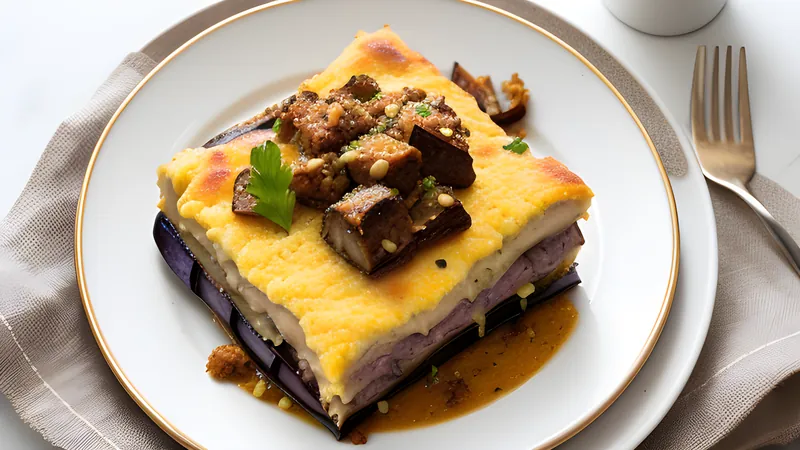
↓ Jump to recipeMoussaka is one of those dishes people assume is ancient and find out is barely a hundred years old, at least in the form everyone now recognises. The layered bake of aubergine, spiced lamb and a thick golden cap of béchamel was codified in the 1920s, and the béchamel — the part that gives it that custardy, gratin-like top — is a French borrowing grafted onto older Ottoman-Greek foundations. This version keeps two things that matter and improves a third. The lamb is spiced with cinnamon and allspice the way a Greek cook would; the béchamel is scented with fresh nutmeg and enriched with sharp, salty kefalotyri; and the aubergine is salted and roasted rather than fried, which keeps it from turning into an oil-logged sponge. Rest it properly before you cut, and it slices into clean layers instead of sliding across the plate.
Moussaka with Aubergine and Nutmeg Béchamel
Ingredients
- 3 large aubergines (about 1kg), sliced lengthways 1cm thick
- 5 tbsp olive oil, plus more for brushing
- Salt, for drawing out the aubergine
- 2 large floury potatoes (about 500g), peeled and sliced 5mm thick (optional base layer)
- 1 large onion, finely chopped
- 3 garlic cloves, minced
- 700g minced lamb
- 2 tbsp tomato purée
- 1 x 400g tin chopped tomatoes
- 150ml red wine
- 1 tsp ground cinnamon
- 1/2 tsp ground allspice
- 2 bay leaves
- 1 tsp caster sugar
- 1 tsp salt for the lamb, plus black pepper
- 90g unsalted butter (for the béchamel)
- 90g plain flour
- 900ml whole milk, warmed
- 1/2 tsp freshly grated nutmeg
- 100g kefalotyri or pecorino, finely grated
- 2 egg yolks
Method
- Lay the aubergine slices in a colander, salting each layer generously, and leave for 45 minutes to draw out moisture and bitterness. Rinse and pat thoroughly dry.
- Heat the oven to 200°C fan. Brush the aubergine slices on both sides with olive oil, spread on baking trays and roast for 25 to 30 minutes, turning once, until golden and soft. If using potatoes, brush and roast them alongside for 20 minutes until tender.
- Meanwhile, heat 2 tbsp olive oil in a large pan and cook the onion for 8 minutes until soft. Add the garlic and cook for 1 minute.
- Turn up the heat, add the lamb and brown well, breaking it up, for about 8 minutes until any liquid has evaporated and the meat is caramelising.
- Stir in the tomato purée, cinnamon and allspice and cook for 2 minutes. Add the wine and let it bubble away for 2 minutes, then add the tinned tomatoes, bay leaves, sugar, salt and pepper.
- Simmer the lamb, uncovered, for 25 to 30 minutes until thick and almost dry — a wet ragù will make the moussaka slump. Discard the bay leaves.
- For the béchamel, melt the butter in a saucepan, stir in the flour and cook the roux for 2 minutes without colouring. Gradually whisk in the warm milk and cook, stirring, until thick enough to coat the back of a spoon, about 6 minutes.
- Off the heat, stir in the nutmeg, most of the grated cheese and a pinch of salt. Let it cool for 5 minutes, then beat in the egg yolks until smooth and glossy.
- Heat the oven to 180°C fan. Layer the potatoes (if using) in a deep 30x20cm dish, then half the aubergine, then all the lamb, then the remaining aubergine. Pour over the béchamel, spread level, and scatter with the last of the cheese.
- Bake for 45 minutes until the top is deep golden and set. Rest for at least 30 minutes before cutting, so the layers firm up and hold their shape.
Where moussaka comes from
The name comes from the Arabic musaqqa’a, meaning something chilled or moistened, and versions of a layered aubergine-and-meat dish run right across the former Ottoman world, from the Levant to the Balkans. The Greek moussaka most people know today, though, owes its defining feature to one man: Nikolaos Tselementes, a hugely influential Greek chef whose 1920s cookbooks set out to “refine” Greek cooking along French lines. It was Tselementes who crowned the aubergine-and-lamb bake with a thick French-style béchamel, and that top became so central that a moussaka without it now reads as unfinished to most Greek cooks. The dish that feels like the oldest thing in the taverna is, in its familiar form, a piece of early-20th-century culinary nation-building.
The spicing is the quieter Greek signature, and it is what stops moussaka tasting like a Mediterranean lasagne. Warm spices — cinnamon and allspice above all — run through Greek meat cookery, a legacy of centuries of Ottoman influence and the old spice routes that ran through the eastern Mediterranean. Used with restraint they do not read as “spiced” so much as deeply savoury, giving the lamb a rounded, faintly sweet warmth that plays against the earthy aubergine and the rich béchamel. Get the balance wrong and it tips into something that tastes of Christmas; get it right and you would struggle to name the spice, only notice that the meat tastes of more.
Regional and household versions abound. Some Greek cooks lay a base of sliced potato under the aubergine for extra heft, some use a mix of aubergine and courgette, and the vegetarian version built on the same lines has become a taverna staple in its own right. This recipe treats the potato base as optional and leans on the aubergine, which is the soul of the dish.
Salt and roast the aubergine
Aubergine is a sponge, and how you cook it decides whether moussaka is silky or greasy. Raw aubergine flesh is full of air pockets, and if you fry the slices they drink up cooking oil astonishingly fast — a single batch can swallow half a bottle — then sit heavy and slick in the finished bake. Two moves fix this. First, salt the slices and leave them for three-quarters of an hour: the salt draws out moisture by osmosis, and with it some of the bitterness older aubergines can carry, while also collapsing those air pockets so the flesh absorbs far less oil later. Rinse and dry them well afterwards, or the moussaka will be too salty. Second, brush the slices lightly and roast them in a hot oven rather than frying: they take up only the oil you paint on, colour and soften evenly, and come out tender and concentrated instead of oil-logged. It is less oil, less mess and a better texture in one change.
The lamb: cook it dry
The commonest structural failure in moussaka is a filling that is too wet, which makes the whole thing slump and weep when you cut it. The lamb ragù wants to be cooked down until it is thick and almost dry, with the tomato reduced and the fat glistening rather than pooling. Brown the mince properly first — get it past the grey, stewed stage and into genuine caramelisation, which means letting the water cook off and the meat sizzle in its own fat, building the savoury depth that carries the dish. Then reduce the sauce hard. A dry, intense lamb layer sets between the aubergine and the béchamel and holds the moussaka together; a loose, saucy one turns the base to slop. The same principle rewards you in any layered bake, which is why a well-drained ragù is the making of an aubergine parmigiana too.
The béchamel: nutmeg, cheese and yolks
The béchamel is what makes moussaka moussaka, and three things lift it above a plain white sauce. Nutmeg, freshly grated, is the classic seasoning for any béchamel and adds a warm, aromatic note that ties the cap to the spiced lamb below. A good handful of grated kefalotyri — a hard, sharp, salty Greek sheep’s- or goat’s-milk cheese, with pecorino as the closest easy substitute — stirred into the hot sauce gives it savour and a proper golden crust. And two egg yolks, beaten in once the sauce has cooled slightly, are the traditional Greek touch that sets the topping into something between a sauce and a baked custard, so it cuts cleanly and browns to a deep gold. Add the yolks off the heat and after a short cool, or they will scramble; whisk them in until the béchamel is glossy and smooth, and it will set beautifully in the oven.
Rest before you cut
This is the step everyone skips and everyone regrets. Straight from the oven, a moussaka is molten inside — the béchamel is loose, the fats are liquid, and cutting into it releases a landslide. Give it at least half an hour out of the oven, and as it cools the béchamel firms, the fats set, and the layers knit into slices that lift out whole and hold their shape on the plate. It is genuinely better eaten warm rather than scalding, which makes it a fine dish to cook ahead and let settle while you lay the table. Patience at the end is what turns a delicious mess into a proper wedge of moussaka.
The recipe
Salt the aubergine slices for 45 minutes, rinse, dry, then brush with oil and roast until golden. Brown the lamb hard, spice it with cinnamon and allspice, add wine and tomatoes, and reduce to a thick, almost dry ragù. Make a béchamel, season it with nutmeg and grated kefalotyri, cool it a little and beat in two egg yolks. Layer optional potato, then aubergine, then all the lamb, then more aubergine in a deep dish; pour over the béchamel, top with cheese, and bake at 180°C fan for 45 minutes until deep gold. Rest 30 minutes before cutting.
Tips, substitutions and make-ahead
Beef mince stands in perfectly well for lamb if that is what you have, though lamb gives the most authentic flavour. For a vegetarian moussaka, replace the meat with a thick ragù of green lentils and mushrooms cooked down the same way, or add a layer of roasted courgette; the spicing and béchamel carry it. Kefalotyri is worth seeking out at a Greek or Turkish grocer, but pecorino romano or a mature Parmesan will do the job. Grate the nutmeg fresh — the pre-ground stuff is a shadow of it, and nutmeg is the one seasoning here you will genuinely notice if you skimp.
Moussaka is one of the great make-ahead dishes: assemble it a day in advance, refrigerate unbaked, and bake straight from cold, adding ten minutes to the time. It reheats better than almost any bake, since a day in the fridge lets the flavours settle and the layers set even firmer, so leftovers cut cleaner than the first night. It keeps for 3 days in the fridge and freezes, cooked, for 3 months. Serve it with something bright and sharp to cut the richness — a watermelon Greek salad or a slice of spanakopita alongside makes it a full Greek table. Just remember to let it rest, and it will reward you every time.
Related Content